We may earn revenue from the products available on this page and participate in affiliate programs. Learn more >
Look, the steel is not just a component of the sword, it is the sword. That’s why choosing one made from the best steel is so important. For centuries, the steel used to make the best katanas has been tamahagane, a material that has shaped their history and identity, guided by traditional forging techniques and craftsmanship that are still alive today.
The problem with traditional steel used for katana making is that it’s very expensive, takes a long time to make, and, honestly, isn’t superior to some modern steel types anymore. In this post, we’ll list the best steels you can choose for your katana, from affordable options that perform great to the sharpest and toughest steels and beyond.
Best Steels For Katana (in short):
| Best overall steel | T10 Tool Steel |
| Best known toughest steel | L6 Bainite |
| Best heavy-duty steel/affordable | 5160 Spring Steel |
| Best for pure cutting | 1095 Carbon Steel |
| Best for display | Stainless Steel/Damascus |
| Best steel for beginners/ practice+cutting | 1060 Carbon Steel |
| Best authentic steel | Tamahagane |
| Best steel for martial artists | 9260 Spring Steel |
The Bottom Line (Up Front)
If you are looking for the best overall steel used for katana making that also does not break the bank, T10 is the best choice. It is durable, flexible enough, and holds a sharp edge for a long time. If you are looking for the toughest steel the market offers, then there is no steel stronger than L6 bainite. Prepare to pay a lot of money for it.
If you want your katana for martial arts (for impact training), the best steel is spring steel. It is more flexible, durable, and has all the qualities needed to withstand blade‑to‑blade contact. If you want the best cutter katana, 1095 C.S is the best choice. It maintains a very sharp edge for a long time; however, it is more prone to breaking or chipping. Lastly, if you want what the samurai wielded, then tamahagane provides unmatched beauty and authenticity.
Quick Terminology Guide
Performance properties
- Hardness: The ability to maintain a sharp edge
- Toughness: The ability to absorb impact without breaking
- Flexibility: The ability of the blade to bend under stress and return to its original form
Key steel elements
- Carbon: Higher carbon means harder and sharper steel but more prone to breaking; lower carbon means tougher but less harder
- Silicon: Added to Spring Steels (9260, 5160) to help the blade snap back after bending
- Tungsten: Added to Tool Steels (T10) to increase wear resistance and edge life
- Nickel: Added to Bainite (L6) to add extreme strength and shock absorption
Which property matters for what?
- Cutting performance: Prioritizes hardness and strong edge retention.
- Impact & training: Prioritizes toughness and flexibility.
- Everyday / general usage: A balanced mix of hardness, toughness, and flexibility.
- Traditional authenticity: Focuses less on performance and more on historical materials like tamahagane.
Best Katana Steels
| Steel Name | Carbon % | Edge Retention | Durability | Flexibility (Bend Resistance) |
| Tamahagane | 0.60 % – 1.5 % | ★★★★☆ (Very Good) | ★★★★☆ (Very Good) | ★★★★☆ (Very Good) |
| 9260 Spring Steel | 0.60 % | ★★★☆☆ (Good) | ★★★★☆ (Very Good) | ★★★★★ (Excellent) |
| 5160 Spring Steel | 0.60 % | ★★★★☆ (Very Good) | ★★★★★ (Excellent) | ★★★★☆ (Very Good) |
| 1060 Carbon Steel | 0.60 % | ★★★☆☆ (Good) | ★★★☆☆ (Good) | ★★★☆☆ (Good) |
| 1095 Carbon Steel | 0.95 % | ★★★★☆ (Very Good) | ★★★☆☆ (Good) | ★★★☆☆ (Good) |
| T10 Tool Steel | 1.0 % | ★★★★★ (Excellent) | ★★★★☆ (Very Good) | ★★★★☆ (Very Good) |
| L6 Bainite Tool Steel | 0.75 % | ★★★★★ (Excellent) | ★★★★★ (Excellent) | ★★★★★ (Excellent) |
Best overall steel: T10 Tool Steel

Pros
- Very good balance between hardness and toughness
- Holds a sharp edge for a long time
- Great for both advanced cutting and regular use
- Forms a clear hamon when clay tempered
- Not very expensive
Cons
- Needs regular maintenance
For a blade that does almost everything well, T10 tool steel is widely considered the best all-rounder on the market while also being affordable. Used for both high end and advanced cutting katanas, it is the preferred choice for advanced practitioners and serious cutters who demand superior edge retention and reliability for intense tameshigiri (test cutting).
T10 is essentially a high-carbon steel (similar to 1095) with about 1.0 percent carbon, which lets it reach very high hardness—around 60 to 65 HRC with proper heat treatment. It also has small amounts of chromium, vanadium, and sometimes tungsten to boost wear resistance, strength, and overall performance.
When you compare it to something like 1095, which struggles with toughness, T10 gives you a tougher, cleaner steel while keeping the same cutting ability.
Price range: $250 – $2000+
Best known toughest steel: L6 Bainite
Pros
- Extremely tough and almost unmatched in durability
- Handles hard targets and heavy cutting very well
Cons
- Very expensive
- Rare
- Usually has a very soft or less visible hamon
- Only a few smiths can heat treat it correctly
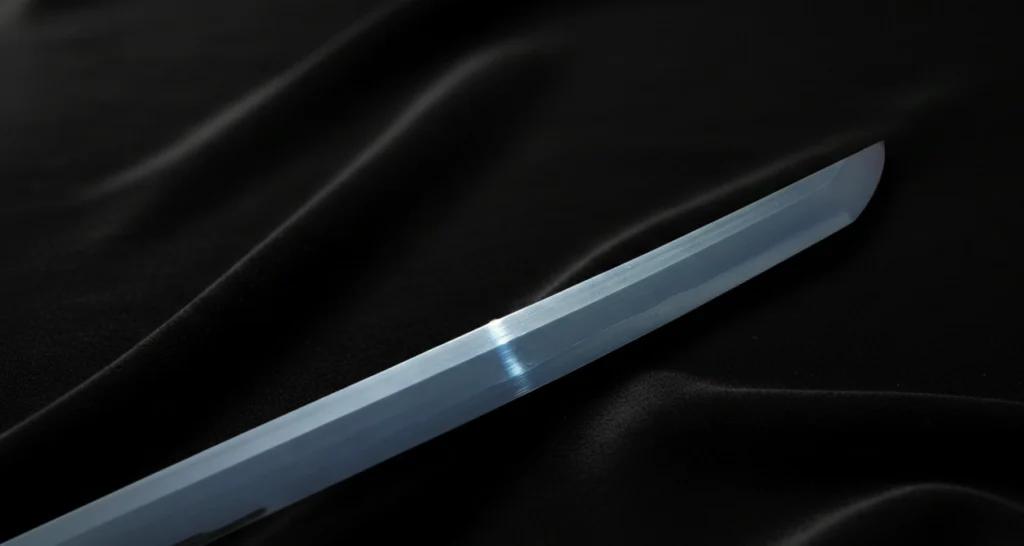
Even though an indestructible katana doesn’t exist, an L6 bainite blade is the closest you’ll get in modern times. While standard steels are hardened into a crystal structure called martensite (which is hard but can be brittle), L6 is heat-treated to become bainite. This gives the blade the shock-absorbing properties of a truck spring but with a much harder edge than standard spring steels.
The catch is that making Bainite is an incredibly difficult process that only a few master smiths (like the famous Howard Clark) can pull off. Because of this, it is very expensive and rare. Also, due to the high-nickel alloy, these blades usually don’t have a very visible hamon, but with a good polish they can still show.
Warning: Buying a cheap L6 sword doesn’t mean you are getting Bainite. Unless it is specifically stated as Bainite heat-treated, it is likely standard steel.
Price range: $1,000 – $10.000+
Best heavy-duty steel/affordable: 5160 Spring Steel
Pros
- Great toughness and shock absorption
- Very good for heavy duty cutting
- Much more affordable compared to other steels
- Offers some rust resistance due to the chromium
Cons
- Edge retention is good but not as good as high carbon steels
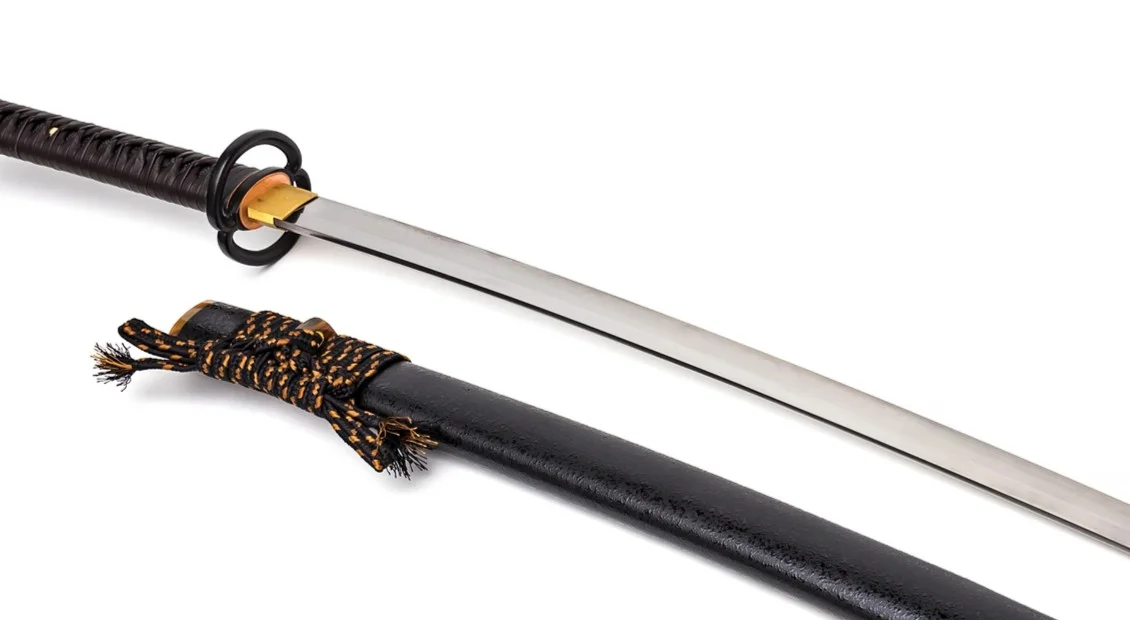
5160 Spring Steel is a high-performance alloy with about 0.60% carbon, a good amount of chromium, and important elements like silicon and manganese. It’s called spring steel because its composition and heat treatment make it extremely resilient. The silicon gives it that signature elasticity, letting the blade bend or twist under stress and return to its original shape, similar to a car’s suspension spring.
Thanks to its strength and flexibility, 5160 is one of the best affordable options for a heavy-duty katana. It’s reliable, beginner friendly, and great for long-term cutting without stressing about damage.
Price range: $250 – $500
Best for pure cutting: 1095 Carbon Steel
Pros
- Excellent cutting ability
- Sharp edge that lasts
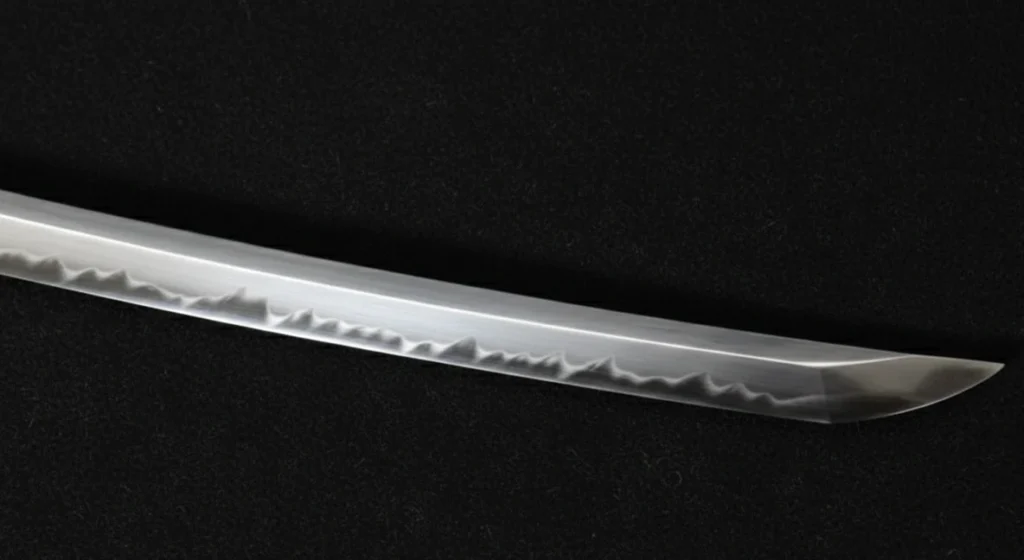
- Creates a very clear and beautiful hamon when clay tempered
- Popular among practitioners
Cons
- May chip or break more easily if used in hard targets o bad angles
- Needs regular maintenance
1095 carbon steel is widely used for katanas, especially high-performance cutting blades. Its high carbon content (around 0.95%) lets the blade reach excellent hardness and keep a sharp edge for a long time. Besides cutting, 1095 is also known for creating a very clear hamon, which is great for those who want a more traditional look. The downside is that it’s more prone to chipping or breaking, so it’s not good for hitting very hard targets.
Price range: $250 – $1,500
Best for display: Stainless Steel/Damascus
Pros (Stainless):
- Very low maintenance
- Does not rust
- Affordable
Cons (Stainless):
- Not safe for functional purposes
Pros (Damascus):
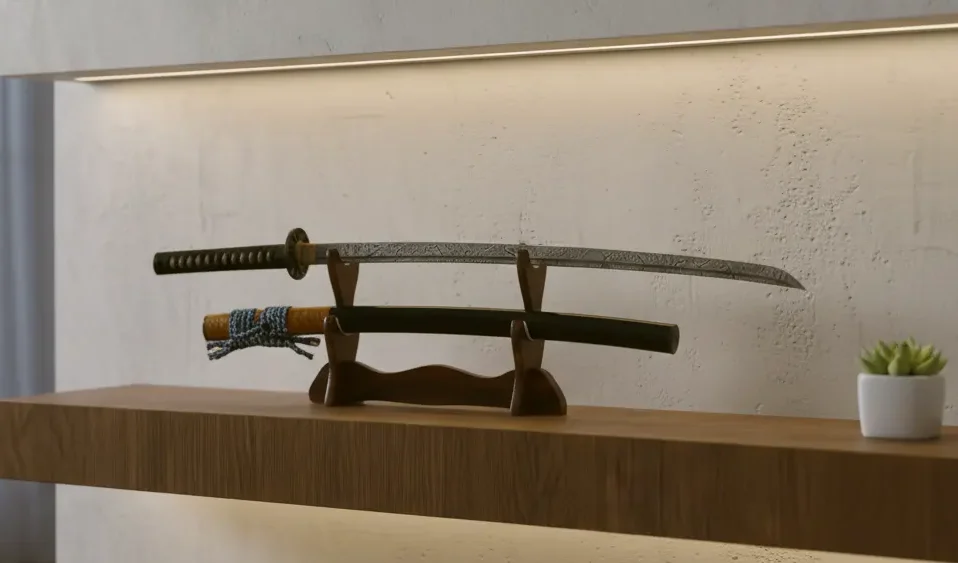
- Beautiful and eye catching blade patterns
- Some blades can be used for light cutting
Cons (Damascus):
- Lower cutting performance
- Quality varies a lot depending on the maker
- Mostly recommended for display
Both stainless steel and Damascus are great if you want your katana for display. Stainless because it doesn’t need much maintenance, so you don’t have to worry about rust like other steels. Damascus, on the other hand, looks much more eye-catching.
If differentially hardened, a Damascus katana can also be functional for cutting, but it still has less performance than other steels. Stainless steel katanas cannot be used for functional purposes because the steel is too brittle.
Price range(stainless): $50 – $150
Price range(damascus): $150 – $700
Best steel for beginners/ practice+cutting: 1060 Carbon Steel
Pros
- Very good balance between hardness and toughness
- Handles light to medium cutting without problems
- More forgiving compared to high carbon steels
- Affordable
Cons
- Edge retention is moderate
- Not ideal for heavy targets
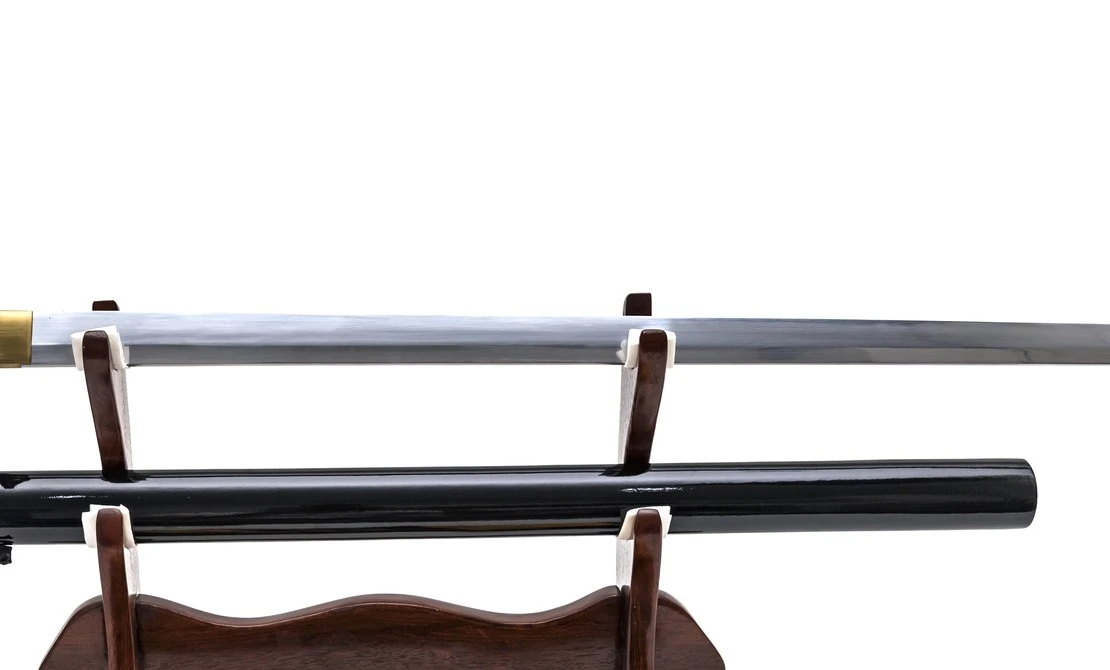
1060 carbon steel is a very common choice for budget-friendly functional katanas. With around 0.60% carbon, it offers a good balance between hardness and toughness, making it suitable for light to medium cutting and training. It doesn’t reach the sharpness or edge retention of 1095 or t10, but it’s more forgiving and less likely to chip, which is why many beginners start with a 1060 blade.
Price range: $150 – $450
Best authentic steel: Tamahagane
Pros
- Most authentic traditional steel for Japanese swords
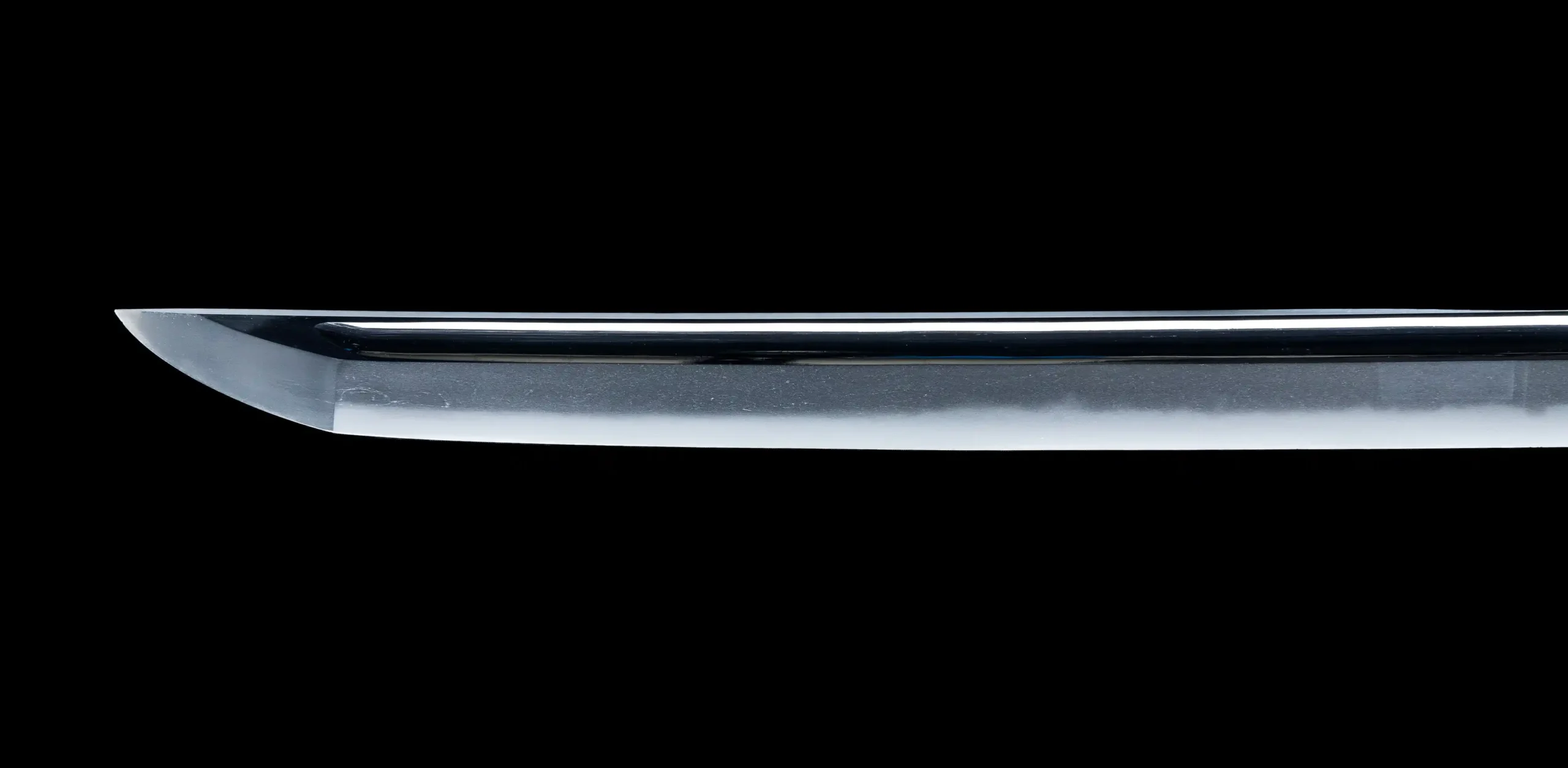
- Beautiful natural patterns and a traditional look
- Highly valued, and its value tends to appreciate significantly over time
- Handmade and unique
Cons
- Very expensive
- Requires regular care
- Less performance compared to modern steels
A true katana is made using traditional tamahagane steel and the same crafting and forging techniques used in Japan for centuries. It’s a long and delicate handmade process that can take months, with every step done by expert smiths. The steel is folded, the blade is shaped, and it’s polished with different natural stones, bringing out the beautiful grain patterns and tiny layers that make each sword unique.
While this gives you the highest level of authenticity, in terms of raw performance, other steels like 1095, T10, or spring steel are better options, especially for the price.
Price range: $1,000 (Chinese reproduction) – $10,000+ (Authentic Nihonto)
Best steel for martial artists: 9260 Spring Steel
Pros
- Extremely tough and flexible
- Holds up well under repeated strikes
- Affordable and beginner friendly
- Forgiving if used often
Cons
- Edge retention is not as good
If your focus is martial arts involving contact or the risk of blade-to-blade impact, 9260 spring steel is the superior choice. In a blade-to-blade scenario, standard high-carbon steels (like 1095) are essentially glass—hard but brittle—and can shatter or chip dangerously upon impact. Spring steel, however, acts like a shock absorber.
9260 (enriched with silicon) are alloyed specifically to withstand high-impact shock. If you accidentally clash with another weapon or a hard target, these steels are more likely to simply “roll” the edge or flex and return to true, rather than snapping or suffering catastrophic failure. For the same reason, you’ll see 9260 used in other training weapons too, including rapiers, longswords etc.
Price range: $150 – $400
Other Popular Steels
1045 Carbon Steel
1045 carbon steel is another popular option you will find in katanas, normally used for the most basic entry-level swords. With a relatively low carbon content of about 0.45%, it is soft enough to be very tough against snapping, but it lacks the hardness to hold a sharp edge for very long. 1045 is a good choice for a first katana.
T8 Tool Steel
T8 is an alloy steel often seen as a budget-friendly alternative to T10. It contains tungsten and carbon (slightly less than T10), which gives it decent hardness and durability. In practical terms, it offers better edge retention than basic carbon steels like 1060 but is generally not as refined or hard as T10.
S5 Steel
S5 is a shock-resisting tool steel designed for heavy-impact tools like jackhammer bits and chisels. In katanas, it is used specifically for its extreme toughness and ability to absorb shock without breaking. It is harder to heat treat than standard spring steels, but the result is a blade that can handle abusive targets that would damage harder, more brittle steels.
S8 Steel
S8 is another steel in the shock-resisting family, similar in purpose to S5. It is formulated with lower carbon and added alloying elements to prioritize impact resistance over raw hardness. While less common than other spring steels, it is an option for users who need a sword that can survive heavy blade-to-target impact without chipping.
Zinc-Aluminum Alloy
Even though it is not steel, aluminum is a popular metallic alloy used for perfectly balanced katanas, particularly for Iaito training. Because the material is much lighter than steel, it allows practitioners to focus on form and technique without the fatigue that comes from swinging a heavy steel blade. These swords are typically made unsharpened for safety. The trade-off is that aluminum is too soft for impact; it cannot hold an edge and is strictly for non-contact practice.
What Else Affects a Katana Besides Just the Steel
Except for choosing the steel for your blade, it is equally important to understand how the steel is made and treated. For example, whether you are ordering a custom katana or buying a ready-made one, you may encounter options like folded, clay-tempered, sometimes both, or just pure steel, which is usually through-hardened by default. These choices can affect the blade’s performance, appearance, and price, so knowing what they mean will help you make a better and smarter decision.
Heat Treatment (The Most Important Factor)
Katana blades are heat-treated in two ways: through-hardened and differentially hardened. Both methods have their advantages and disadvantages.
Through-Hardened(T.H). The entire blade is heated and cooled evenly, so it has the same hardness all the way through. There is no hamon. This is used mostly on spring steels (5160, 9260) and also on high-carbon steels by default. It costs less.
Differentially Hardened (D.H). This is the traditional clay-tempering method. The smith hardens only the edge to keep it strong and sharp, while the spine stays softer and flexible to reduce breaking. It is also the treatment that creates the natural-looking hamon along the edge. The best katanas on the market are made with differential hardening not only for the traditional value, but also for the advantages in both appearance and functionality.
Folding: Is folded steel good for katanas?
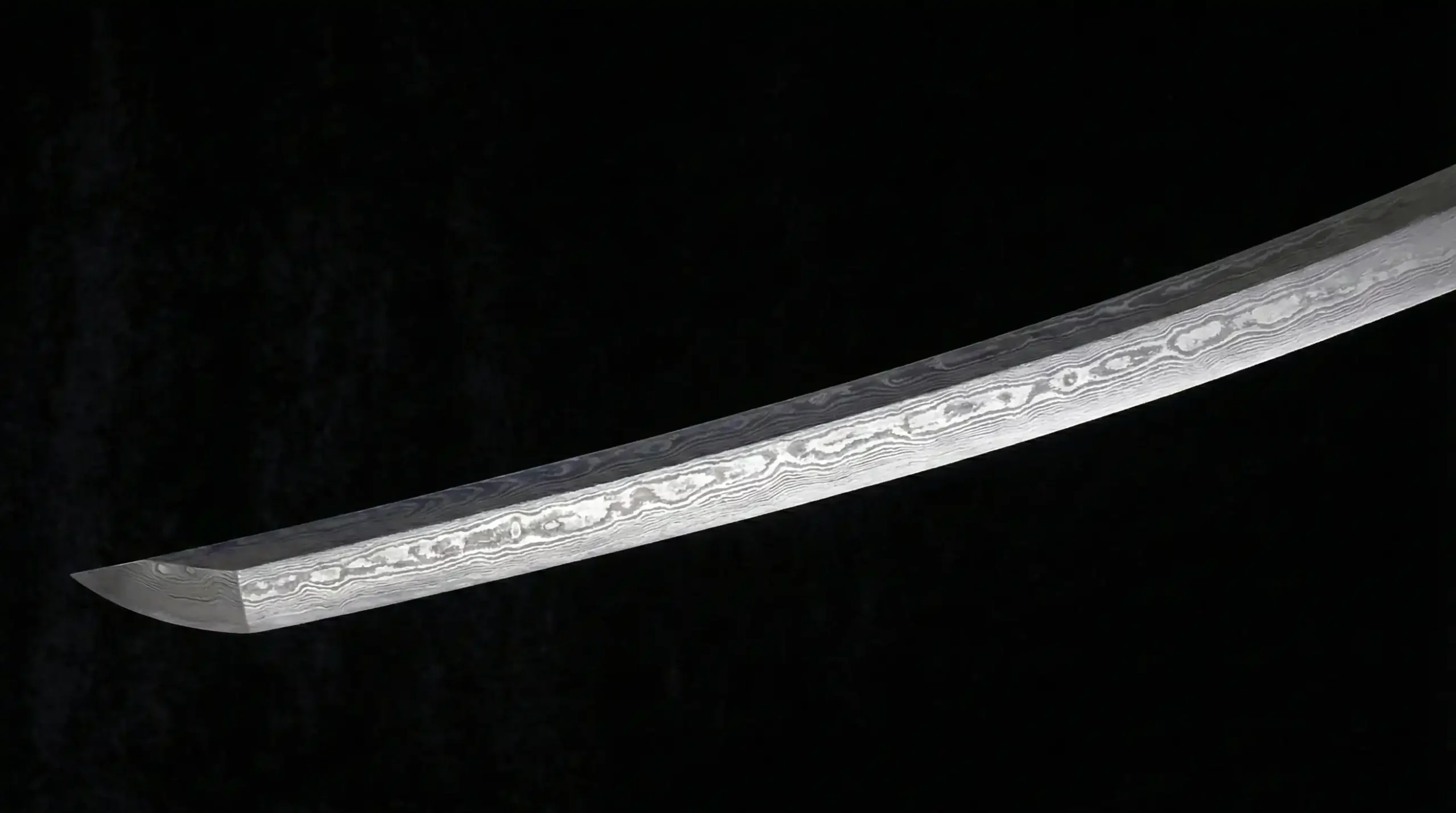
You will often see terms like forge-folded or folded 1095 or 1060. Folding is an old forging process where the smith repeatedly folds and hammer-welds the steel to mix it evenly and remove impurities. But is it actually better to pick a katana made of folded steel? Well, yes and no. Back in the day folding was needed to purify bad steel (tamahagane had lots of slag and uneven carbon, so folding made the steel cleaner, tougher, and more consistent).
Nowadays steels are already pure, so folding is not necessary for performance. Now it’s mostly done to create the beautiful layered patterns you see on the blade. It doesn’t make the sword stronger or sharper. In fact, cheap folded steel can sometimes be weaker. But if you want the patterns on your blade, go for it. Just keep in mind folded usually costs some extra bucks.
Last Words
In the end, selecting the right steel for your katana depends on what matters most to you. Some steels offer more strength, others provide smoother cutting, some allow greater bend without breaking, and certain types match traditional designs. Learning how each steel differs will help you choose wisely and appreciate your blade more. Keep in mind, steel is only one part of the equation, the skill of the swordsmith plays a bigger role in how the katana turns out. That’s why it’s best to buy from trusted and experienced makers.
Faq
Is Damascus good for katana?
Damascus katanas look beautiful, but they are mostly for display. Modern damascus is made for patterns, not performance, so it doesn’t offer better cutting or durability.
Does carbon steel rust easily?
Yes, carbon steel can rust if it’s not cared for. Unlike stainless steel, it doesn’t have chromium to resist corrosion. Regular cleaning, drying, and oiling are needed to keep the blade in good condition and prevent rust.
What is carbon in steel?
Carbon is a key element in steel that makes it harder and allows it to hold a sharp edge. The more carbon a steel has, the harder and sharper it can be, but it also becomes less flexible and more prone to chipping or breaking. Lower carbon makes the steel softer and more flexible, which helps it absorb impacts without cracking, but the edge won’t stay sharp as long.
The last two digits show the carbon percentage (e.g., 1045 = 0.45% carbon, 1095 = 0.95% carbon).
What is a laminated katana?
Lamination is another method where two steels are combined to work together as one. For example, you can mix T10 with 9260. The blade takes the hardness and sharpness from T10 and the flexibility from 9260. This creates a blade that can handle cutting and impact better than using a single steel alone. However, most mass-produced katanas are monosteel, not laminated.