We may earn revenue from the products available on this page and participate in affiliate programs. Learn more >
Whether you’re new to fencing or have years of experience, finding the right shoe is often a challenge. Some shoes lack proper support or comfort, while others wear out far too quickly.
In this article, we’ll share our research to help you find some of the best fencing shoes trusted by fencers around the world. Our picks range from budget-friendly options to high-performance models and include both non-fencing and specialized shoes. Here are our top choices:
- Best Overall: Azza 15/14
- Best Durability: ASICS Gel-Challenger 15
- Best Budget: ASICS UPCOURT 5
- Best Comfort: ASICS Gel-Rocket 8
- Best Stability: ASICS Gel-Resolution 9
- Best for Beginners: Asics Gel-Rocket 11
- Best Lightweight: YONEX Aerus Z2
Quick Comparison: Best Fencing Shoes
| Shoe | Excels In | Lacks / Not Best At | Best Suited For |
|---|---|---|---|
| Azza 15/14 | Fencing-specific design, grip, ankle/heel support, durability | Slightly heavy, stiff at first, not ideal for long sessions | Explosive fencers, competitive use |
| ASICS Gel-Challenger 15 | Durability, stability, value for money | Heavier feel, less breathable | Heavy training, durability-focused users |
| ASICS Upcourt 5 | Affordability, comfort, balanced performance, grip | Not top-tier in any area, average cushioning | Beginners, budget training |
| ASICS Gel-Rocket 8 | Comfort, shock absorption, traction, lightweight feel | Fit may feel too wide for narrow feet, laces slightly long | Long sessions, comfort-focused fencers |
| ASICS Gel-Resolution 9 | Stability, support, cushioning, secure footing | Heavy, expensive, break-in time needed | Aggressive footwork, lateral movement |
| ASICS Gel-Rocket 11 | Lightweight, comfort out of the box, beginner-friendly | Not very durable, slightly narrow fit | Beginners, casual training |
| YONEX Aerus Z2 | Ultra-lightweight, speed, breathability, responsiveness | Less durable, higher price | Fast, footwork-heavy fencers |
What Shoes Are Good For Fencing
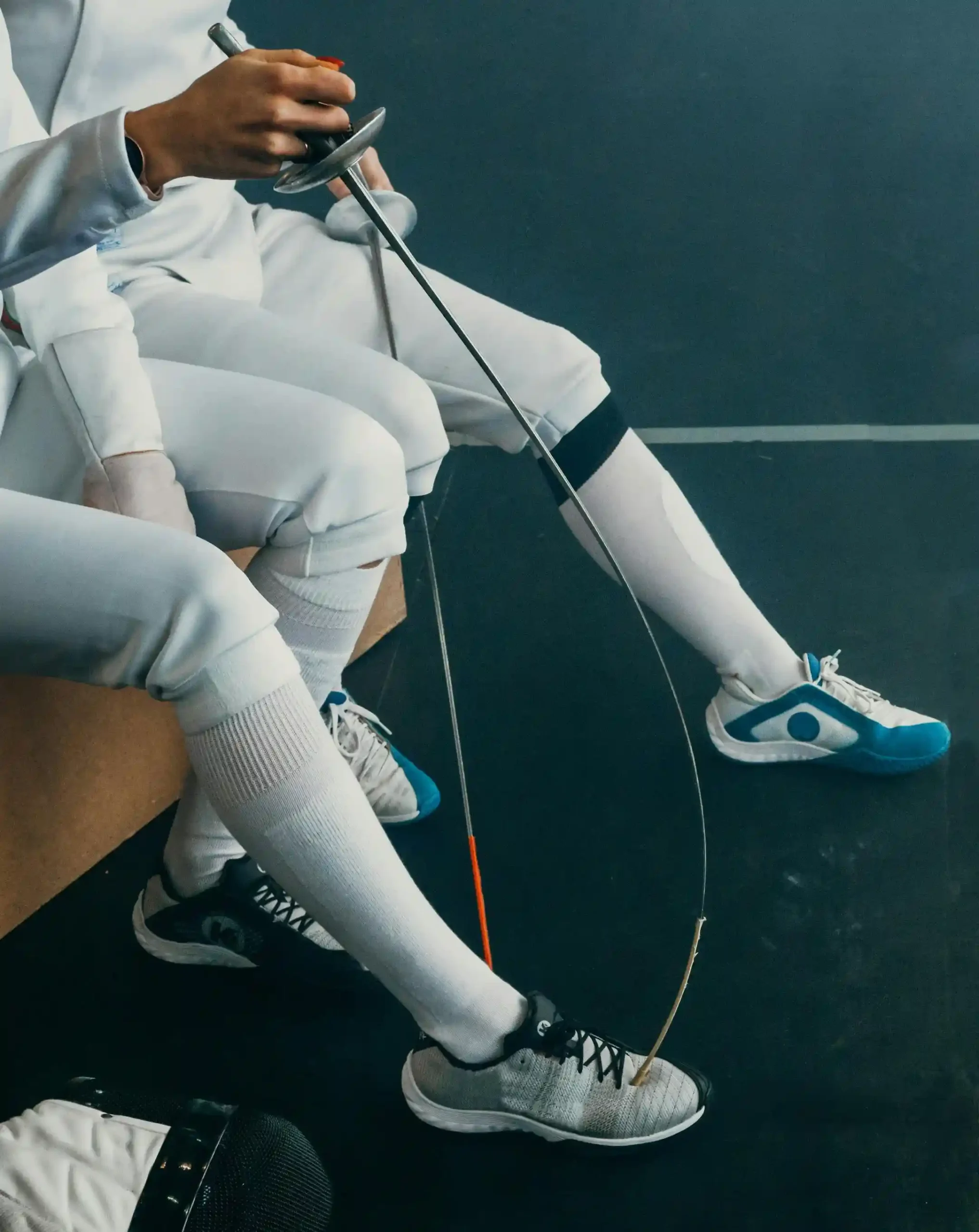
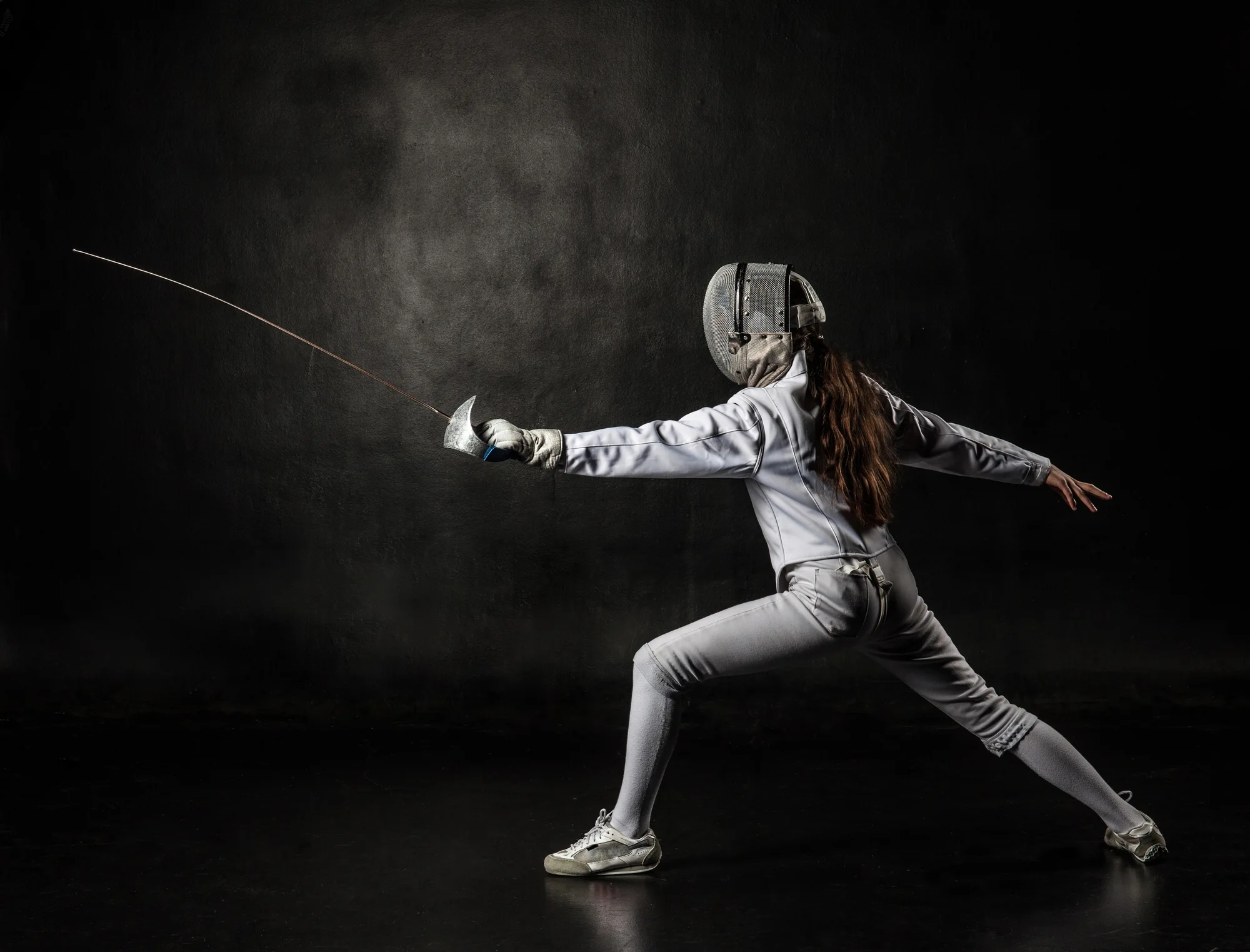
Fencing is a fast-paced sport where footwork spans in a wide variety of movements including lunges, advances, bouncing, retreats, direction changes etc.. When executing most of these moves, a lot of force is exerted, placing significant stress on the foot. To reduce this, you need shoes that:
- Offer support (heel and lateral): Your shoes should provide support so your foot doesn’t roll in, mainly during lunges or side-to-side movements.
- Offer good grip and traction: Fencing is full of sudden stops, explosive advances, and quick retreats. Without proper grip, your foot can slide at the wrong moment, which not only affects performance but also increases the risk of injury.
- Absorb landing force: This is especially important during lunges and helps protect the heel. You need a balance: not so much cushioning that it reduces stability, but not so little that it starts to hurt your feet.
You will find a variety of shoe types used for fencing. Specialized fencing shoes are the first option and are usually marketed as the best choice for the sport. The second option is indoor court shoes, such as those made for basketball, tennis, squash, or badminton. The reason fencers like to wear them is because they are more affordable, comfortable, and honestly, some of them can perform just as well, or even better, than certain fencing shoes.
That said, not every indoor shoe works well for fencing, but a good rule of thumb is to choose models with a relatively low heel. I also recommend avoiding running shoes, as they are too flexible and do not provide enough support for fencing movements.
How We Chose the Best Fencing Shoes
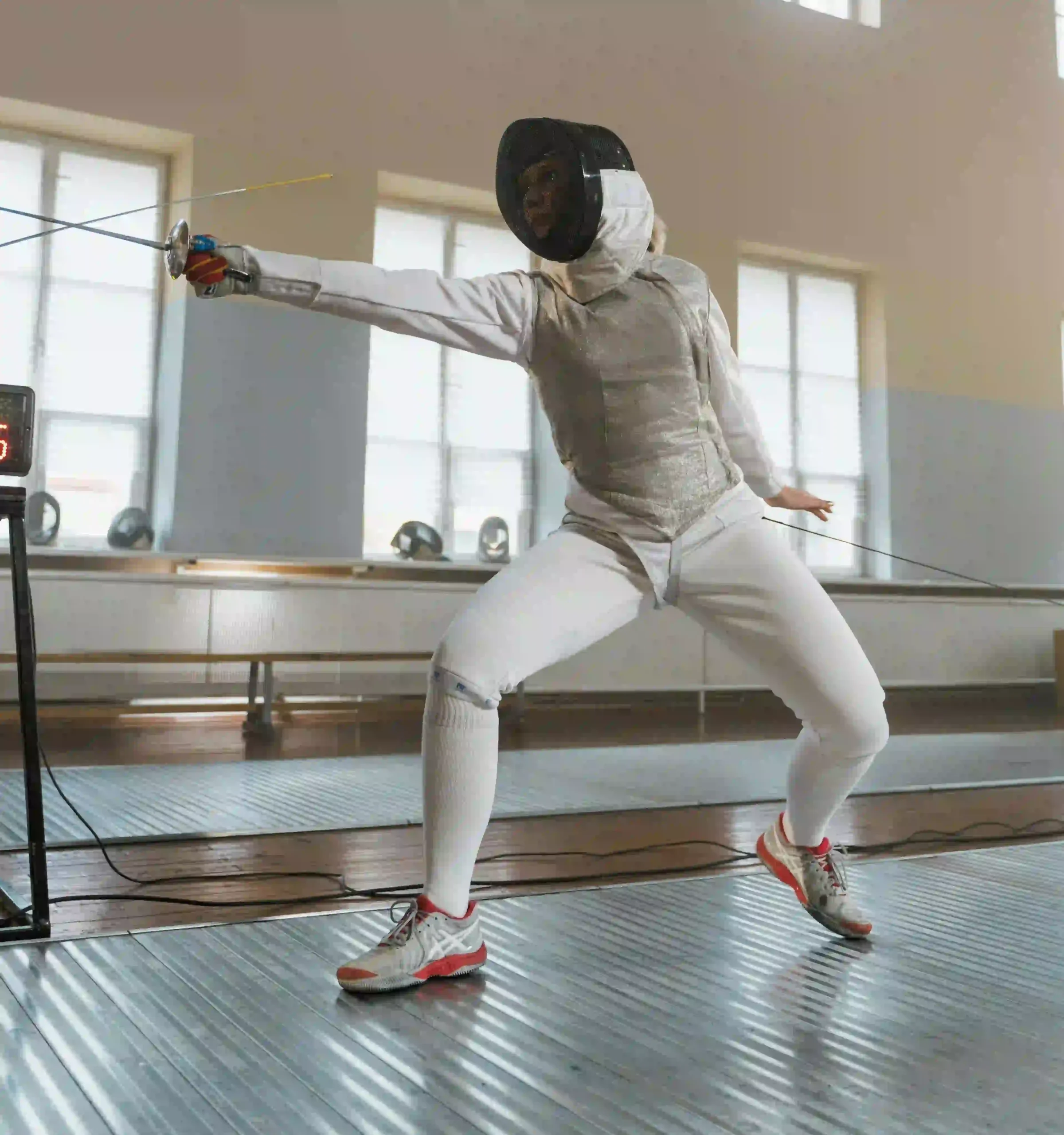
Wonder how we chose the best fencing shoe recommendations? What you see here is based on what coaches and active fencers actually use, have personally tested, and trust for their own training and competitions.
Club Feedback:
We spoke with active fencers at local clubs. These conversations gave us honest, real-world insight into which shoes truly perform well under actual fencing conditions.
Coach Perspectives:
We also consulted with experienced coaches who see a wide range of footwear. Their input helped us understand what works best for beginners versus what more advanced or elite fencers use.
Community Reviews:
We reviewed discussions from fencing forums and user feedback to get a broader perspective. We paid close attention to both the strengths of each shoe and the most common complaints to avoid recommending models that only look good on paper.
Finally, we filtered everything through five main priorities: grip, support, comfort, durability, and price. Our goal was to find a strong overall balance. While no single shoe is perfect for everyone, these are the options that have consistently proven their worth on the strip.
Best Fencing Shoes: Reviews & Recommendations
Best Overall: Azza 15/14

Pros
- 100% optimized for fencing movements
- Beautiful shoe
- Excellent heel and ankle support
- Strong grip on the piste
- Reinforced toe and lunge protection
- Comfortable
- Durable
Cons
- It may be pricey for some
- May feel a bit stiff in the beginning
- Better for explosive movement, not long sessions
| Price | $197 |
| Weight | 374 gr (US 10.5) |
| Stability | High |
| Cushioning | Moderate |
| Durability | High |
| Best Suited For | Medium to slightly wide feet |
Our best overall fencing shoe for 2026 is the AZZA 15/14. I remember back in 2021, when they first started testing, and now they have become one of the most used shoes at the elite level. Some of the fencers I have seen wearing them are Olympic gold medalist Kazuyasu Minobe and Giulia Rizzi, along with other top names like Andrea Santarelli, Cruz Schembri, and more.
The shoe has a modern, fencing-specific look with a flat, low-to-the-ground profile. It features a dual-density midsole that absorbs the impact of landings and a rubber outsole that offers maximal traction on all piste surfaces, whether dry, humid, or metallic. The outsole extends along the sides more than a typical court shoe, especially on the inner edge and toward the front, adding protection in the high-wear areas and extra support during lunges and quick recoveries.
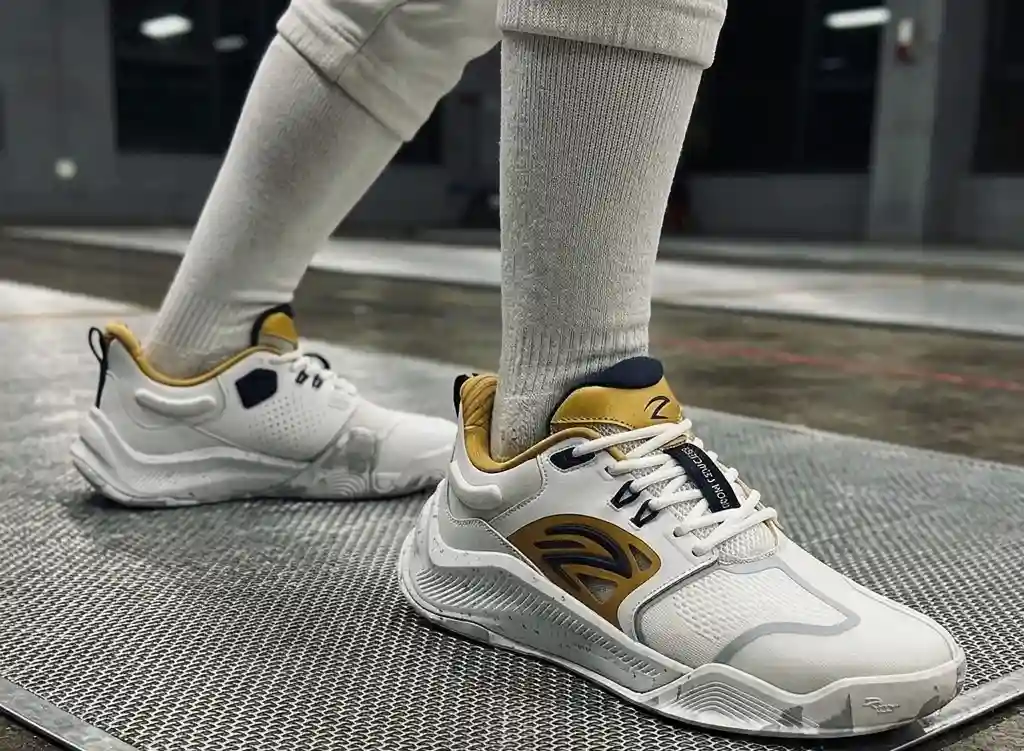
Now, for the downsides. First, they may feel a bit stiff at the beginning and can take about a week to break in. Second, they are slightly heavier than most shoes, but not to the point where it affects performance. Some may find them expensive, but honestly I think they are a great shoe, and the fact that the best fencers in the world wear them says enough. They come in at least four color variants, with the 15/14 Falcon (Gold / Dark Blue) being my favourite.
Best Durability: ASICS Gel-Challenger 15
Pros
- Very durable
- Value for money
- Great stability
Cons
- Heavier
- Less breathable
| Price | $104 |
| Weight | 360 gr (US 9) |
| Stability | High |
| Cushioning | Moderate |
| Durability | High |
| Best Suited For | Regular / Wide Feet |
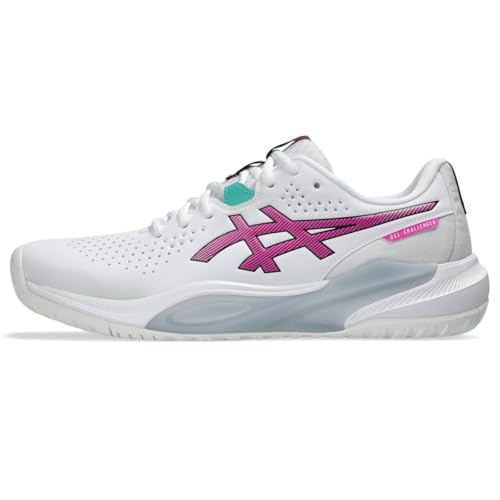
If you want the longest-lasting shoe for fencing, the Asics Gel Challenger 15 is the one. Originally designed for tennis, the Challenger 15 comes with material and construction updates that seriously improve durability over its previous versions, and it does this at a price point well below higher-end models like the Gel Resolution series, which are much more expensive and commonly seen on fencing strips.
Designed with PGuard technology, Challenger 15 features a reinforced layer around the toe and inner side of the shoe, which are the areas that usually wear out the fastest from dragging and repeated movement. The toebox is made of synthetic leather, which is more durable than mesh but less breathable. The rubber outsole located in the heel area is made using AHARPLUS technology, which is said to be approximately three times more durable than standard outsole rubbers. With the addition of WINGWALL technology, the shoe also feels stable and offers good lateral support.
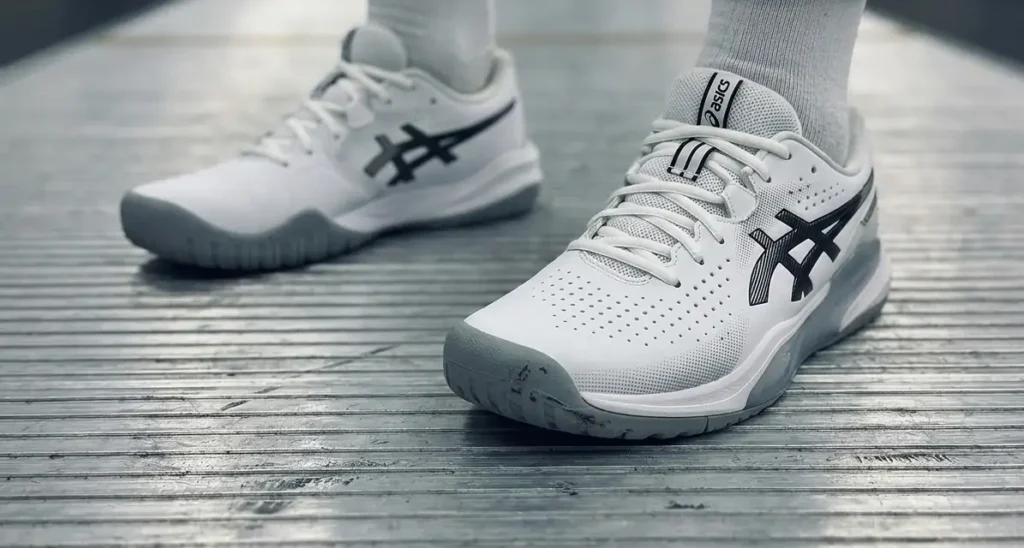
One thing to sacrifice with durability is weight. At 385g for a men’s size 9, honestly, it has some weight in it. If you are someone who prioritizes a lighter shoe above everything else, this probably is not the best choice. But if durability is what you are after, it is hard to find a better option at this price point.
Best Budget: ASICS UPCOURT 5

Pros
- Comfortable
- Good grip
- Affordable
Cons
- Short break-in period needed
- May be a bit narrow for those with wide feet
| Price | $56 |
| Weight | 316g (US 10) |
| Stability | Moderate |
| Cushioning | Moderate |
| Durability | Moderate |
| Best Suited For | Regular Feet |
Even though it has become kind of an old model at this point, the Asics Upcourt 5 is still one of the best affordable options you can use for fencing training. Priced under $60, it offers a solid overall balance across the board. It is comfortable straight out of the box and does not take long to break in. The mesh upper keeps the shoe lightweight and breathable, which you appreciate during longer sessions.
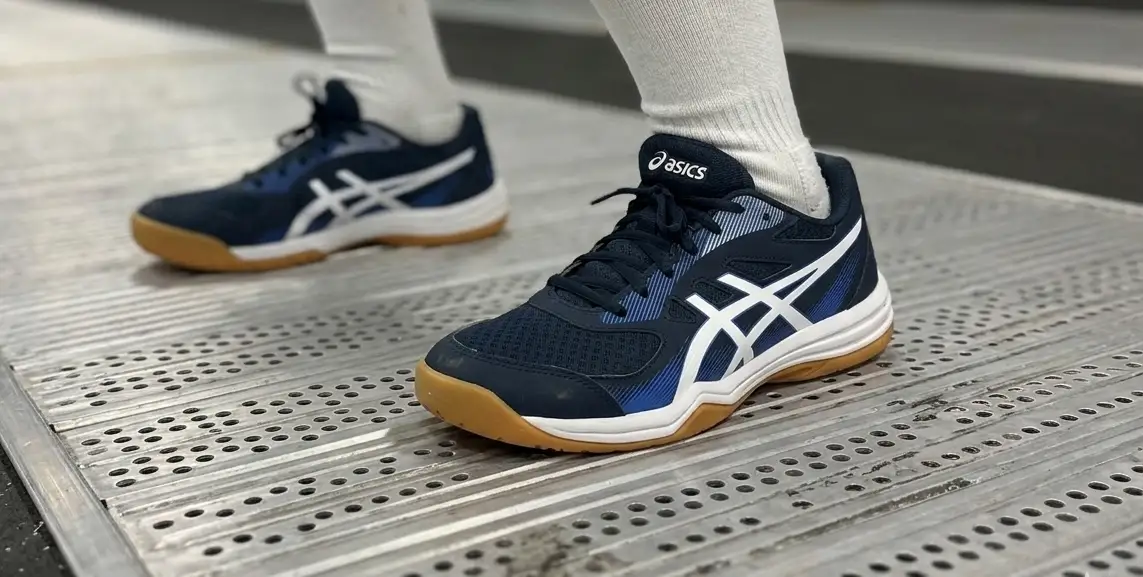
Traction is good, gripping well on all indoor courts whether wood or metal, and handles stops, advances, retreats and direction changes without issue. Cushioning is decent too, though it is not the most shock absorbing shoe out there. None of these qualities are at the highest performance level, but I would rate all of them above average, which for a shoe under $60 is hard to argue with.
Best Comfort: ASICS Gel-Rocket 8

Pros
- Excellent shock absorption
- Excellent traction
- Lightweight design
- Great for those with wide feet
Cons
- Laces may be a bit long
- May be too wide for narrow feet
| Price | $70–90 |
| Weight | 340–360 g |
| Stability | Moderate |
| Cushioning | Moderate |
| Durability | Moderate |
| Best Suited For | Regular / Wide Feet |
For the most comfortable feel on the fencing strip, we recommend Gel-Rocket 8. One of the standout features of the Gel-Rocket 8 is its GEL cushioning system. This technology is strategically placed in both the forefoot and rearfoot areas, providing excellent shock absorption during high-impact landings.
Whether you’re jumping, advancing, or making back to forth movements, the GEL cushioning helps reduce stress on your joints, allowing for a more comfortable experience throughout movements. Even though this is an earlier model compared to resolution 8 or rocket 10 for many users this is still the most comfortable.
In addition to its cushioning, it features a lightweight design, enabling quick movements without the feeling of being weighed down. The shoe also features a breathable mesh upper, which promotes ventilation and helps keep feet from sweating. Overall, the ASICS Gel-Rocket 8 combines these key elements, cushioning, lightweight design, breathability, and support.
Best Stability: ASICS Gel-Resolution 9

Pros
- Best stability
- Great cushioning
- Suportive
Cons
- Heavier
- Expensive
- May take some time to break in
| Price | $181 |
| Weight | 393g (US 9) |
| Stability | Very high |
| Cushioning | Medium |
| Durability | High |
| Best Suited For | Regular / Slightly Wide Feet |
The Asics Gel Resolution 9 is the stability standout on this list. The key upgrade over the previous Resolution 8 is a longer Dynawall, the rigid panel running along the outer edge of the shoe. On the Resolution 8 this support only covered the midfoot, but version 9 extends it all the way back to the heel. This creates a high sidewall that keeps your foot from sliding over the edge during aggressive side to side movements, which noticeably lowers the risk of ankle rolls.
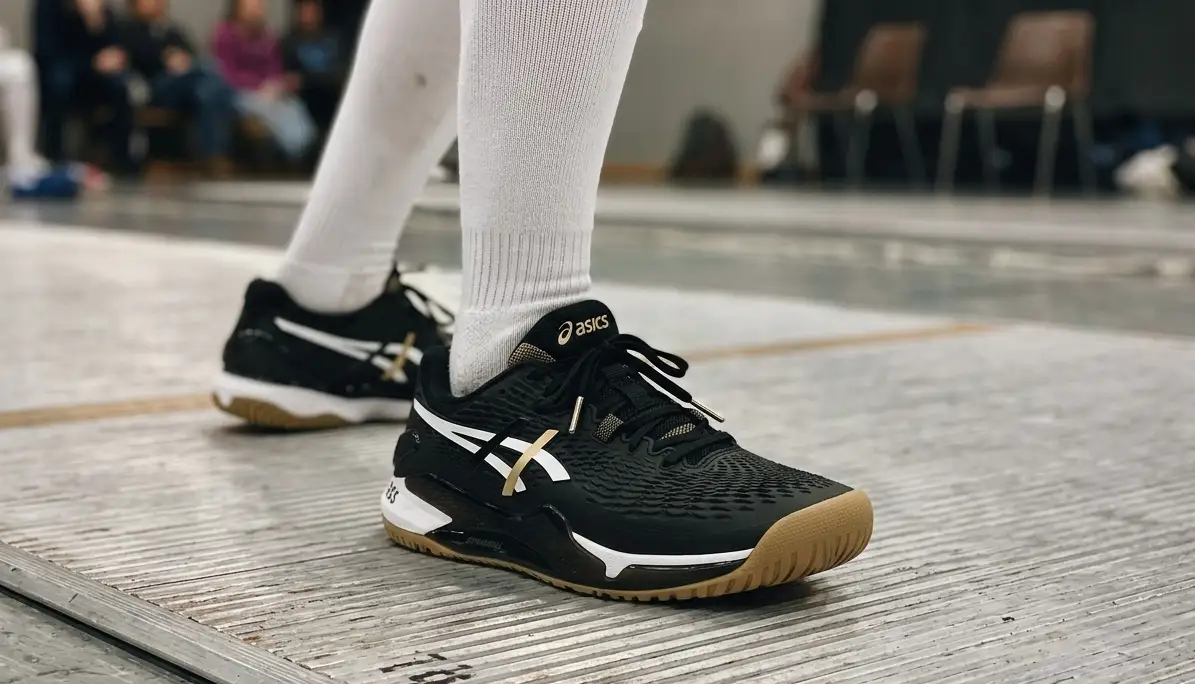
Despite how stiff and heavily built the shoe looks, it actually moves and bends better than you would expect, though it does take some time to break in. The outsole is completely flat and in full contact with the ground, which gives you a better grip on the strip and a more secure base for stopping and starting. Shock absorption on hard landings is also great.
Best for Beginners: Asics Gel-Rocket 11

Pros
- Affordable
- Lightweight
- Comfortable straight out of the box
Cons
- May fit narrow for wider feet
- Not the most durable
| Price | $76 |
| Weight | 320 gr (US 9) |
| Stability | Moderate |
| Cushioning | Moderate |
| Durability | Moderate |
| Best Suited For | Regular / Wide Feet |
If you are just starting out your fencing journey and are not sure what shoe to go for, the ASICS Gel Rocket 11 is a very solid choice. It is not originally designed for fencing, but it is widely used and recommended by beginners — and for good reason. The shoe is lightweight and comfortable from the first session, so you can focus on learning the basics rather than worrying about your feet.
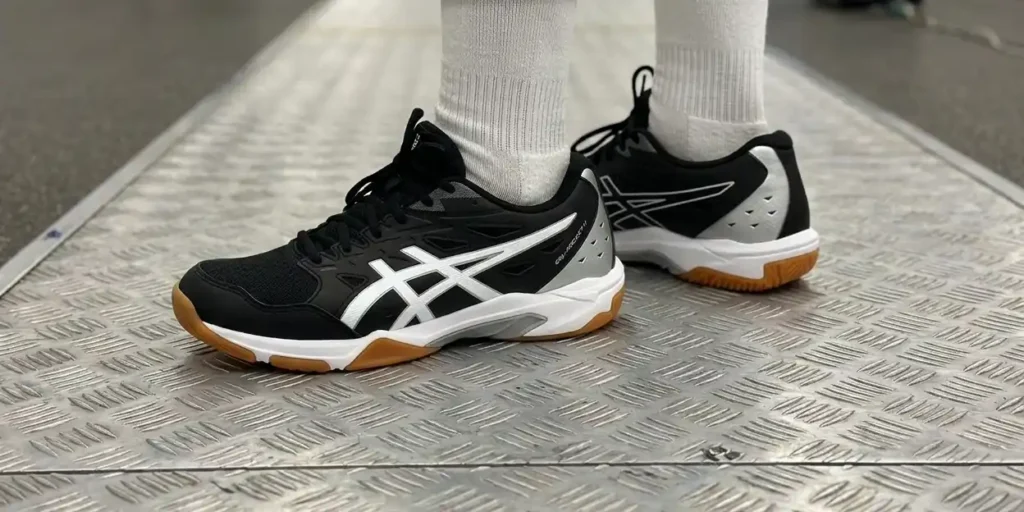
The GEL cushioning handles the impact of lunges well, the midfoot support keeps you stable during lateral movements, and the flexible outsole lets the shoe move naturally with you on the strip. The mesh upper also keeps things breathable during longer practices. At this price point, it is hard to find a court shoe that handles fencing movement this well. A good starting point before you invest in a dedicated fencing shoe.
Best Lightweight: YONEX Aerus Z2

Pros
- Extremely lightweight
- Breathable
- Excellent traction and response
Cons
- Less durable than heavier builds
- Expensive
| Price | $169 |
| Weight | 240 gr (US 9) |
| Stability | Moderate |
| Cushioning | Moderate |
| Durability | Moderate |
| Best Suited For | Narrow / Regular Feet |
The Yonex Aerus Z2 is a very lightweight shoe designed for speed and agility. Weighing only 240 grams in a size 9, it is one of the lightest options you can use for fencing. It has a minimal and thinner look compared to most shoes on this list. The upper uses Double Raschel Mesh and Durable Skin Light, which replace heavier layered materials with a thin seamless structure that is light, durable and breathable.
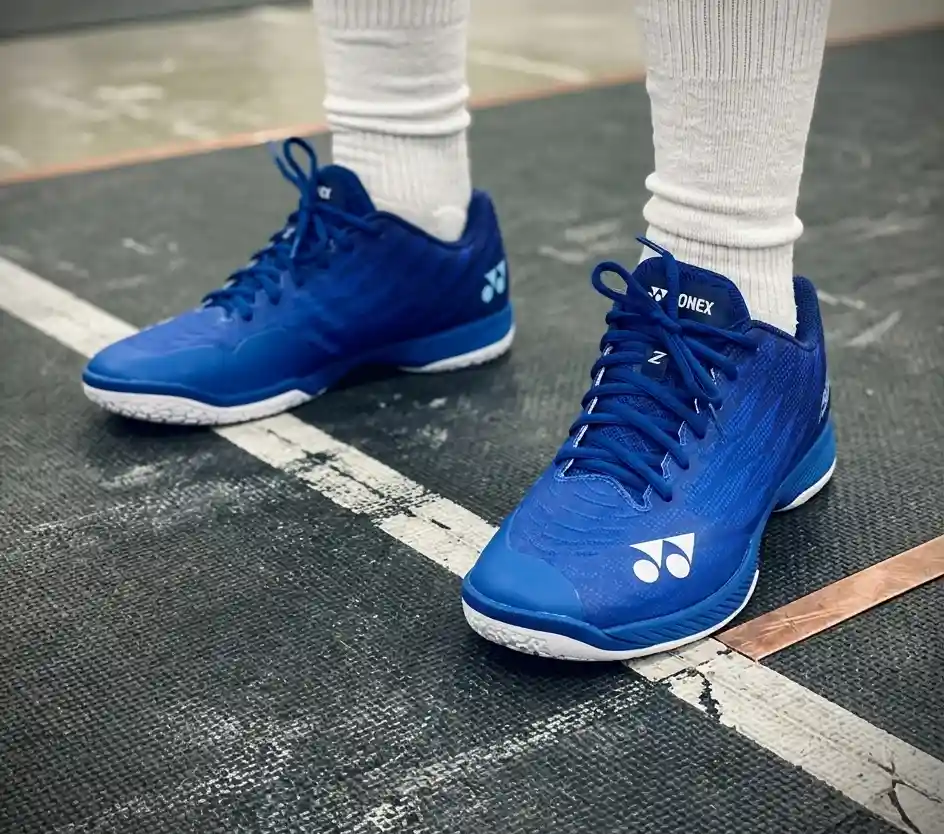
The midsole is made of msLITE X foam, one of the lightest cushioning materials out there, and it still absorbs landings well. From the feedback we gathered they are very comfortable. Traction is good, advances and retreats feel responsive, and foot dragging is handled well too. There are two things to keep in mind on the downside though. The thinner design probably won’t last as long as heavier more reinforced shoes, and the price is kind of high, so that is something to factor in depending on what you are looking for.
How to Choose a Fencing Shoe
Choosing the correct fencing shoe is crucial for performance and injury prevention. Consider these key factors when making your selection.
Do You Have Wide Feet or Narrow Feet?
Feet vary from person to person. If you have wide or narrow feet, finding the right fit can be more of a challenge. For those with a more average width, it is usually simpler. Whatever your case, your fencing shoe should match your natural foot shape and prioritize how it accommodates your foot rather than relying solely on brand popularity or general reviews.
Does Weight Matter More Than Durability — Or Is It the Other Way Around?
One of the things that comes with durability is weight. Heavier shoes tend to last longer. What you prioritize between the two is a personal choice, but keep in mind that weight does affect how the shoe feels and performs over time.
How Much Cushioning Do You Actually Need?
Cushioning is also a personal preference. Fencing shoes are generally low to the ground and do not have a lot of it by design. That is not a bad thing. Cushioning absorbs impact but too much of it can affect your stability on the strip. Finding the right balance matters for both comfort and performance.
Should Your Fencing Shoe Be Flexible or Stiff?
Fencing shoes are neither very flexible nor very stiff. You want a sole firm enough to support you when you push off, lunge, or recover, but not so stiff that it limits your movement.
There are a few simple tests you can do in the store before buying:
- Bend the shoe. It should flex at the toes, not in the middle.
- Twist the shoe. You should feel moderate resistance, not a shoe that folds easily.
- Stand on one foot and do a lunge. If the shoe feels unstable, it is probably too soft.
The Strip Surface
Most fencing takes place on either metal pistes or indoor gym floors (wood or rubber), and each surface changes how your shoes feel underfoot.
Metal Strips: Used in most competitions. These are hard and offer consistent grip, but they can feel unforgiving over long sessions. If you fence mostly on metal, having good cushioning—especially in the heel—can make a noticeable difference.
Wood or Rubber Floors: Common in clubs. These surfaces have more give but can become slippery when dusty. Shoes with good traction, especially gum rubber outsoles, tend to perform better here.
Last Words
No matter if you fence with epee, foil, or sabre, the shoes you wear can really affect how you perform. Choose a pair that gives you solid support, good cushioning, and strong traction. You don’t need to buy specialized fencing shoes right away. Many regular athletic shoes offer the same features you need for fencing, often at a lower price and with performance that can even match or beat the specialized ones.