We may earn revenue from the products available on this page and participate in affiliate programs. Learn more >
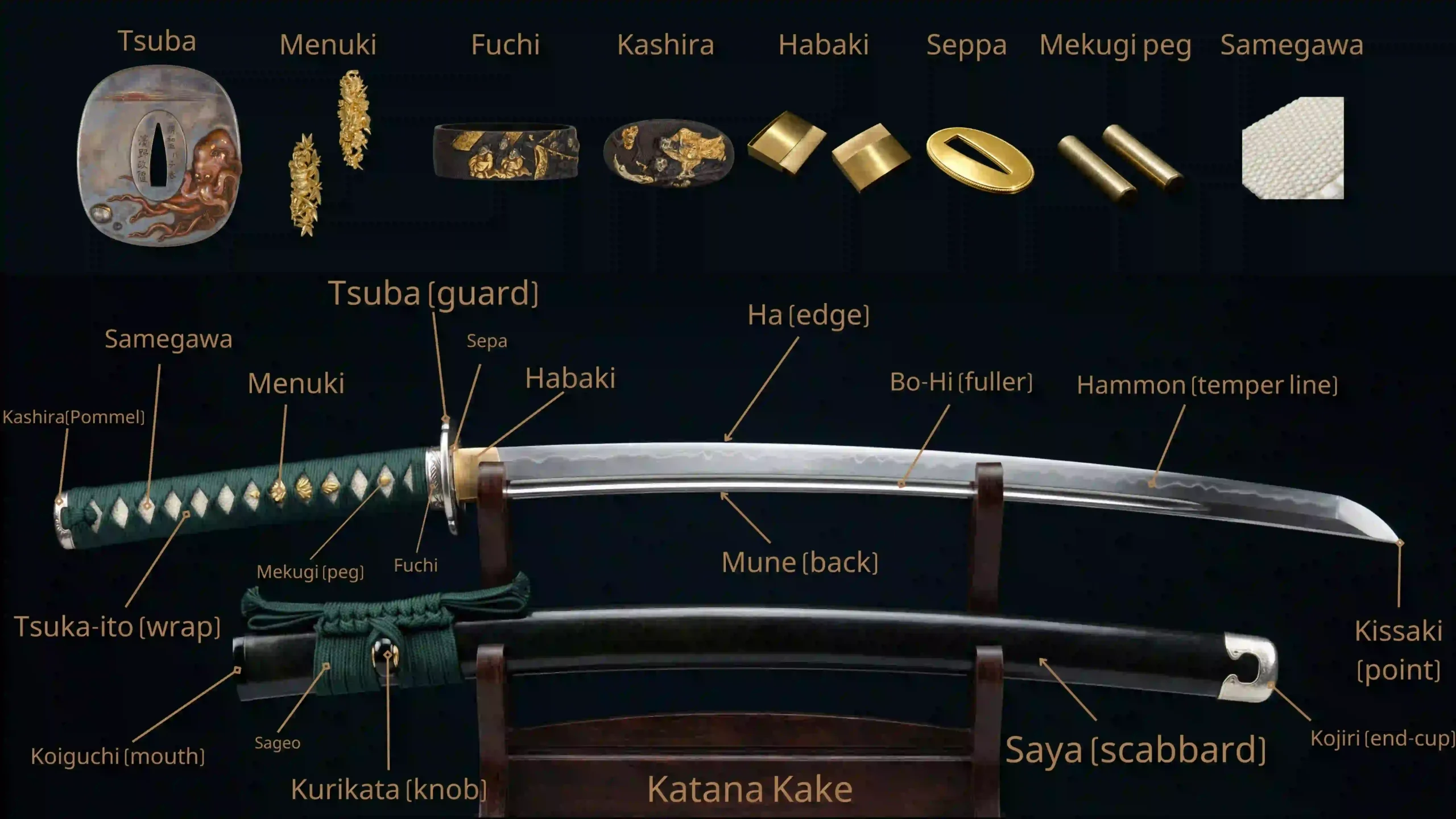
A samurai katana, like any sword, consists of two main parts: the blade and the hilt. But if you want to better understand the elements that make up these two sections, read on, and I’ll walk you through each part, while explaining their role.
Parts of the Blade
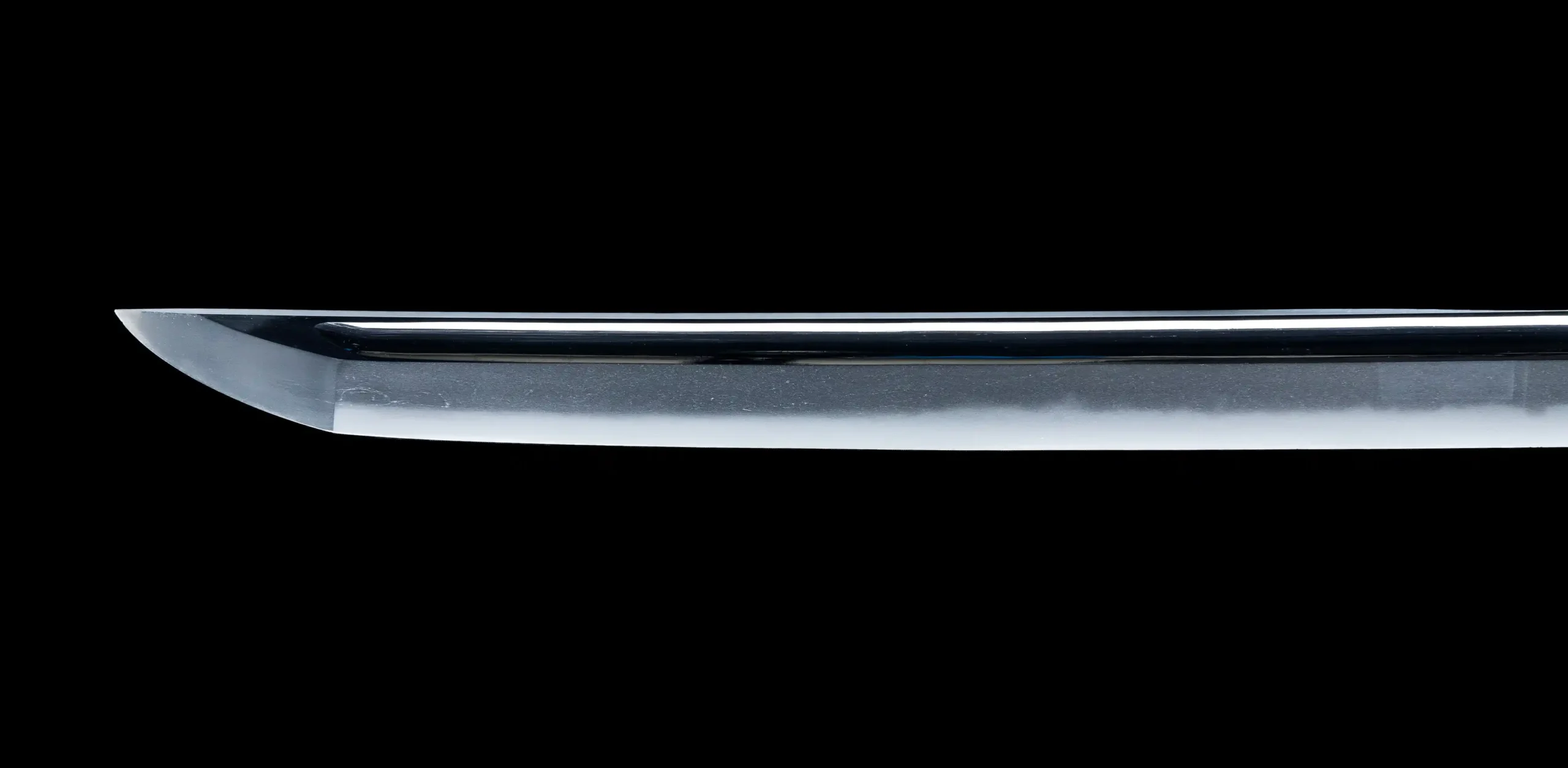
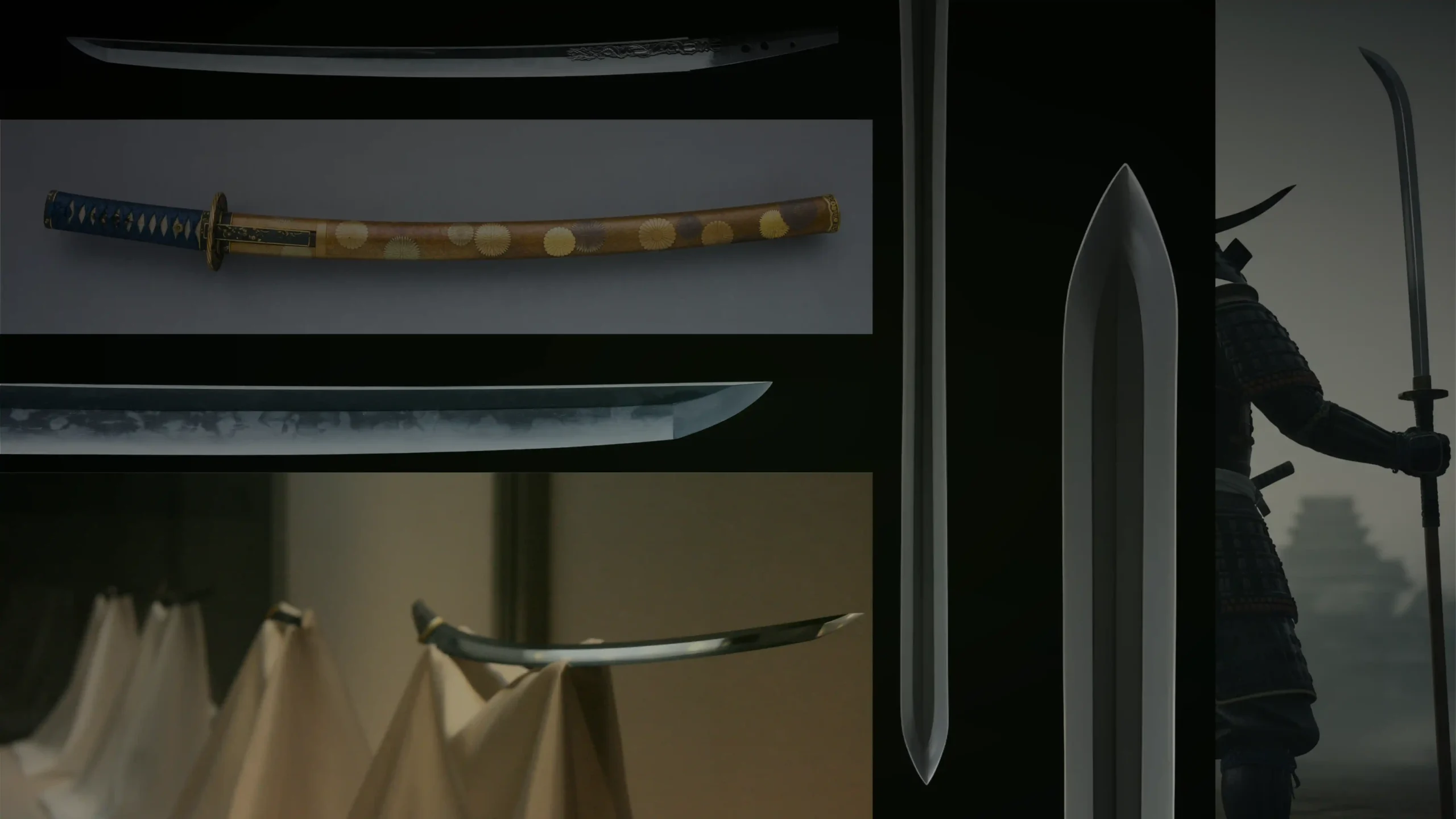
The blade of a katana, or tōshin in Japanese terminology, comes in different lengths and shapes. Based on these characteristics, they are categorized in different ways. However, the basic structure remains the same across all katanas.
Ha (Edge)
Ha refers only to the sharp-cutting edge. In traditionally made katanas, this part is harder than the rest.
Mune (Spine)
The back of the blade is called mune. In traditionally made katanas, this is the softer and more flexible part of the blade, helping it absorb stress without breaking.
Kissaki (Tip)
Kissaki refers to the tip of the sword. It is designed for piercing and stabbing, often featuring its own unique geometry and hardening.
Hamon (Temper Line)
Clay-tempered katanas show a visible pattern along the edge called hamon. The hamon comes in different types and forms.
Nakago (Tang)
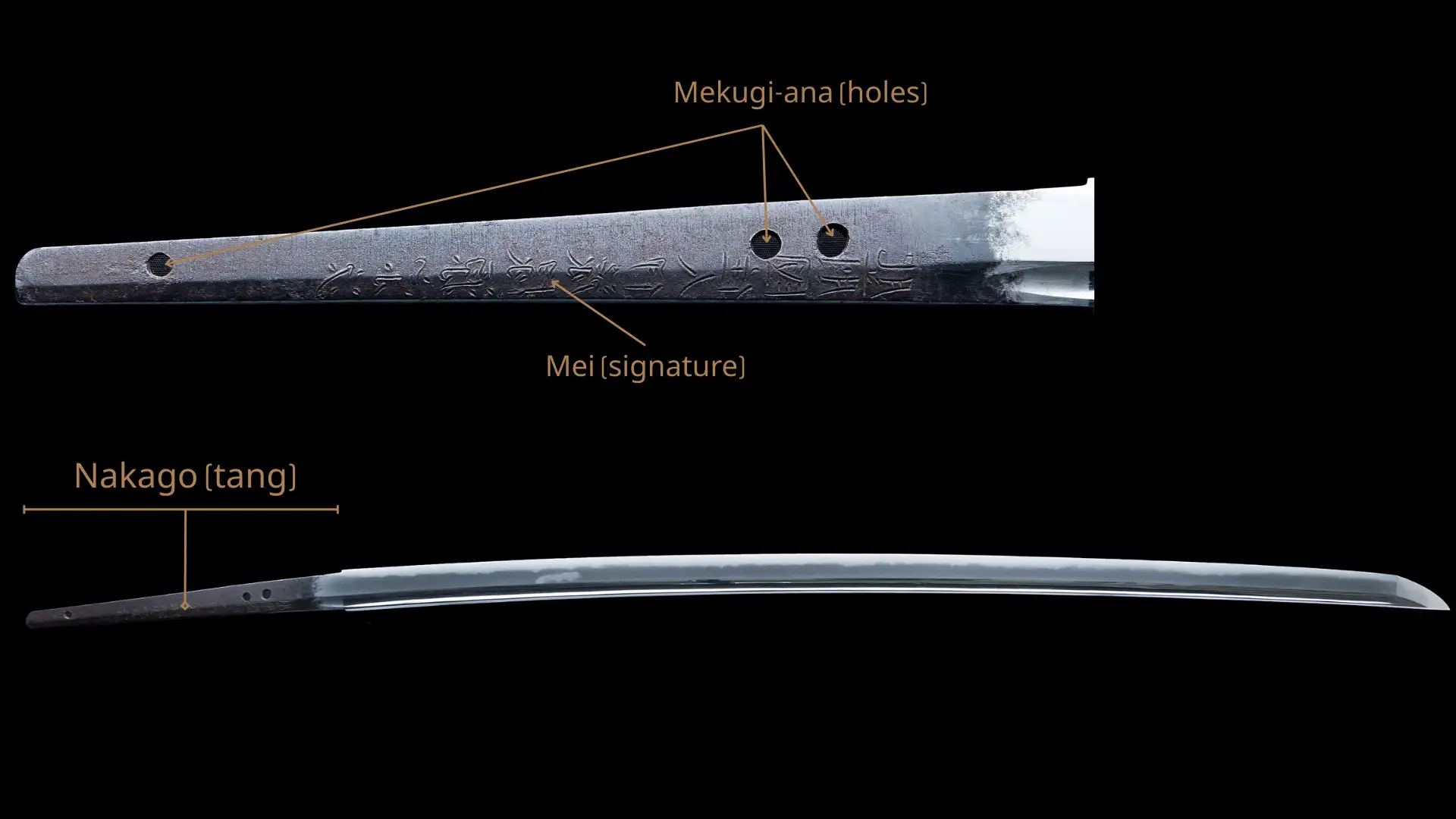
The nakago, or tang, is the part of the blade that extends into the handle. It usually contains one, two, or three holes where the pegs (mekugi) are inserted to secure the blade in place, and it often bears the blacksmith’s signature.
Shinogi (Ridge Line)
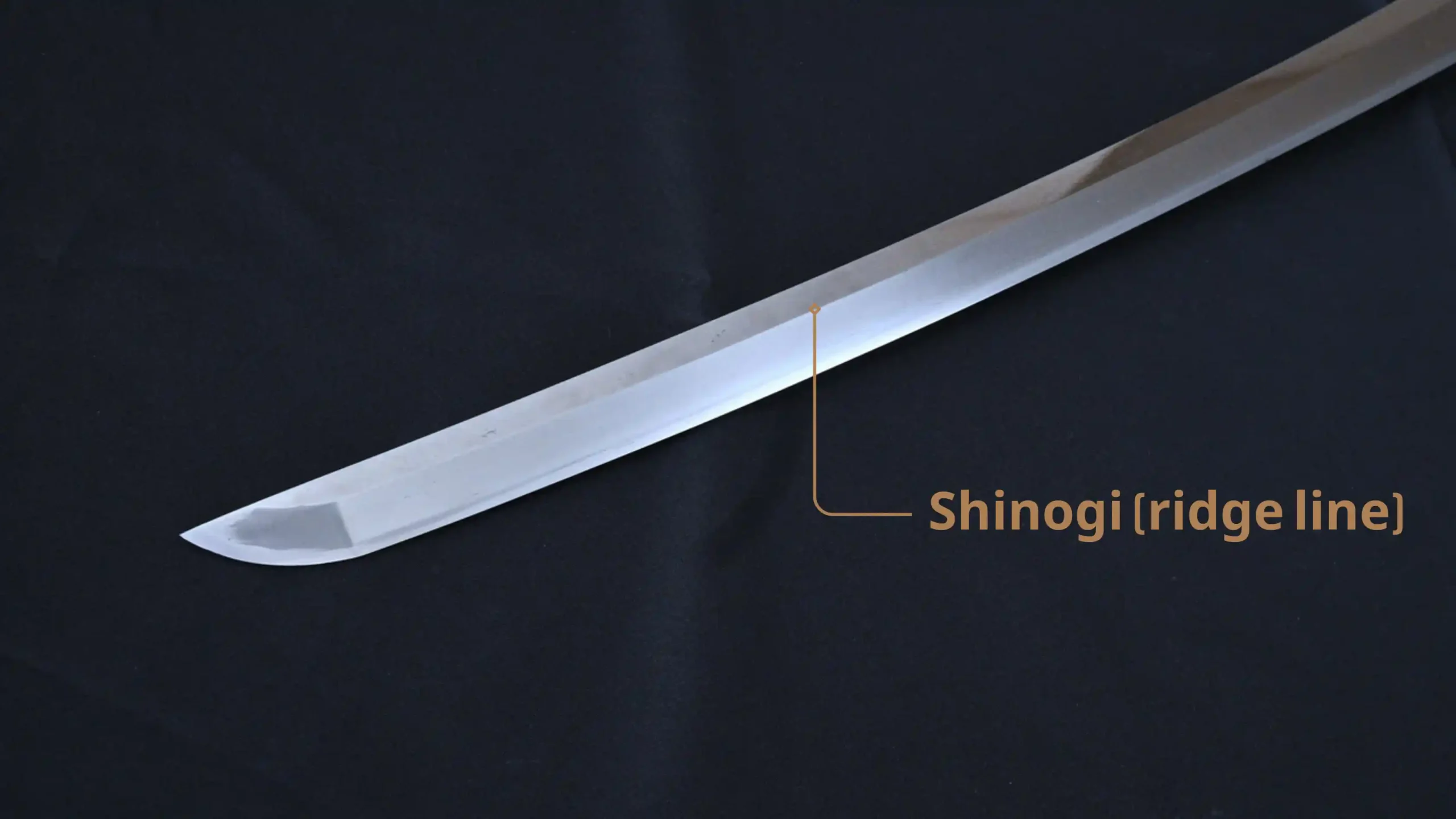
The raised line running along the side of the blade is called the shinogi. Most heavy-cutting katanas follow the shinogi-zukuri style, featuring a prominent ridge line, with or without a bo-hi. The shinogi adds strength to the blade and influences cutting performance. Variations in its height and position affect how the blade behaves: a higher shinogi performs better against harder targets, while a lower shinogi is more effective on softer materials.
Bo-hi (Groove or Fuller)
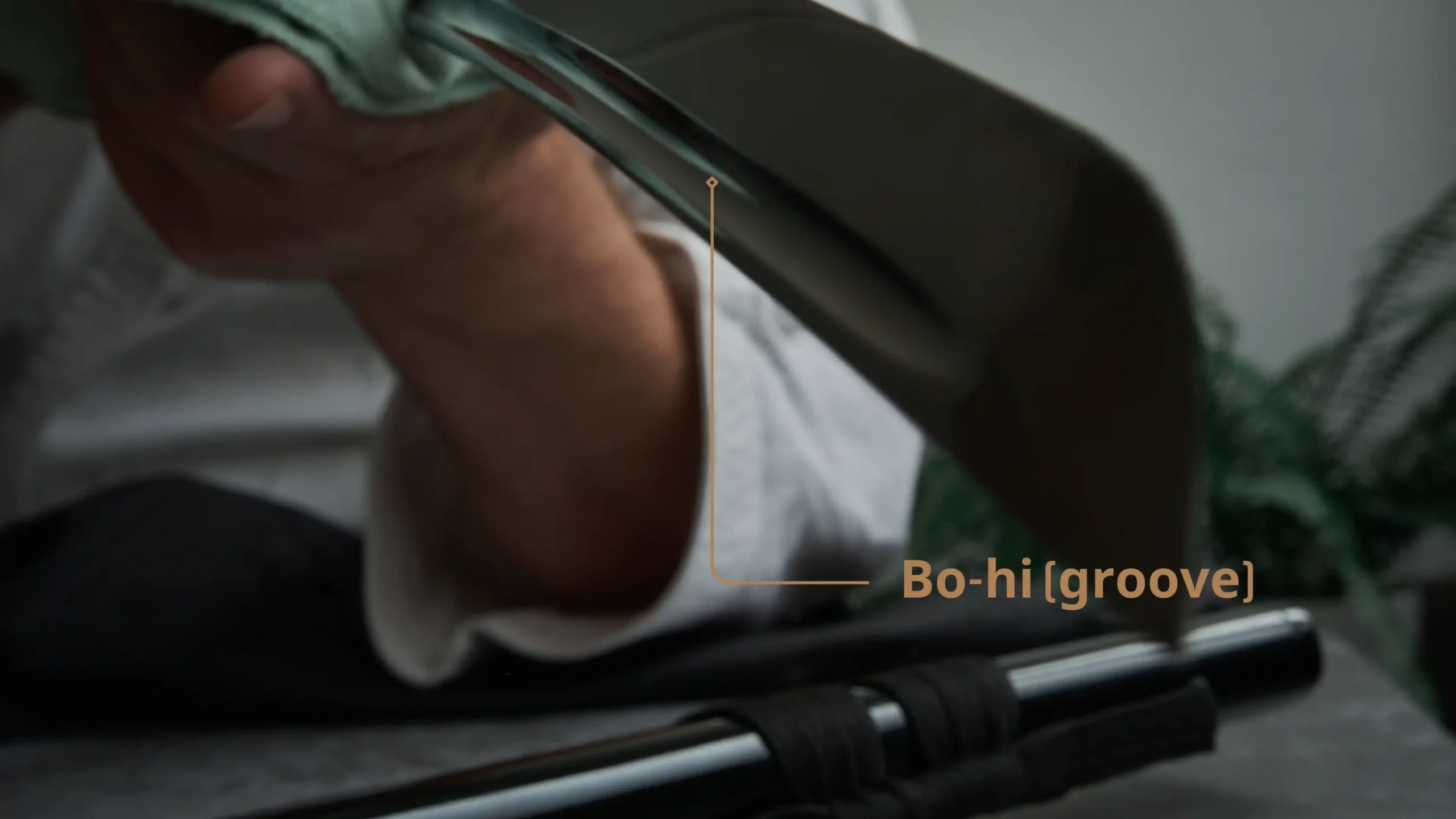
Often called a “blood groove,” its primary function is to lighten the blade and shift the balance without compromising strength. Not all katanas feature a bo-hi.
Parts of the Handle (Tsuka)
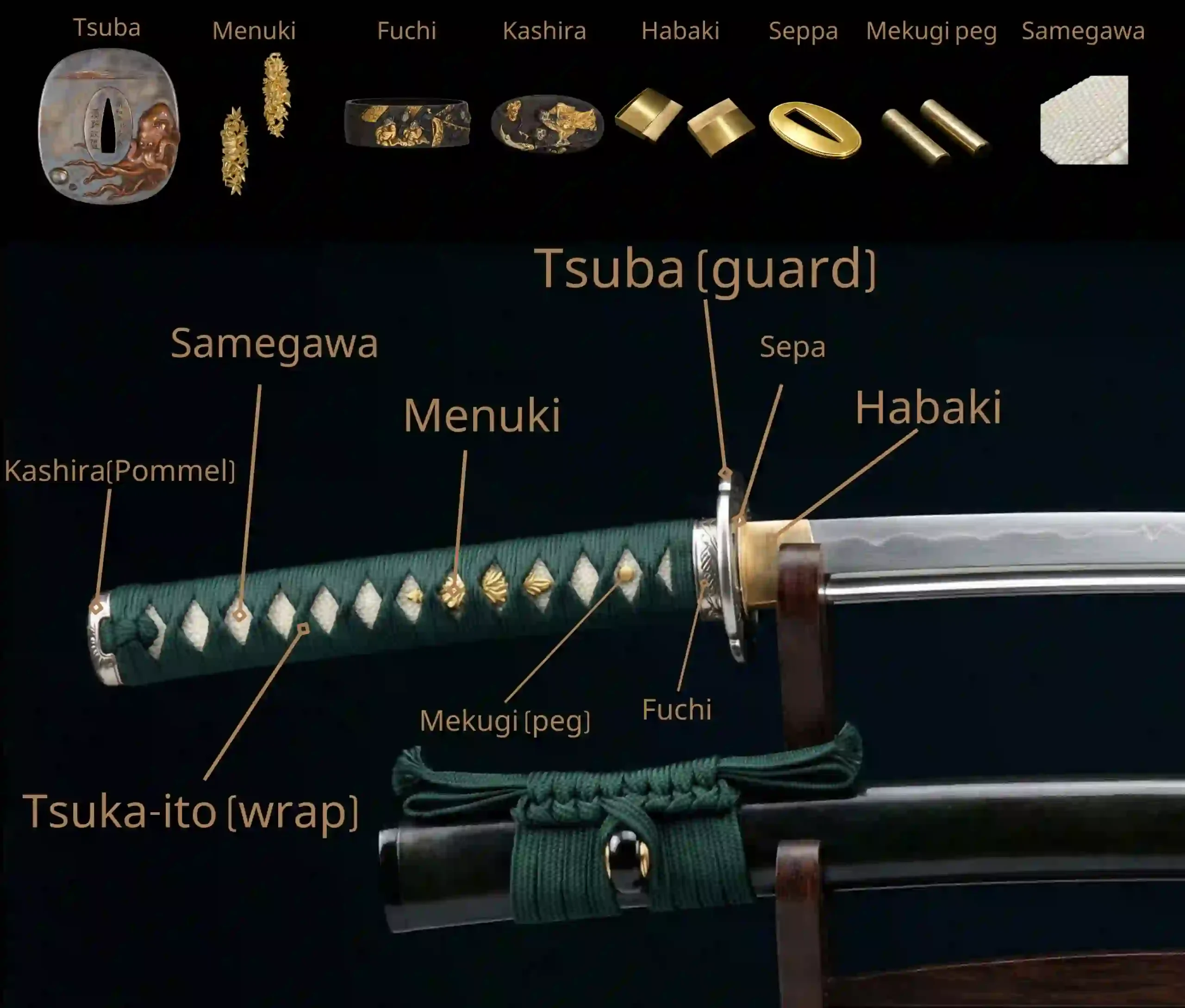
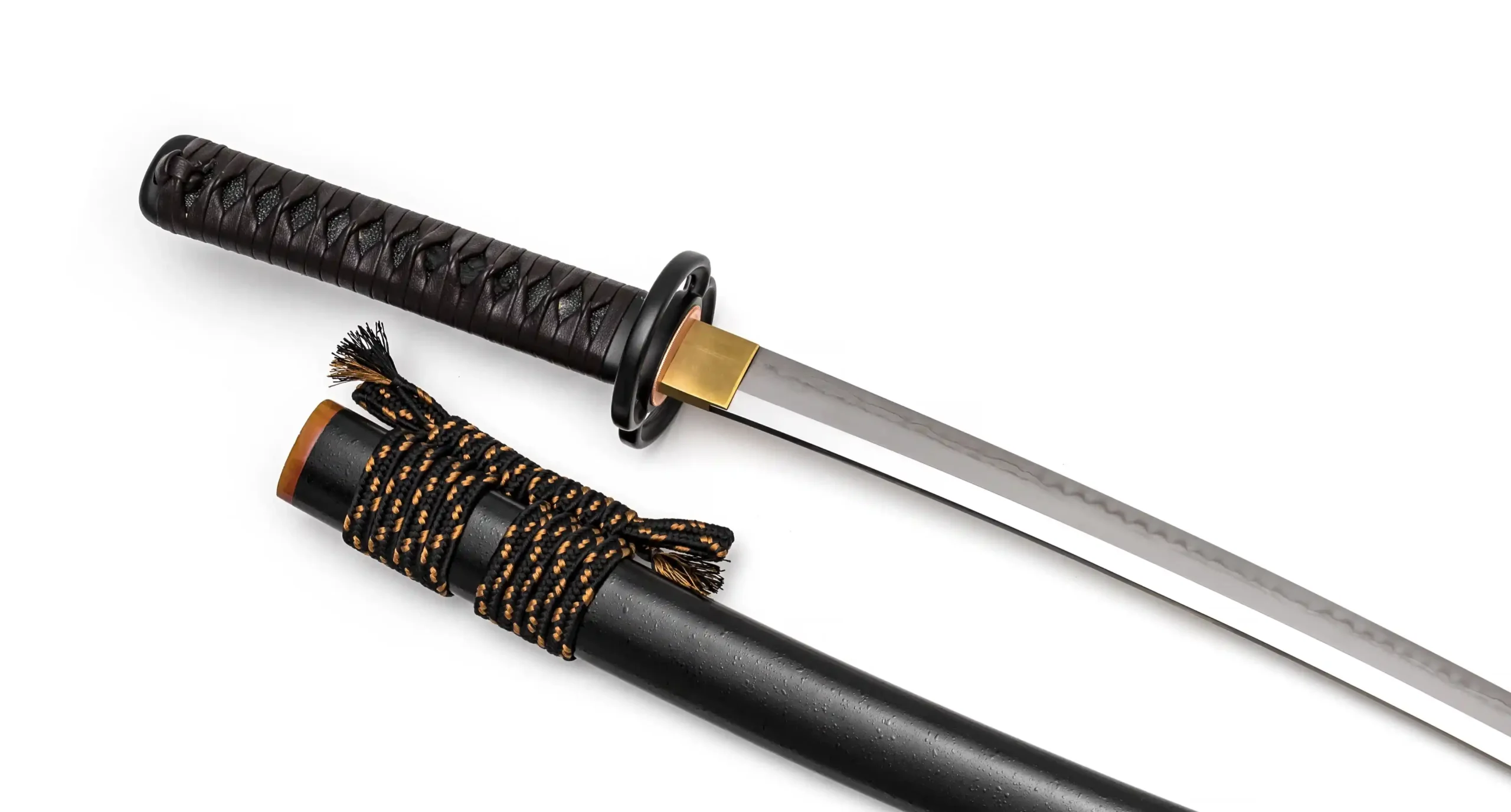
The handle, or tsuka is more than just a grip; it is a complex assembly of materials designed to give the wielder maximum control and prevent the blade from slipping out of the hand.
Tsuka-ito (Wrap Cord)
The physical cord or braid (silk, cotton, or leather) used to perform the wrap.
Samegawa (Ray Skin)
The skin of a ray or shark. Its nodes act like “hooks” to keep the tsuka-ito from sliding during use.
Menuki (Ornaments)
Small metal charms tucked under the wrap. They help your fingers find a secure grip and balance the sword.
Mekugi (Bamboo Peg)
The small peg that goes through the tang hole (Mekugi-ana). It is the only thing physically locking the blade to the handle.
Kashira (Pommel Cap)
The end-cap of the handle. It secures the final knot of the tsuka-ito and protects the wood core.
Fuchi (Collar)
The metal ring at the top of the handle. It reinforces the wood so it doesn’t split under the pressure of the tang.
Seppa (Spacers)
Thin washers that sit on either side of the guard (Tsuba) to ensure everything fits tight without rattling.
Parts of the Scabbard (Saya)
The saya, or scabbard, is an important part of the sword. Even though it is not a direct part of the functional blade, it houses and protects it when it is not in use. The saya is made up of the following parts:
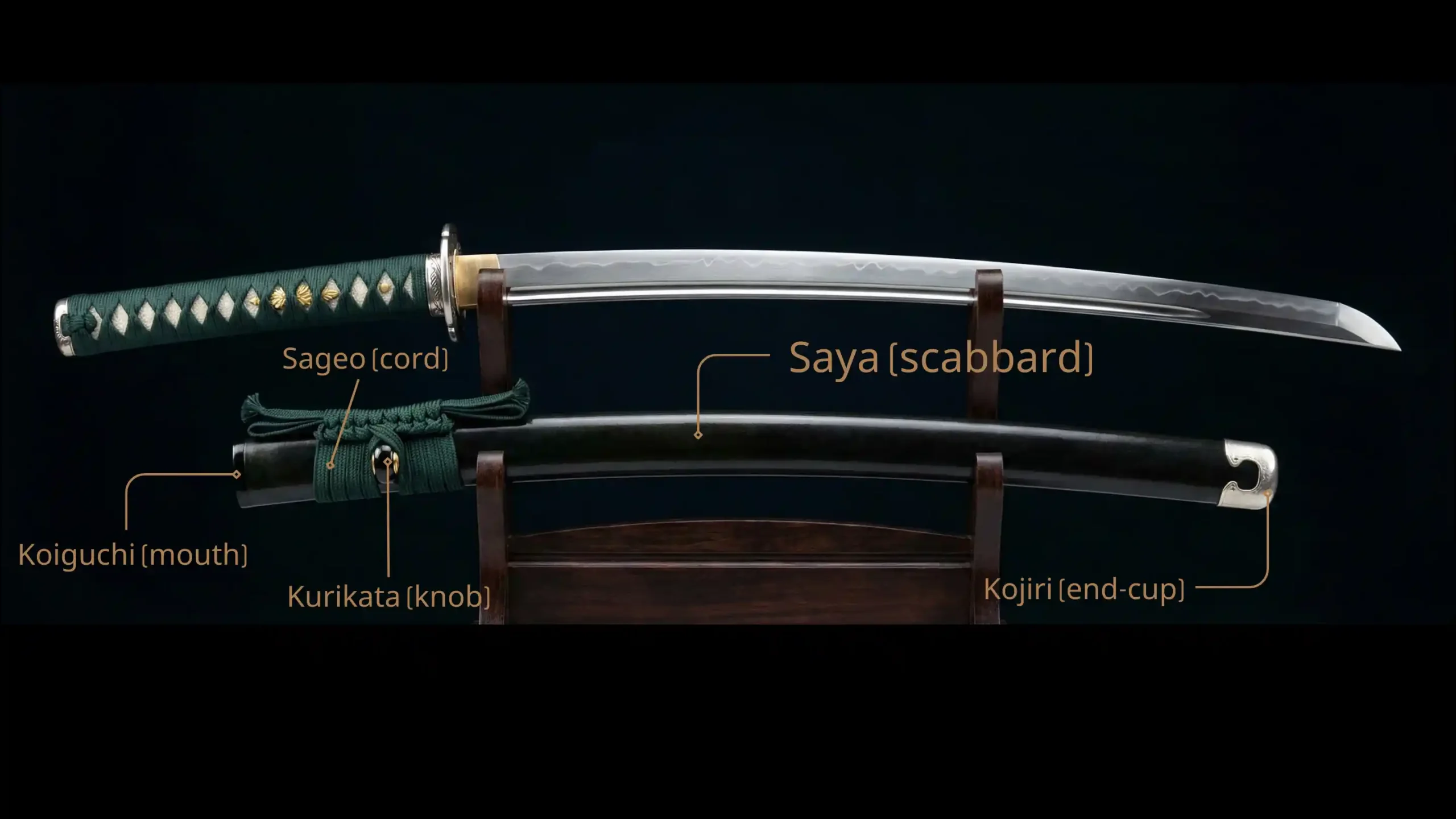
Koiguchi (Mouth of the Scabbard)
The koiguchi is the reinforced opening of the scabbard where the blade enters. It helps protect the saya from wear and keeps the blade seated properly.
Kurikata (Cord Knob)
The kurikata is the small knob on the side of the scabbard used to secure the sageo cord. It helps with carrying and tying the sword.
Sageo (Cord)
The sageo is the cord attached to the scabbard and tied around the belt or armor. It helps secure the katana when worn and can also be used for practical or decorative purposes.
Kojiri (End Cap)
The kojiri is the reinforced end of the scabbard. It protects the saya from damage and adds durability, especially when the scabbard rests on the ground.
Last Words
When it comes to Japanese swords, descriptions are often made using Japanese terms for their parts. Understanding these components will help you make easier and smarter decisions, especially if you are buying a custom katana or reading the specifications of a ready-made one where the terms might otherwise be confusing.
Beyond making a purchase, knowing these elements will help you understand the soul of the sword, maintain it more effectively, and use it with greater confidence and safety.