We may earn revenue from the products available on this page and participate in affiliate programs. Learn more >
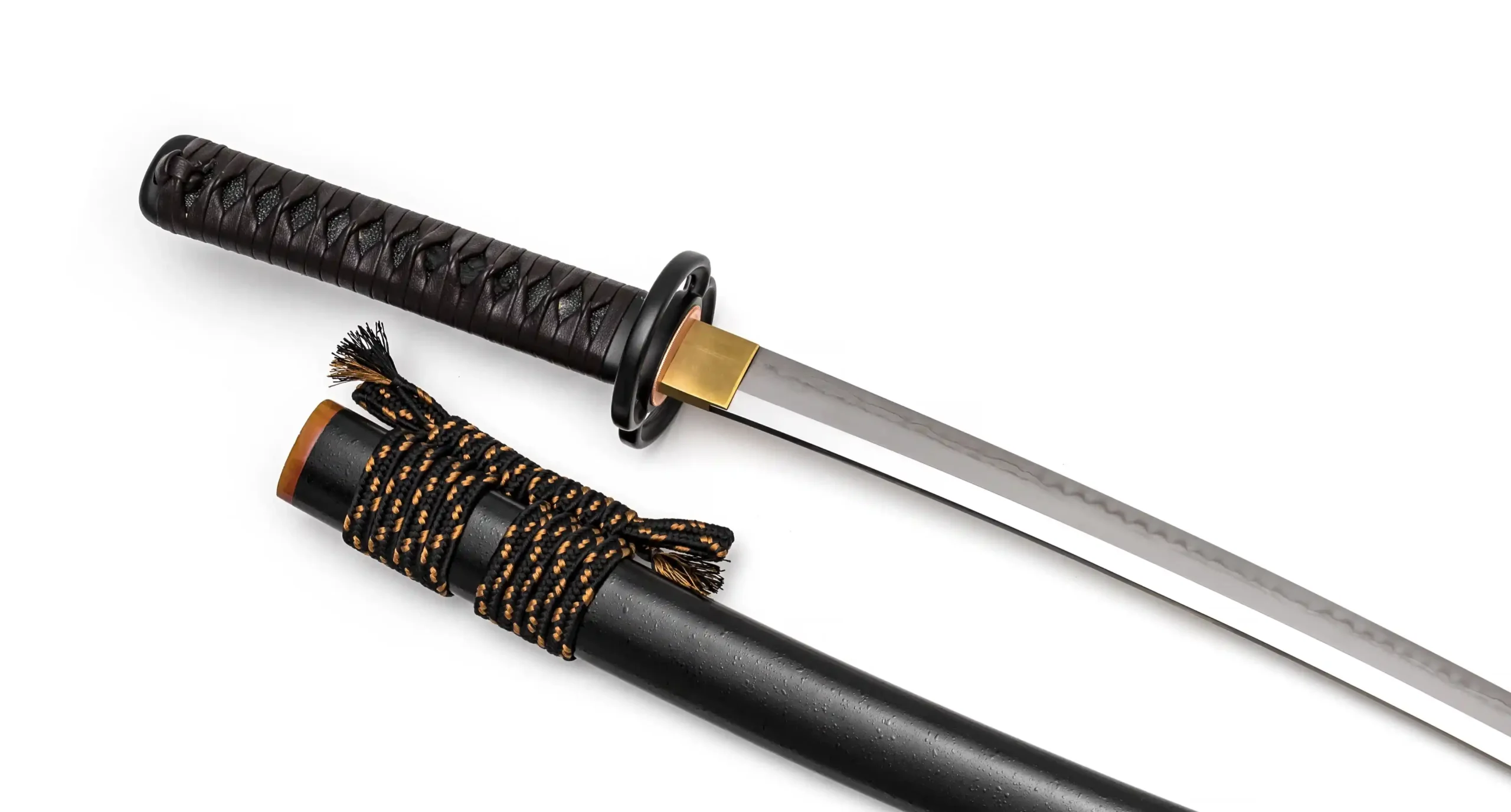
The hamon is the visible pattern or temper line seen on traditional Japanese swords like the katana, and on other blades made using the clay-tempering method. In this post we will look at how a natural hamon is formed, the different types, which steels show it best, and most importantly, how it affects the sword’s performance.
How is the Natural Hamon created?
First, the hamon did not originally appear as something meant to make the sword look more appealing or cooler. It naturally appeared when Japanese swordsmiths began practising differential hardening for their blades, a practice said to have started around the late Heian period.
Japanese steel was not the best quality, and even after repeated folding that purified it, the final blade could still become brittle. To solve this, smiths began using d.h, which kept the edge hard while the spine stayed softer and more flexible. As a result of this process, the hamon appeared naturally, along with tiny grain patterns from the folding, which still serve as part of its identity today.
Over time, samurai and swordsmiths began to appreciate its appearance, and they started shaping it intentionally. Different schools developed their own distinctive styles and forms, making it almost like a signature or a fingerprint.
Process
Before heating, the swordsmith applies a thin layer of clay along the edge of the blade and a thicker layer over the spine and sides. The blade is then heated to around 800°C until it glows red. Once it reaches this temperature, it is quickly cooled in water or oil, a step known as quenching.
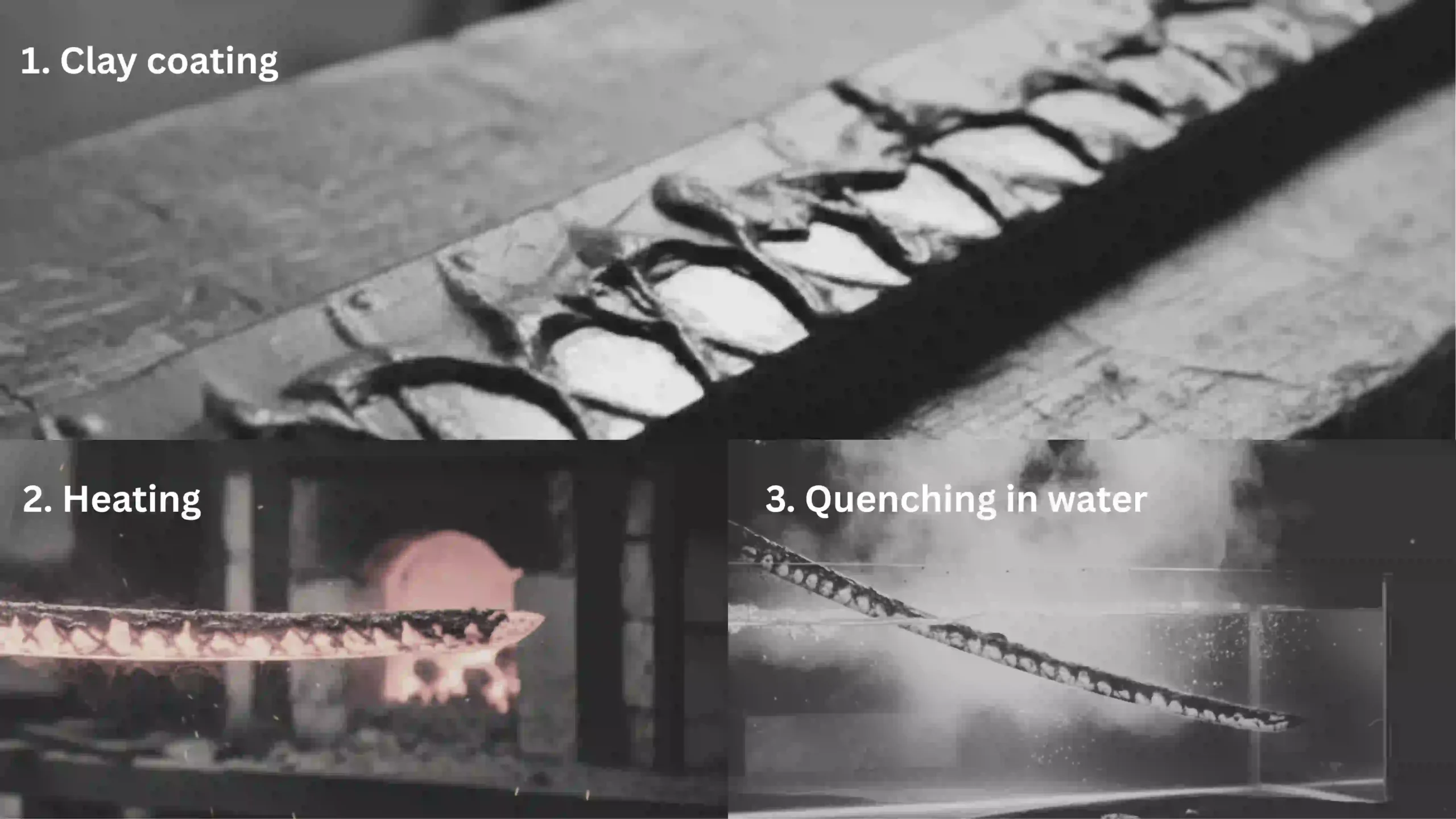
The thin clay on the edge allows the steel there to cool rapidly, creating a harder cutting surface. The thicker clay on the spine slows cooling, leaving that part softer and more flexible. The hamon is the distinct line that marks the boundary between these two zones of hardness.
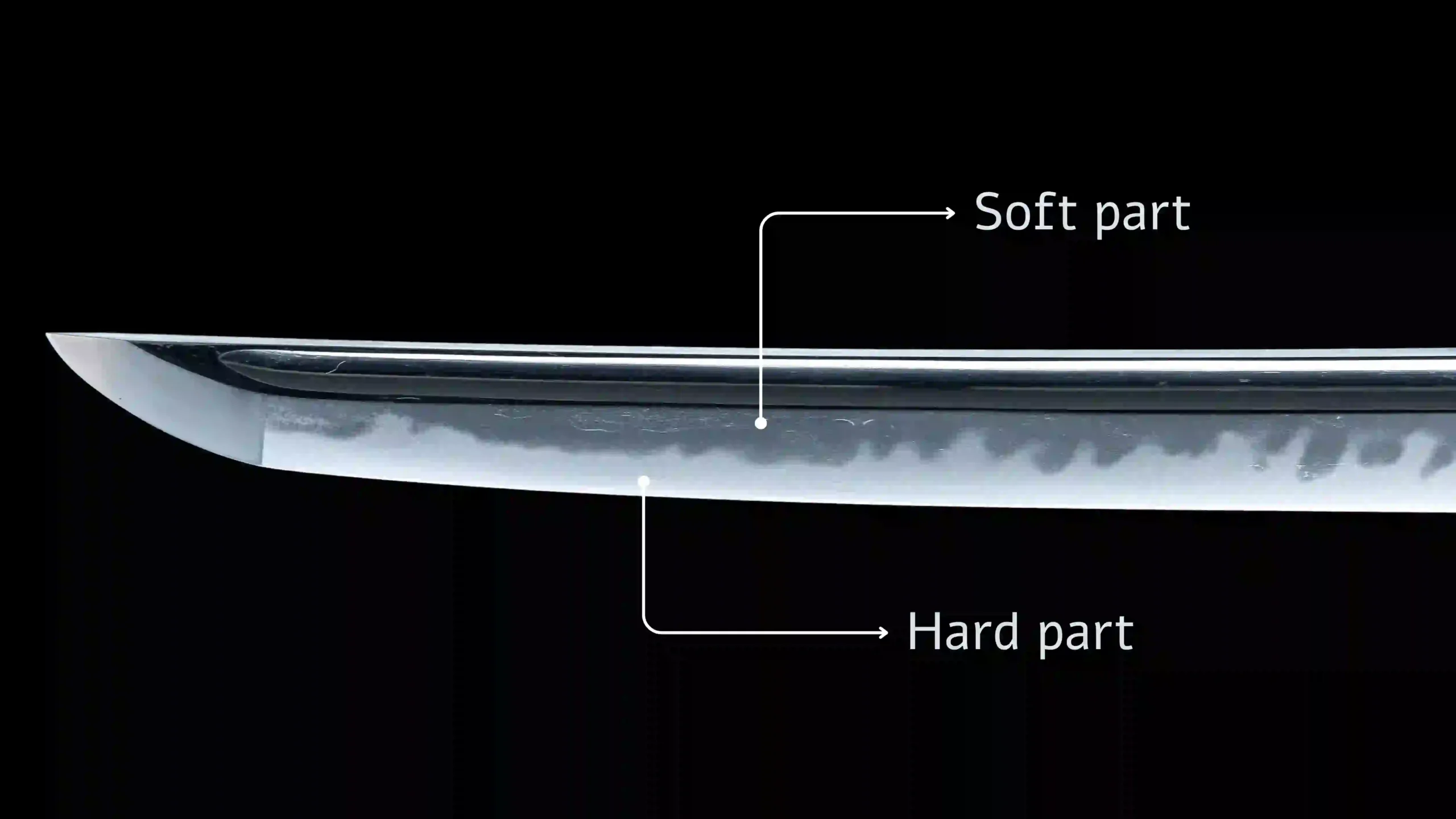
To bring out this line, the blade is polished with stones of different grit until the transition in the steel can be clearly seen.
Types of Hamon (Natural vs Attached)
There are two main types of hamon in the modern katana market. They share some similarities, but they also have differences in how they look and how they are made.
Natural (Real) Hamon
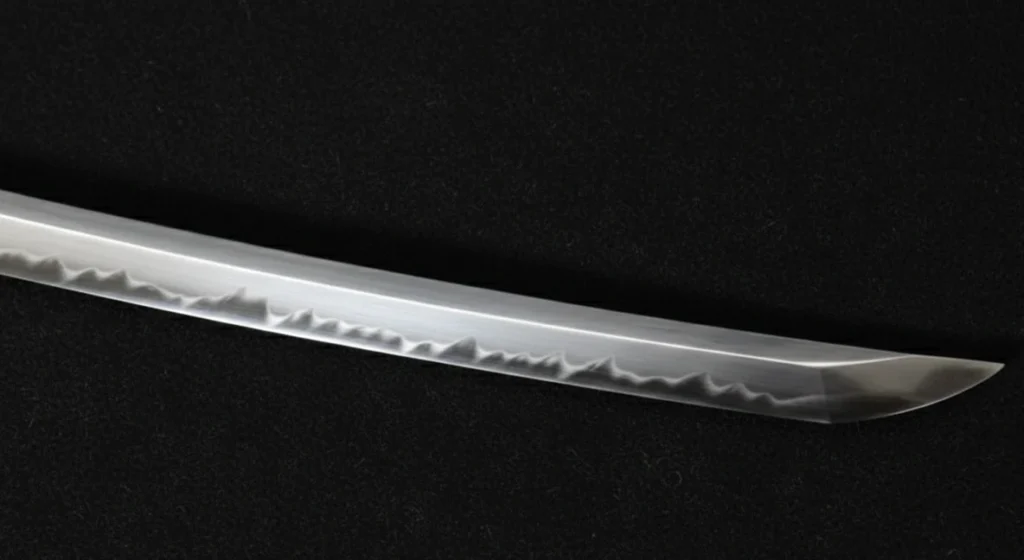
This is the result of the clay tempering process described above. It is a permanent structural change in the metal. It requires high skill to produce and usually increases the cost of the sword.
Attached (Fake) Hamon
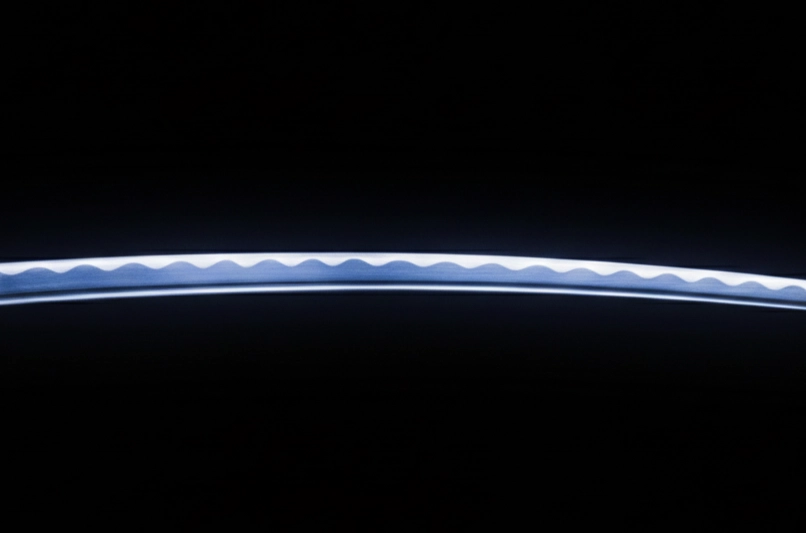
Many katana blades have a fake hamon. This is usually created by acid etching, laser engraving, or even painting on the blade. It does not change the steel’s hardness or flexibility and is mostly found on cheap or factory-made replicas.
Different Types of Natural Hamon Patterns
There are many different natural hamon patterns, and each one reflects the style or creativity of the swordsmith. These are the most common and historically recognized types found on real katanas.
Suguha (Straight Line)
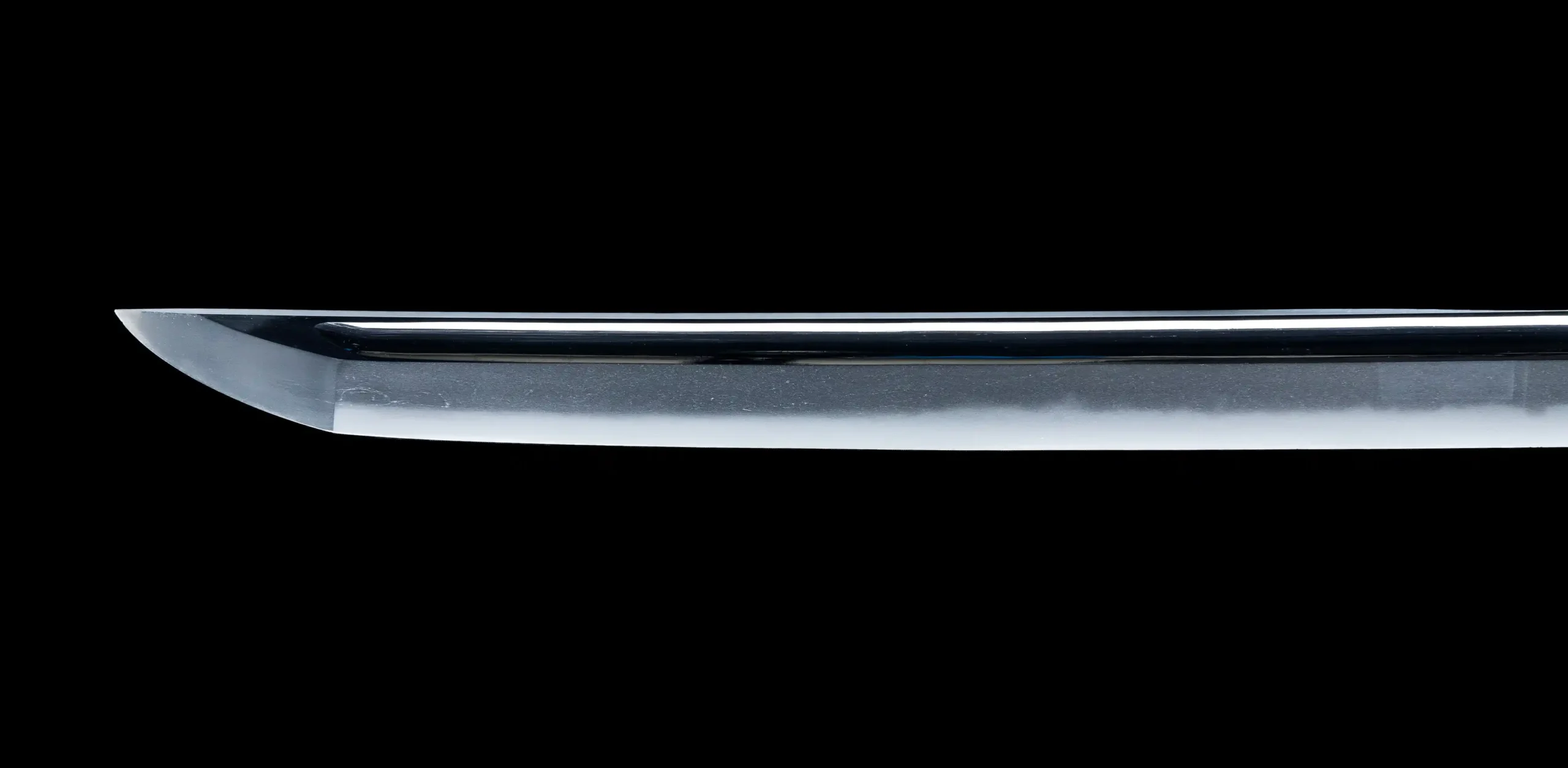
Straight hamon, or suguha, is the simplest type of hamon found on Japanese katanas. It is characterized by an unbroken line running parallel along the cutting edge. Suguha is one of the oldest patterns in Japanese swordmaking and appears across many classical schools. Variations exist based on the width of the hardened area, including wide (hiro-suguha), medium (chu-suguha), and narrow (hoso-suguha).
Notare (Wave)
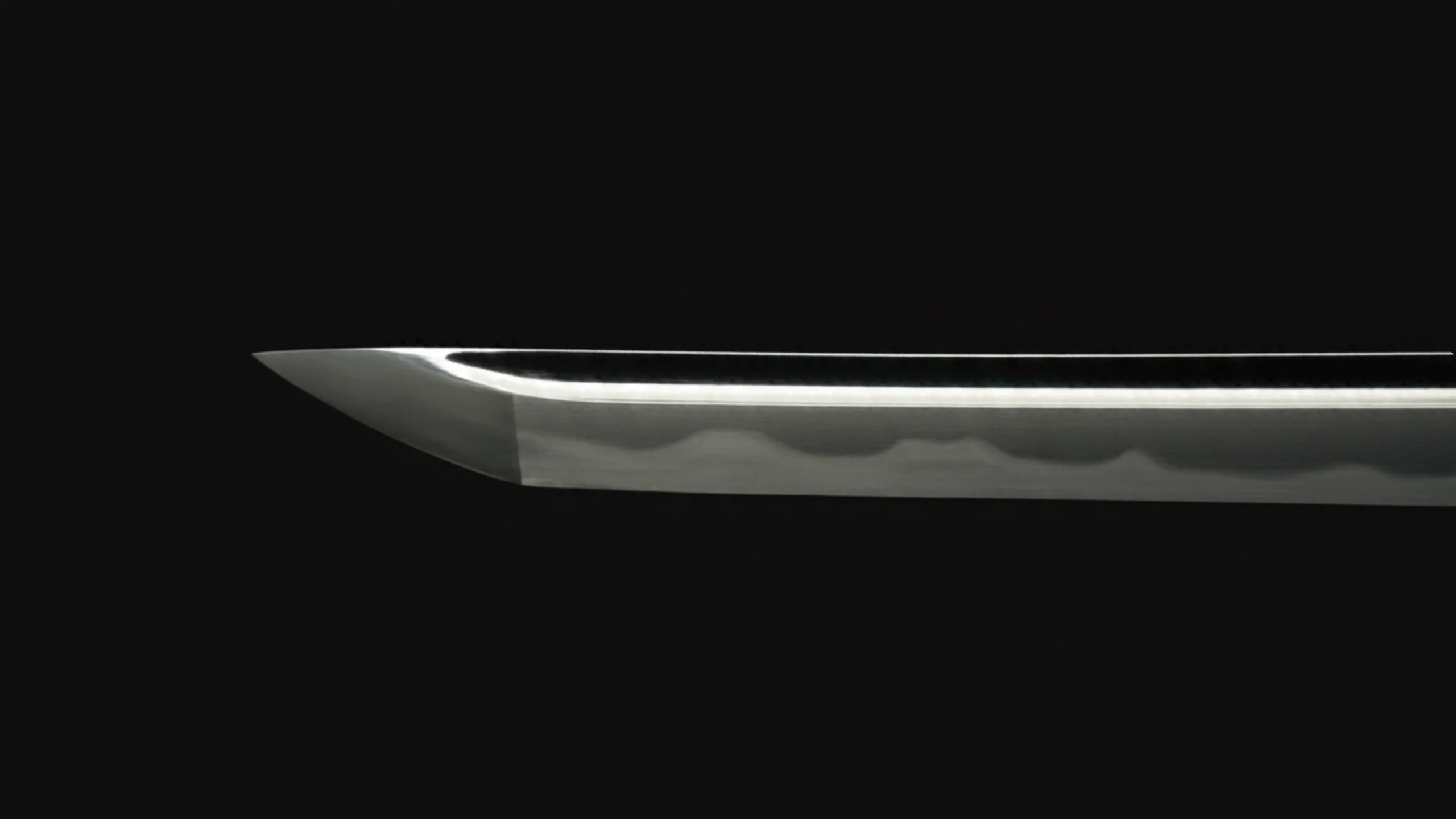
Notare (湾れ刃) is a type of hamon with smooth, gently undulating waves along the blade edge, almost like light waves on water. These waves can take different forms depending on the smith’s style, but they are usually classified by size, such as smaller waves (ko-notare) or larger ones (o-notare). This pattern appeared toward the end of the Kamakura period and became popular through well-known swordsmiths like Masamune.
Midareba (Irregular)
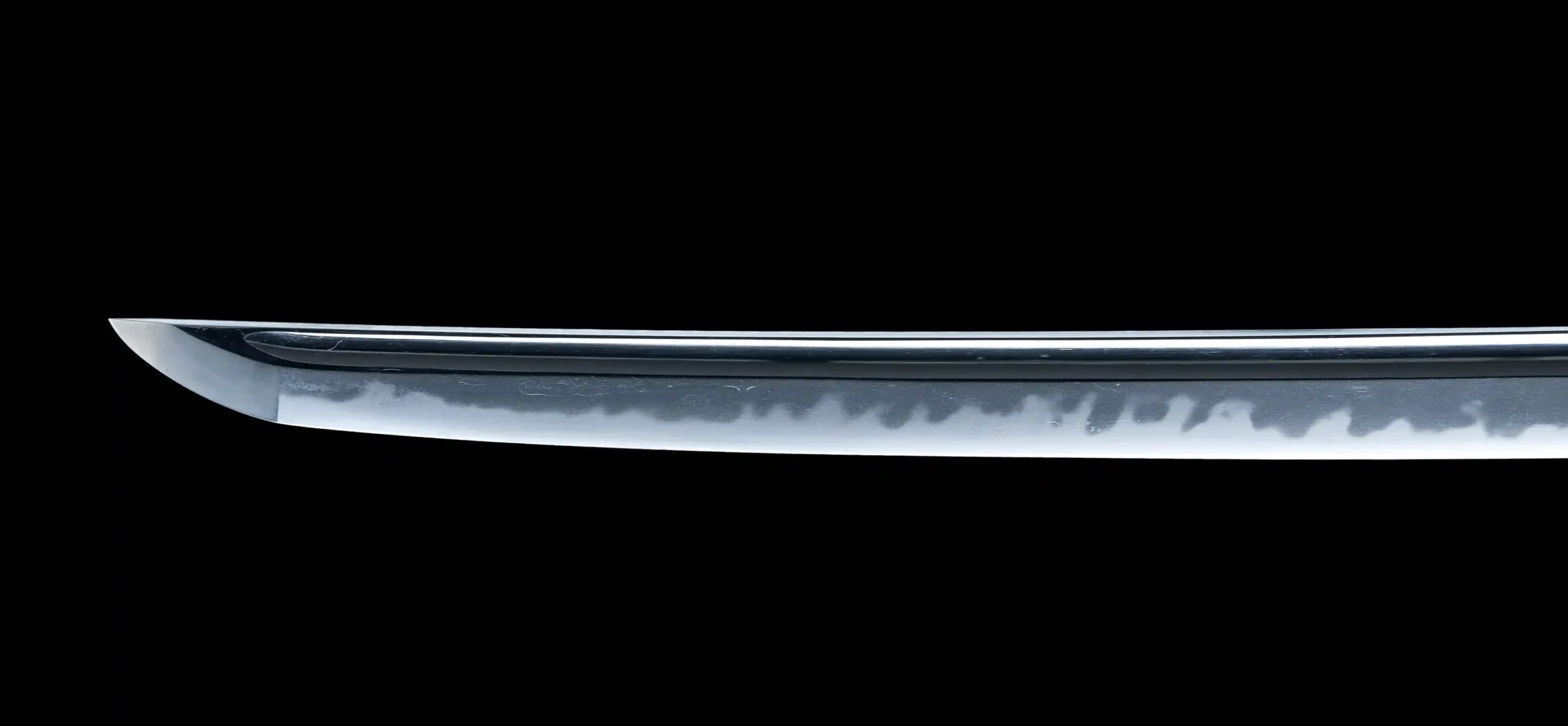
Midareba is a term used for all irregular hamons. It includes all kinds of shapes and forms such as wave-like lines, clove-like forms, uneven peaks, or anything else you can imagine that does not follow a clean, straight line. Each midareba is unique.
Gunome (Round Bumps)

Gunome (互の目) is a type of irregular hamon pattern featuring a rhythmic series of rounded, semicircular waves along the blade edge, resembling the shape of rolling hills or the teeth of a comb. It is considered a midare (irregular) pattern but has a fairly regular, repeating wave shape, creating a dynamic visual effect. Variations include ko-gunome (smaller waves) and o-gunome (larger waves).
Choji (Clove Pattern)
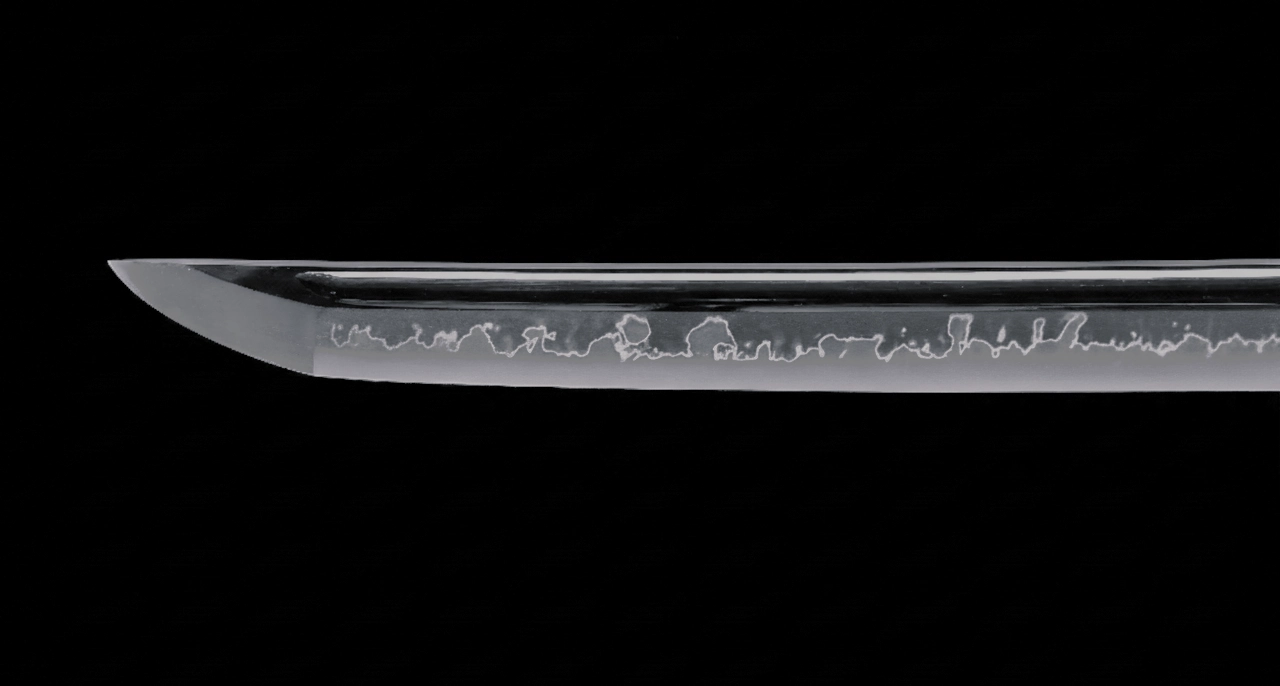
Choji is one of the most beautiful hamon patterns, known for its shapes that resemble clove flower buds. The clove-like forms can vary in size and density, from small and tight groups (ko-choji) to larger and more spread-out clusters, sometimes even overlapping (juka-choji). In some blades, the shapes look a bit like tadpoles, which is called kawazuko-choji. Chōji is mostly associated with classical blades and high craftsmanship.
Hitatsura (Full Temper)
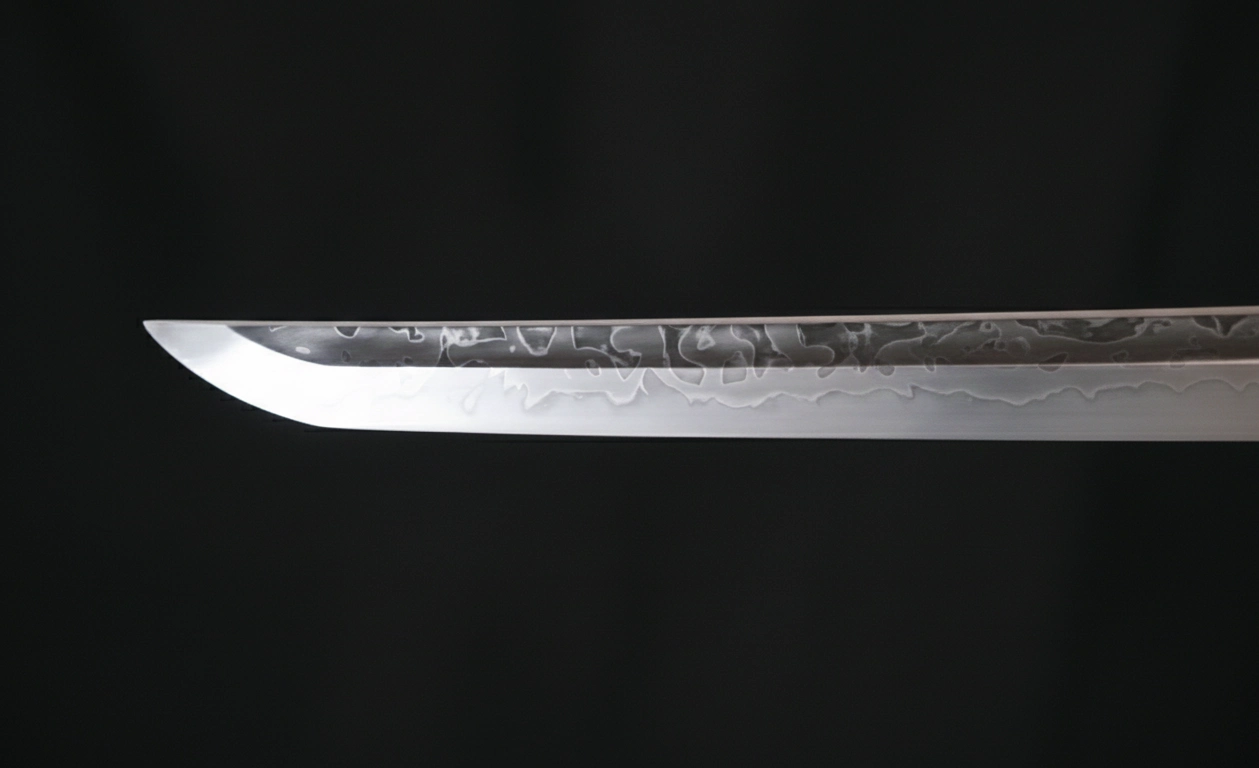
Hitatsura hamon covers not just the edge but also parts of the blade, with many hardened spots appearing across the surface. While it looks extremely striking, a well-made Hitatsura still performs like a normal katana. However, it requires skillful forging, because uneven hardening could create weak spots if done poorly.
Sanbon-sugi (Three Cedars)
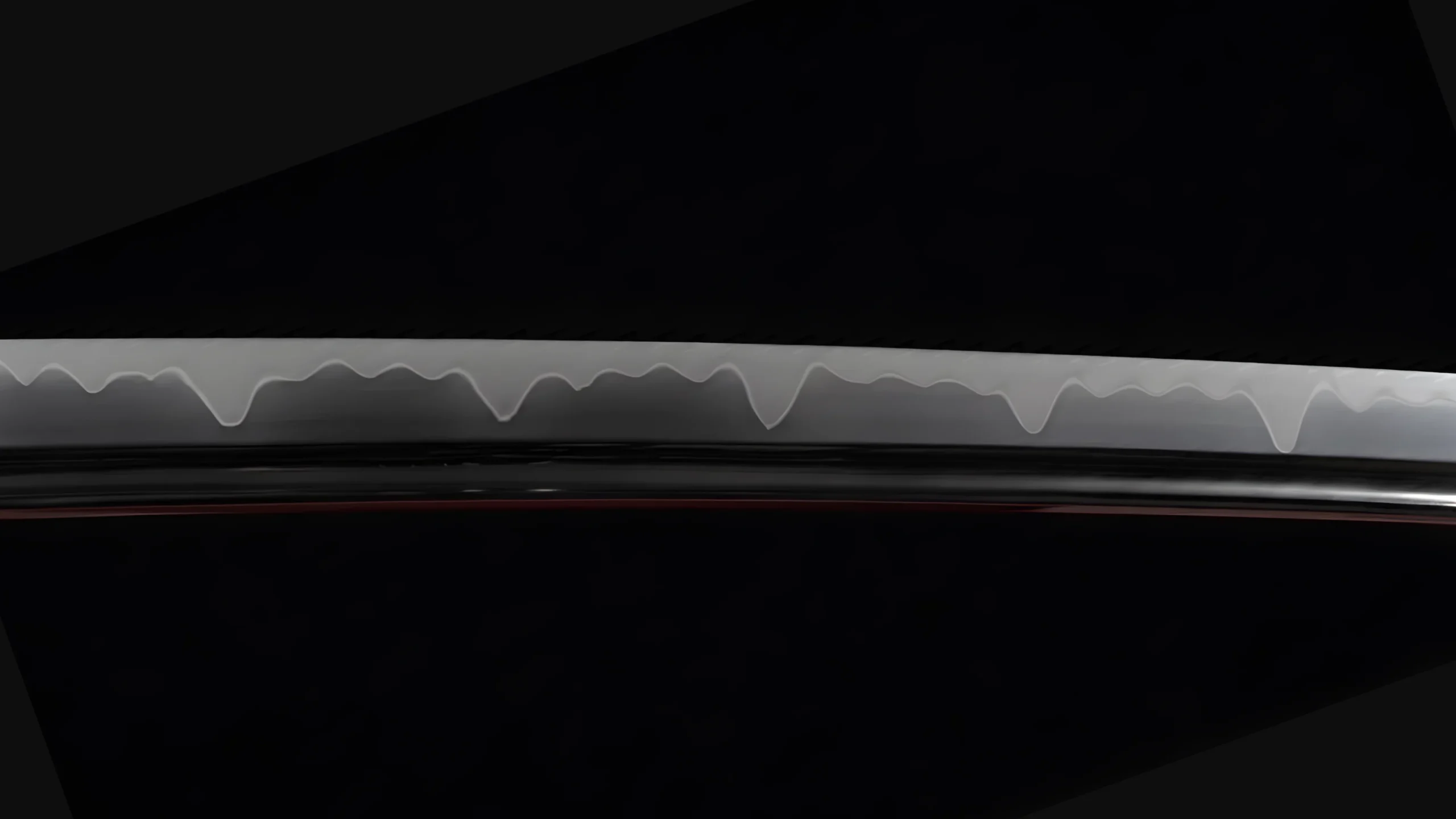
Sanbon-sugi (三本杉), or “three cedars,” is a specific hamon pattern where the waves resemble clusters of three triangular cedar-like shapes arranged in a repeating zigzag sequence. This style was popularized by the famous swordsmith Magoroku Kanemoto and is considered a stylized, vigorous variation of the gunome pattern.
Since fake hamons are made to copy natural ones, they also come in similar forms. But in most cases, you will see a simple wavy pattern, because it is the easiest and most common style for factories to reproduce.
What Steel Shows a Hamon Best?
Tamahagane remains the top steel for creating the most distinct hamon because it lacks the alloying elements commonly found in modern steels that can diminish the pattern’s clarity. Its purity allows it to respond exceptionally well to differential hardening, resulting in a hamon that is sharper, more luminous, and easier to bring out during polishing.
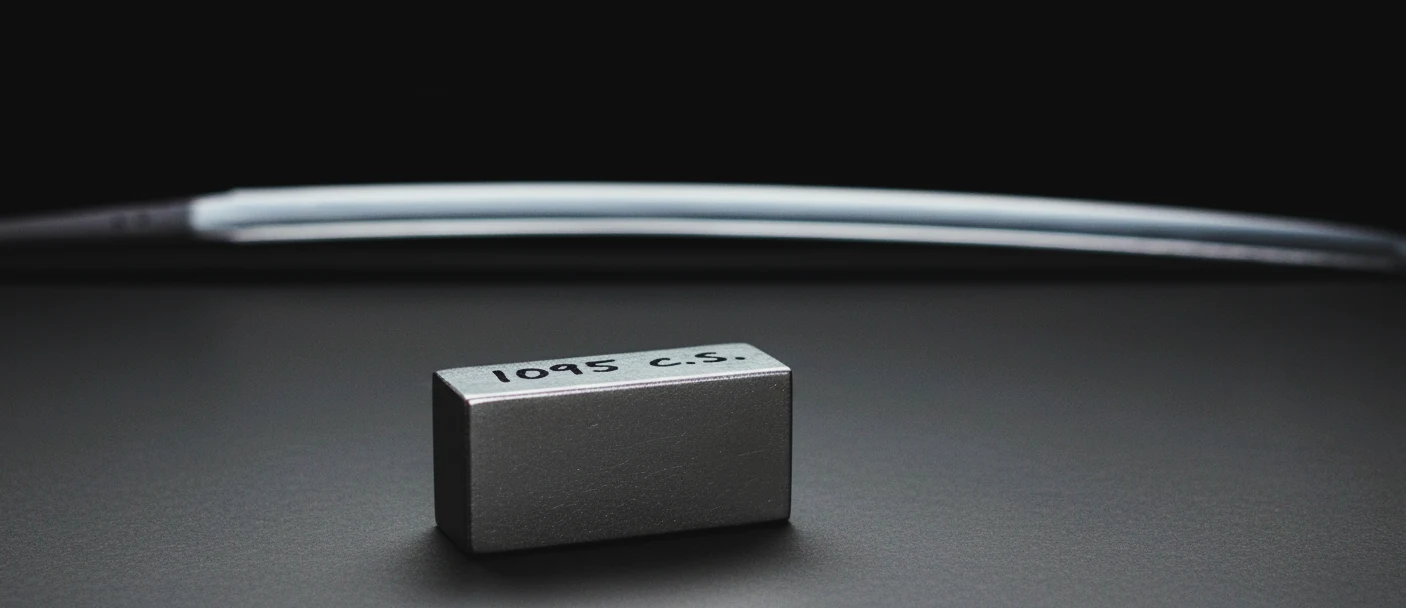
However, in general, the best steels for producing a vivid hamon are those with higher carbon content, as they develop a harder edge when clay tempered. Among affordable modern options, 1095 carbon steel is the most widely used, though any high-carbon steel with low manganese content can yield similarly good results.
Last Words
The hamon, or the temper line, is one of the elements found in Japanese swords, such as the katana. In the market, you will find two primary types: the natural hamon, which forms naturally after the clay tempering process, and fake hamons, which are added to the blade to copy natural ones just for looks. They come in different forms.
FAQ
Does every katana have a hamon?
No, not all katanas have a hamon. Whether a blade has one depends on if it is differentially hardened. Many functional katanas are made from modern steels like spring steel, which are already flexible, so differential hardening isn’t necessary.
How to tell the difference between attached (fake) and natural hamon (real)?
A real hamon sits inside the steel and shows depth when you move the blade under light. It looks cloudy, soft, and organic.
A fake hamon is usually perfectly flat on the surface, often too bright or too sharp, and doesn’t change under light. Etched hamons also tend to look painted on.
Does the hamon affect how sharp the sword is?
Only attached or painted hamons can affect sharpness. On some functional fantasy or anime katana replicas, the painted or colored finish can cover the edge, making it duller. When it sits on the sides of the blade, it can also interfere with clean cuts.
Can you feel the hamon with your finger?
You normally can’t feel a natural hamon because it’s part of the steel, not raised on the surface. But some attached (fake) hamon types can be felt.
Can a hamon fade over time?
Yes, visibility can fade if the blade oxidises, scratches, or loses its polish. The hamon itself never disappears because it is part of the steel.
Does the hamon make the sword brittle?
No. The hamon shows where the edge is harder, while the spine stays softer and flexible. That balance is what prevents brittleness, not the opposite.
Can a sword be re-tempered to fix a hamon?
Technically yes, but doing it ruins the blade’s historical value and often weakens it. For modern production swords, it’s usually cheaper and safer to replace the blade instead of re-tempering.