We may earn revenue from the products available on this page and participate in affiliate programs. Learn more >
When investing in a real katana, it’s important to look for the best, whether it’s a $200 katana or a $5,000 one. Through conversations with many collectors, we noticed a katana priced at $1,000 encountered similar issues to those found in more affordable alternatives. Some cheaper types even outperformed much more expensive swords, or despite how well they performed, they still had some issues.
However, there are a small handful of functional katanas that are very well-priced, cut well, and are absolutely worth adding to your collection. Whether you are looking for a budget-friendly katana, one for heavy cutting, or just a reliable sword to train with, we’ve picked the best katanas.
- Best Overall: Savior Katana
- Best for Heavy Cutting: Watanabe no Tsuna
- Best for Iaido: Umidori Katana
- Best Budged-Friendly: Kato Kiyomasa
- Best Entry-Level: Summer Lotus
- Best Mid-Range: Shinto Katana
- Best High-End: Kumagai Naozane
- Custom Katanas
How I Chose the Best Katanas
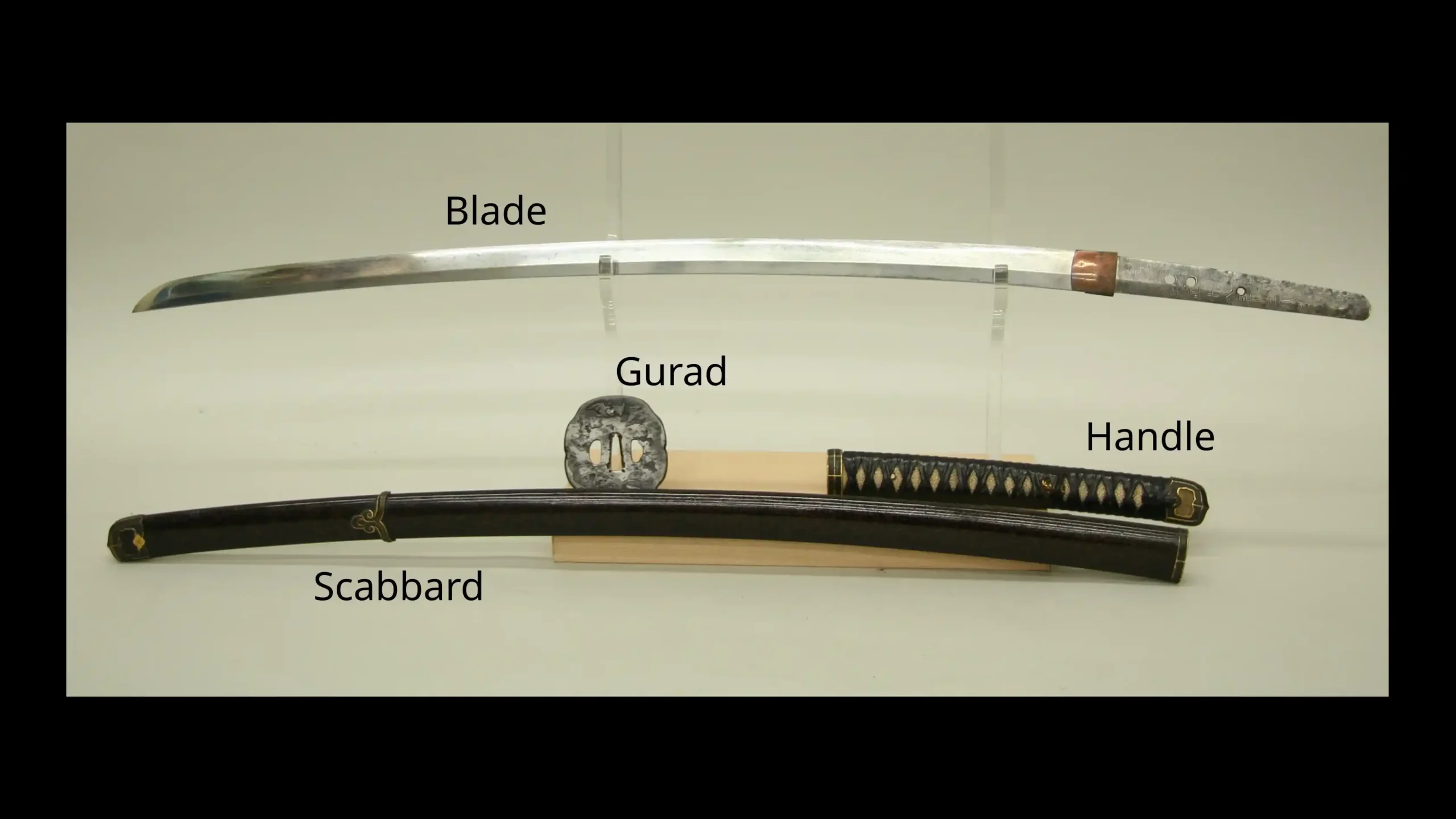
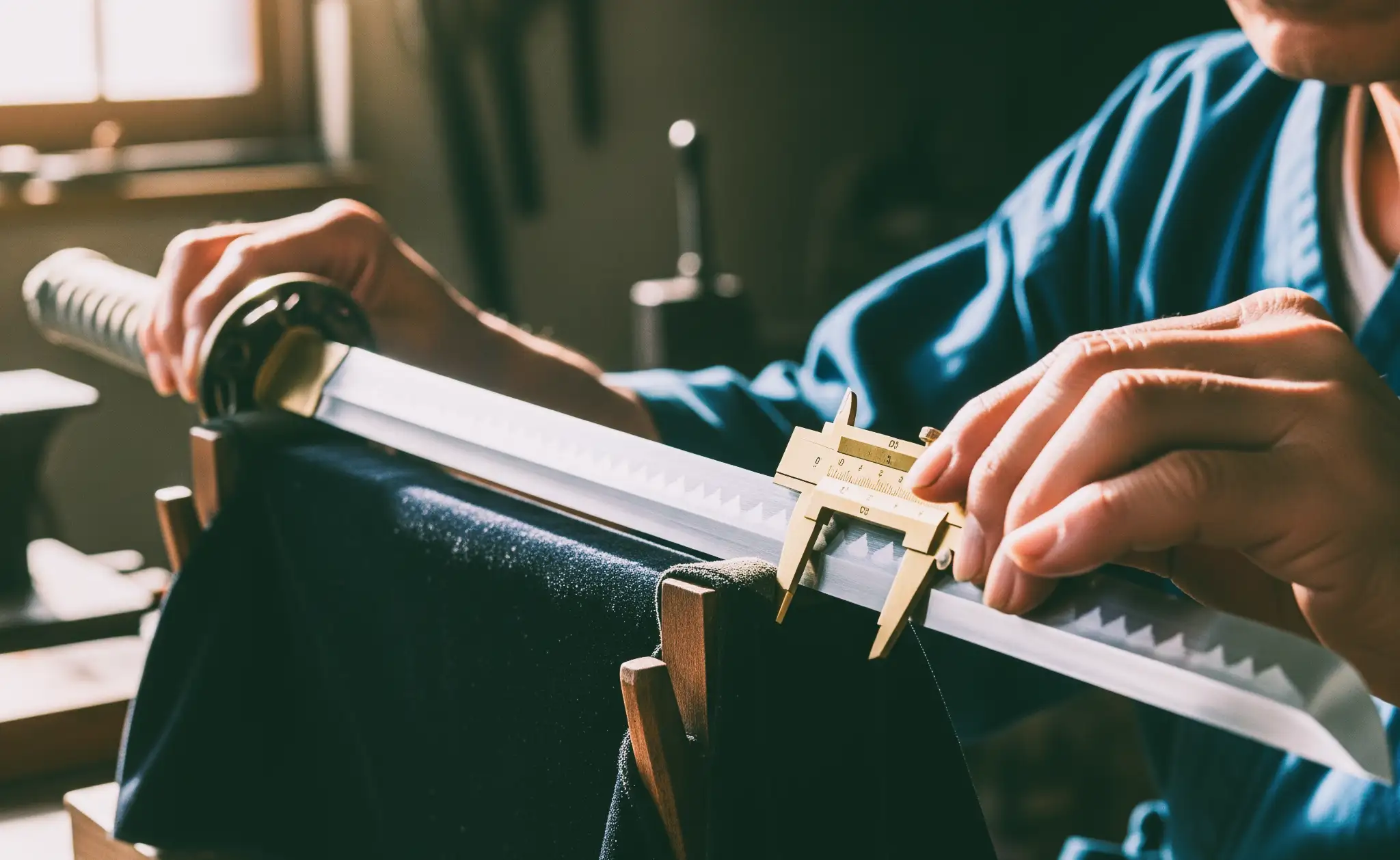
Unlike knives or many other tools, which are mostly machine made and very similar in quality and appearance, katanas can vary in quality even within the same model. This is because they are mostly handmade. Things like the handle wrap, blade polish, fit of the fittings, and overall finish depend on human work.
Just to give an example, one katana might have a slightly misplaced mekugi, while another of the exact same model might instead have a loose kashira, or other small issues that do not appear on both. For this reason, our selections are not based on a single review or a single sword.
Instead, we rely on broader research. We look at multiple reviews from different buyers, reviewers, and collectors. We examine each sword’s advantages, disadvantages, strengths, and weaknesses. Then we check whether these issues are widespread or limited to individual cases.
We also look at details such as length, weight, fittings, design, and overall attention to detail. In the end, we selected only the katanas that are well crafted, perform well, and offer the best value for their price.
The Best Katanas: Reviews & Recommendations
Best Overall: Savior Katana
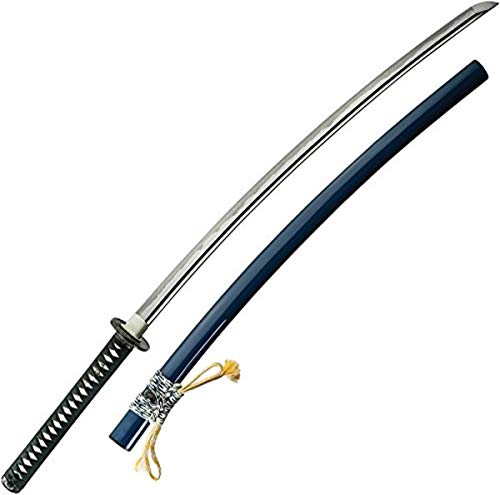
Specifications
| Overall Length | 43 inch (109cm) |
| Blade Length | 29 inch (73 cm) |
| Weight | 1200 g |
| Hamon | Yes |
| Handle Specifications | Wood, Rayskin, Cotton |
| Type of Steel | T10 Tool Steel |
| Usage | Fully functional |
| Price | $825 |
Pros
- Authentic feel
- Great for cutting exercises
- Well-designed tsuba
Cons
- Can not be customized
- May be pricey for some
Designed by Frenchie Jin and produced by the Dragon King brand, the Savior katana is one of the best katanas I have come across where traditional Japanese and samurai-era aesthetics are well blended with modern high performance steel. From what I found, the inspiration behind this katana is the concept of Kami, the divine spirits of the Shinto religion. First of all, this sword comes very sharp straight out of the box. Everything feels tight and well made.
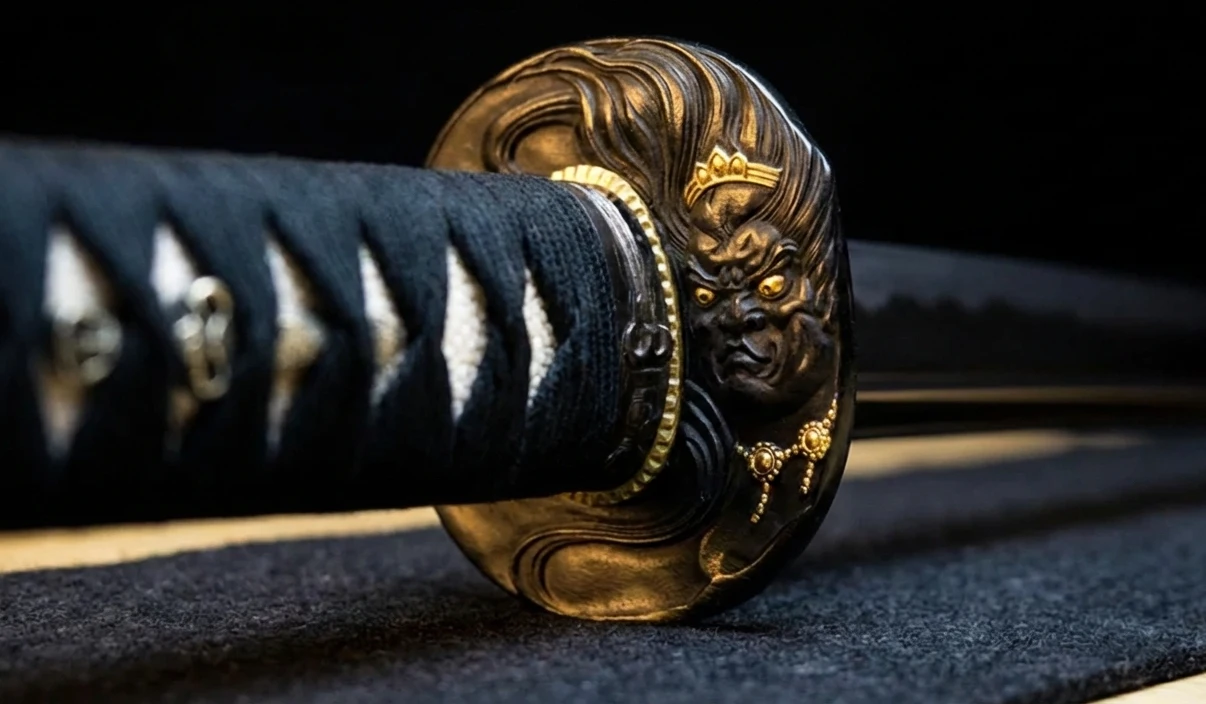
The most eye catching element is the blackened tsuba, designed with a kami spirit face motif on one side, while the other side features a sword icon with flames.
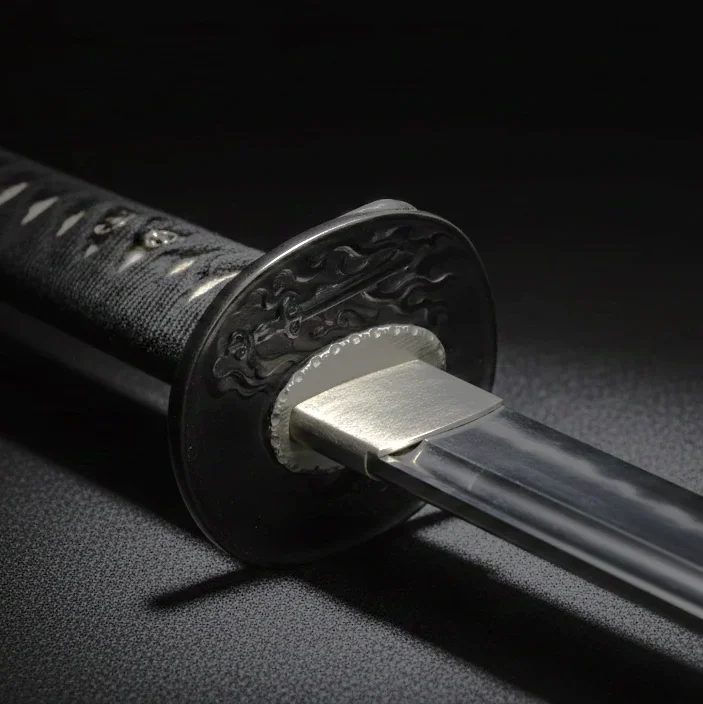
You will find these same elements carried over into the fuchi, kashira, and menuki. The handle is wrapped in black cotton tsuka ito over white samegawa, while the menuki and seppa are finished in silver. The blade is made from clay tempered, differentially hardened T10 tool steel, and the hamon is very clear.
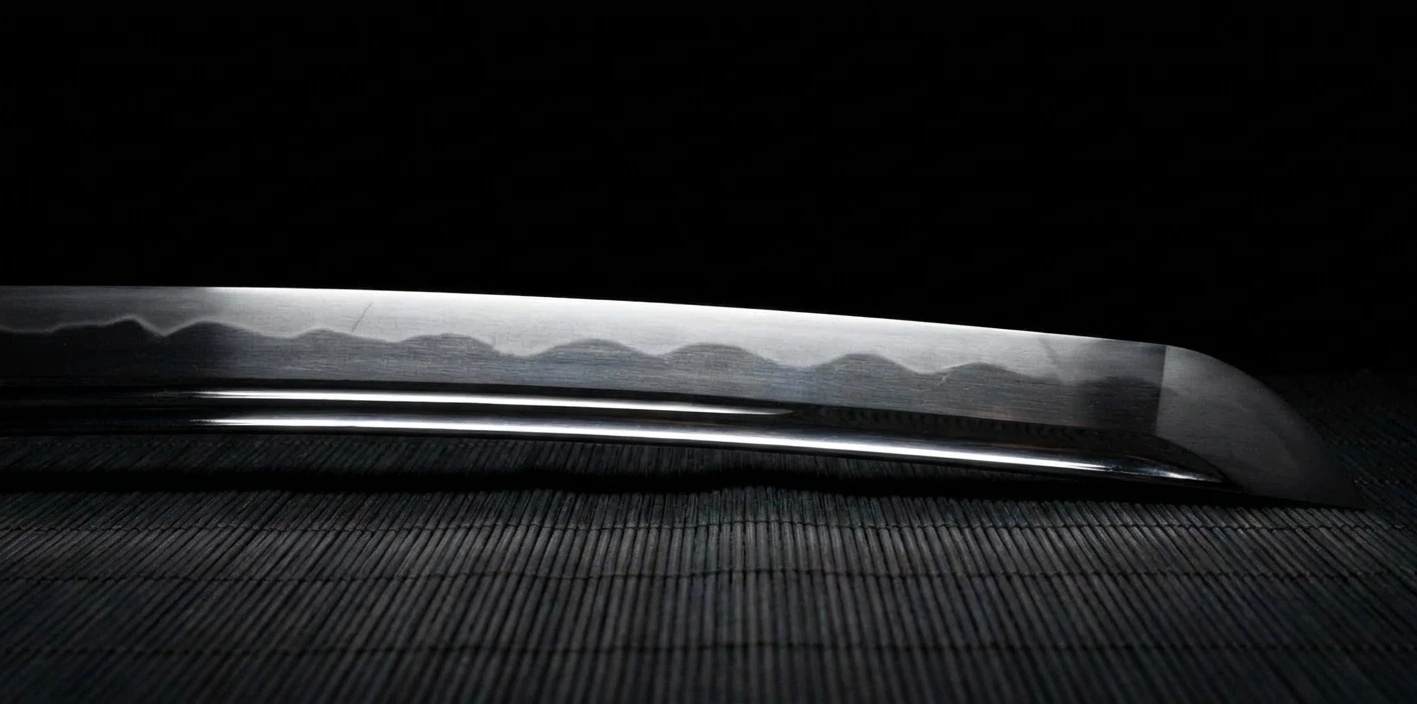
The blade length is around 73 cm, or 29 inches, with an overall length of about 109 cm, or 43 inches, making it one of the larger swords on this list. This is great if you prefer longer swords, but for people with shorter arms, like myself, it can be a bit challenging for iaido practice, especially when drawing or sheathing.
The blade follows a shinogi zukuri shape and includes a deep bo hi, which helps reduce the weight slightly. The Savior is designed for cutting and performs very well on tatami mats. That said, it is not a beginner sword. If your cutting technique is off, you will feel it immediately. The saya fits very well and comes in a deep blue color with a matching blue sageo cord.
Best for Heavy Cutting: Watanabe no Tsuna
Specifications
| Overall Length | 107 cm |
| Blade Length | 72 cm |
| Weight | 1150 g |
| Hamon | Yes |
| Type of Steel | Tempered 1095 High Carbon Steel |
| Usage | Fully functional |
| Price | $869.99 |
Pros
- The blade is made of clay-tempered 1095 steel
- Perfect for heavy cutting
- Can be customized
Cons
- Pricey
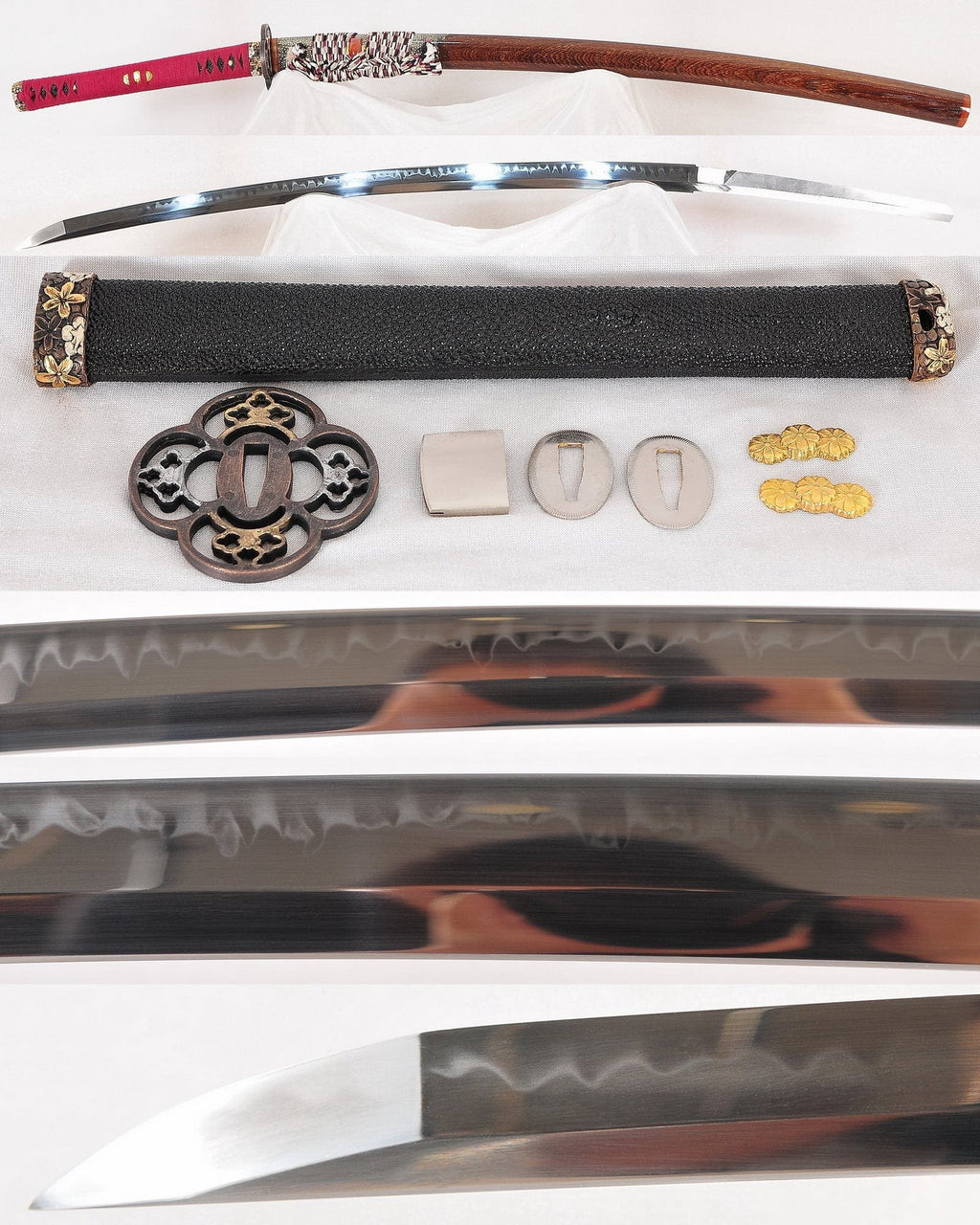
The Watanabe no Tsuna is a heavy-cutting katana made by Longquan swordsmiths. The blade is traditionally forged from 1095 high-carbon steel. What is interesting about this katana is its design. It features a deeper curve, or koshi sori (around 2.8 cm at its deepest point), making it feel more like a tachi than a regular katana. When cutting, the stronger curve creates a more forward cutting angle, allowing the blade to bite and slash into the target more easily, effectively, and cleanly. The hamon is cloudy with small wave patterns.
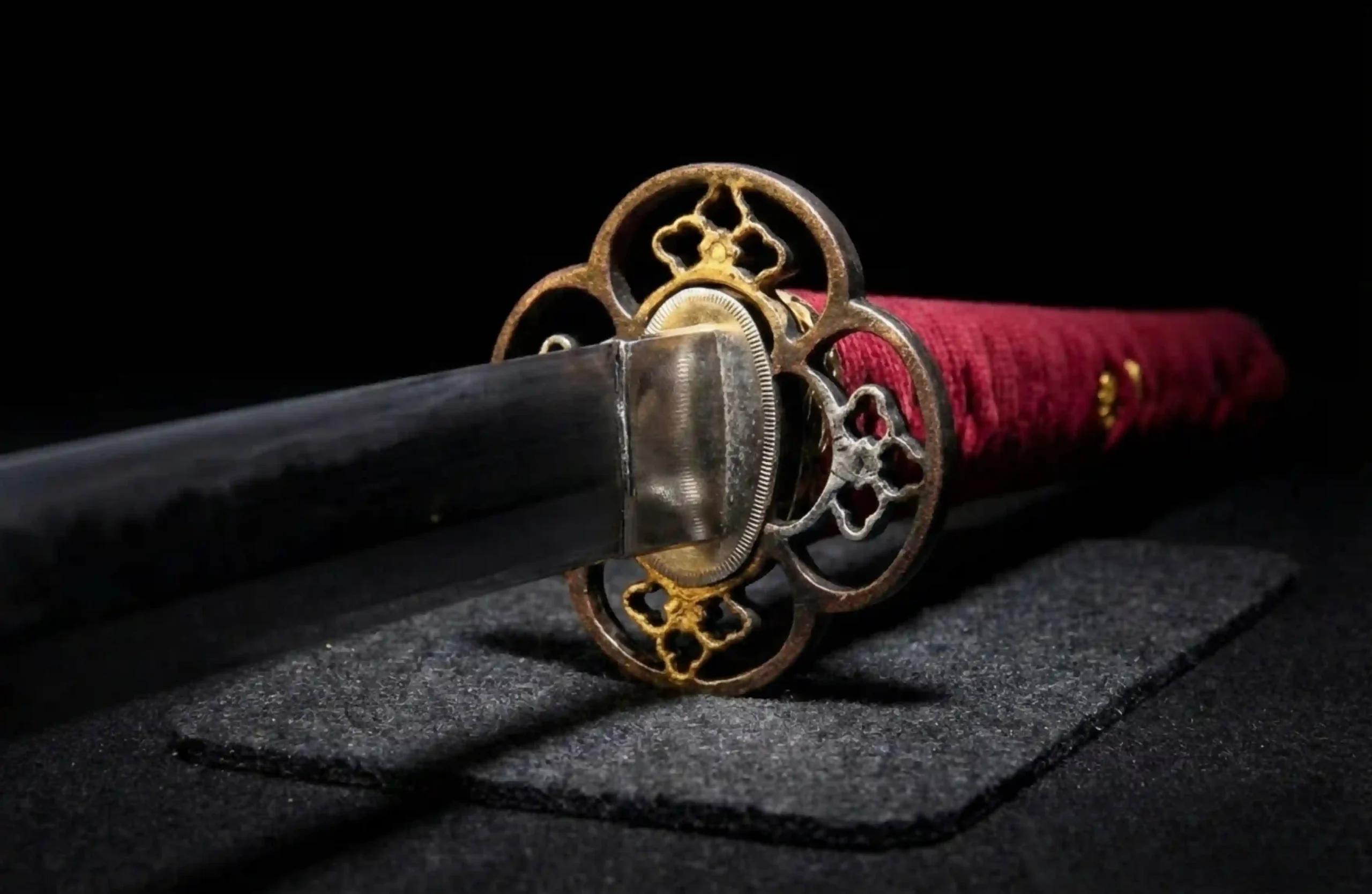
The blade is designed with shinogi-zukuri geometry, has no bo-hi, and ends with an o-kissaki, which is a longer tip than regular blades. Expect this sword to feel slightly heavier because of its forward point of balance. The tsuba is made of alloy and is moderately elaborate. The fuchi, kashira, and menuki are copper with a flower-like motif. The handle features black samegawa and red tsuka-ito wrapped in the katate-maki (battle wrap) style.
Unlike many other katanas, the Watanabe is better optimized for regular cutting, making the cutting motions feel not forced. This sword can also be used for training or collection; however, it is not suited for heavy-duty cutting or hard material cutting.
Best for Iaido: Umidori Katana
Specifications
| Overall Length | 103 cm |
| Blade Length | 71 cm |
| Weight | 998 g |
| Hamon | No |
| Type of Steel | 1060 Carbon Steel |
| Usage | Iaido & Kenjutsu use |
| Price | $149 |
Pros
- Suitable for both drawing and sheathing practice as well as cutting exercises
- Comfortable to handle
- Well-designed tsuba
Cons
- Long-term durability may be questionable
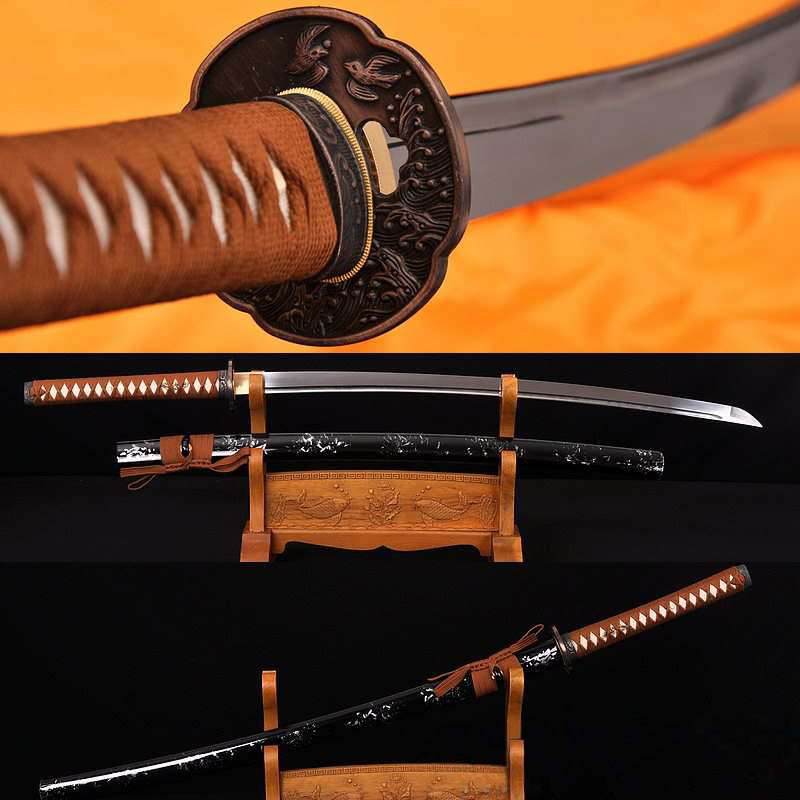
Umidori is a more traditional alternative to the many zinc aluminum alloy blades commonly used for Iaido. Made from 1060 carbon steel, the sword comes unsharpened by default, which is safer for practice however, since it is 1060 carbon steel you can sharpen it at any time. This makes it a much better option compared to aluminum types, which cannot be sharpened later.
The handle is tightly wrapped with silk ito, and the sword offers the right weight, balance, and comfort needed for Iaido use. The tsuba has a classic rounded shape with a design known as Nami Chidori, which combines crashing waves (nami) with a flock of plovers (chidori). The saya is made of black lacquered and painted hardwood.
Best Budged-Friendly: Kato Kiyomasa
Specifications
| Overall Length | 40.9 inch (104 cm) |
| Blade Length | 27.9 inch (71 cm) |
| Weight | 998 g |
| Hamon | No |
| Type of Steel | 1095 High Carbon Steel |
| Usage | Fully functional |
| Price | $265 |
Pros
- Hand forged 1095 high carbon steel
- Fully functional and battle-ready
- Durable for various cutting practices
- Affordable
- Option for engraving
Cons
- Tsuba is simple
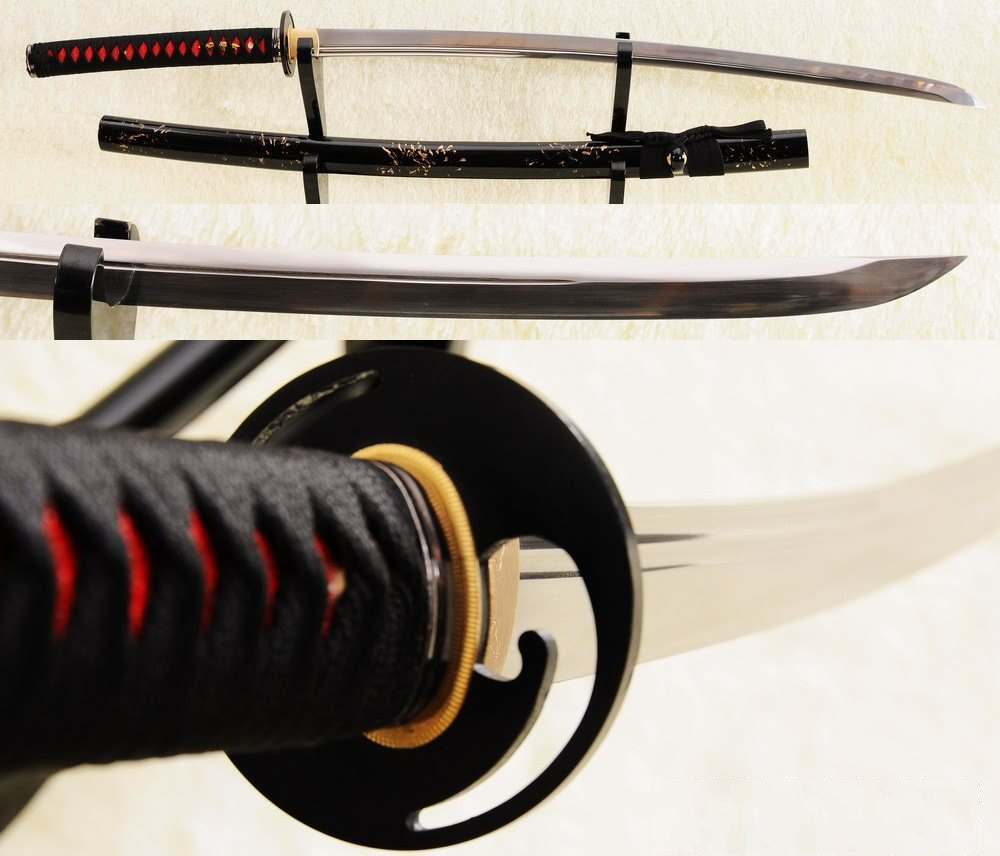
If you are on a budget but still really want a katana, the Kato Kiyomasa costs around $265 and is made from 1095 high carbon steel. The blade is through hardened, not traditionally made, so it does not feature a hamon. Even so, the blade still performs well in cutting, with light cutting being recommended, and it is suitable for practice, training, or home defense.
This functional katana features a more straightforward level of craftsmanship. The tsuba is rounded and simple. The handle is made of red ray skin with black silk ito, which gives it a nice overall look. The seppa and habaki are finished in a gold tone and feature a samurai helmet engraving.
The blade is 71 cm long, or 27.9 inches, and includes a short, deep bo hi along with a thinner one that runs closer to the tip. The sword comes with a black lacquered and painted hardwood saya. If you are looking for a katana to display, train with, or practice cutting at an affordable price, Kato is one of the better options available.
Best Entry-Level: Summer Lotus

Specifications
| Overall Length | 104 cm |
| Blade Length | 71 cm |
| Weight | 1134 g |
| Hamon | No |
| Type of Steel | 5160 carbon steel |
| Usage | Fully functional |
| Price | $392 |
Pros
- Not expensive
- Cuts well
Cons
- The handle may be thinner for some
Our pick for the best entry level katana is the Summer Lotus. The Summer Lotus is part of Dragon King’s series of themed katanas, designed to capture the idea of the summer season. The tsuba of this sword is supposed to capture this concept by expressing a water garden, lotus flower, and tree motif, but I think they are not done in the best way. The menuki are made as a snail on one side and a frog on the other, which are better executed.
The blade is made of 5160 carbon steel and does not include a bo hi or a hamon. The sword comes sharp and cuts well at the beginning, however its long term performance is not proven. In general, 5160 blades are flexible and very resistant to breaking, but they may not offer the highest edge retention if used regularly, so you may need to resharpen it.
Priced under $400, the Summer Lotus is designed for heavy usage and is more focused on functionality than appearance. The main colors are green and black.
Best Mid-Range: Shinto Katana

Specifications
| Overall Length | 39 inch (99 cm) |
| Blade Length | 27 inch (68 cm) |
| Weight | 848 g |
| Hamon | Yes |
| Handle Specifications | Wood, Tsuka-Maki, Rayskin, Cotton |
| Type of Steel | T10 High Carbon Steel |
| Usage | Fully functional |
| Price | $820 |
Pros
- Traditional design
- Designed for heavy cutting
- One of Hanwei’s longest-standing and well-regarded models
- High-quality fittings
Cons
- Might be pricey for some
- No customization options
Over the years, Hanwei has released the Shinto in several editions and variations, each with its own features aimed at different preferences and uses. Today, the only version still in production is the fully functional standard edition made from t10 tool steel. Although it is a mass-produced sword, the blade is hand-forged and differentially hardened. It is clay tempered and shows a very clear midareba hamon, which is easy to see even without perfect lighting or angles, something that does not always happen with many katanas.
The blade also includes a bo-hi. The handle (tsuka) is tightly wrapped in black Japanese cotton, with white samegawa (ray skin) underneath. One of the more interesting parts of the sword is the blackened iron tsuba, featuring a gold-eyed dragon with detail on both sides. Based on the feedback we gathered, it cuts well and holds up nicely. With its traditional design, appearance, price, and the fact that it is also used in martial arts, the Shinto stands out as a solid all-around katana. A maintenance kit is included.
Best High-End Katana: Kumagai Naozane
Specifications
| Overall Length | 104 cm |
| Blade Length | 71 cm |
| Weight | 998 g |
| Hamon | Yes |
| Type of Steel | Tamahagane |
| Usage | Fully functional |
| Price | $3,689 |
Pros
- It’s made from traditional tamahagane steel
- Natural hamon
- Mirror polished
- Fully functional
- Very detailed craftsmanship
Cons
- Pricey
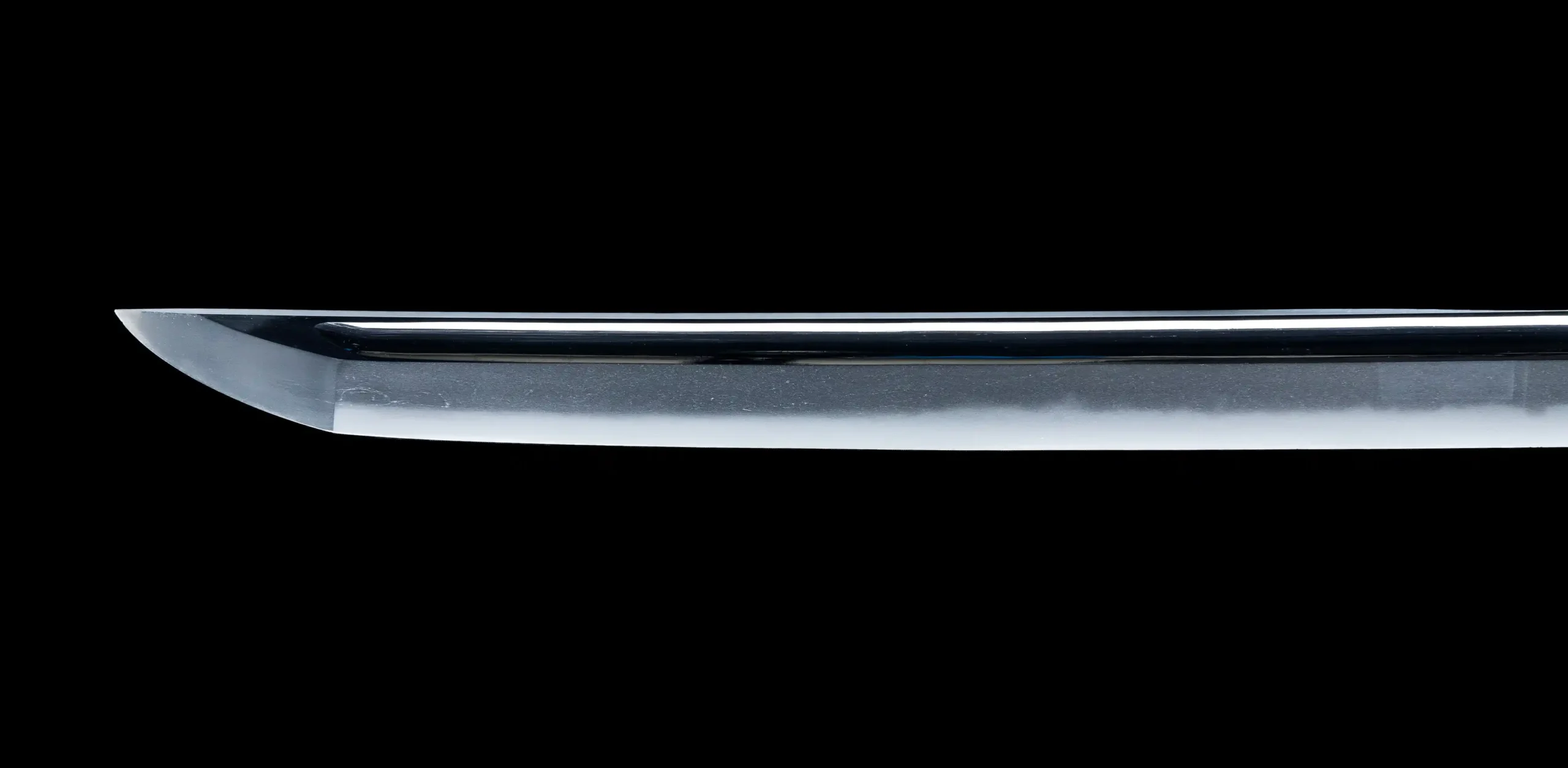
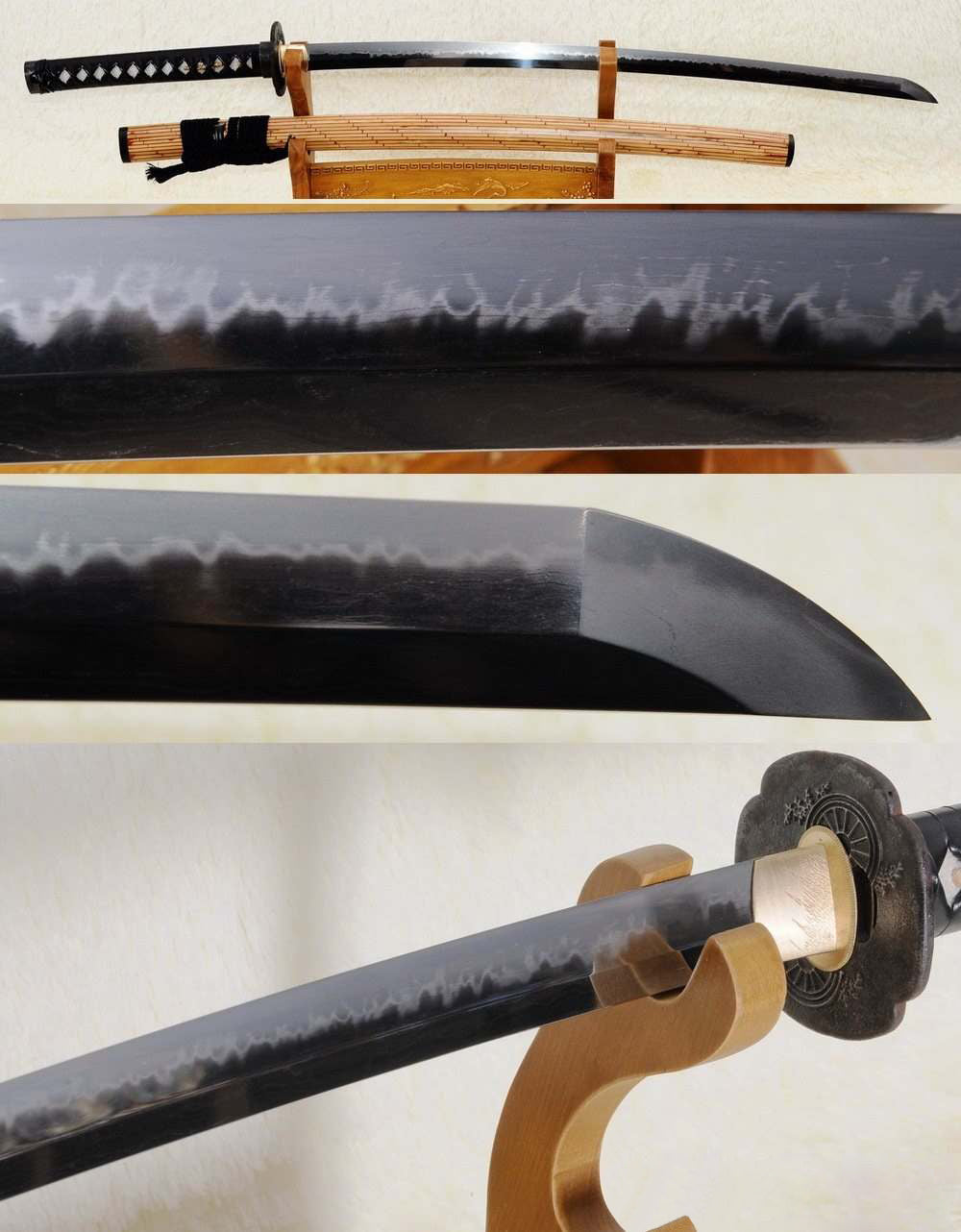
Kumagai Naozane is a high end katana produced by Longquan swordsmiths in China. It is a more affordable option compared to Japanese nihonto, which can easily go up to $10,000. While $3,700 is still not a small amount for a sword, the quality and attention to detail is unmatched. The Kumagai is made from tamahagane steel. The polish on the blade is very clean, allowing the hamon to be clearly visible.
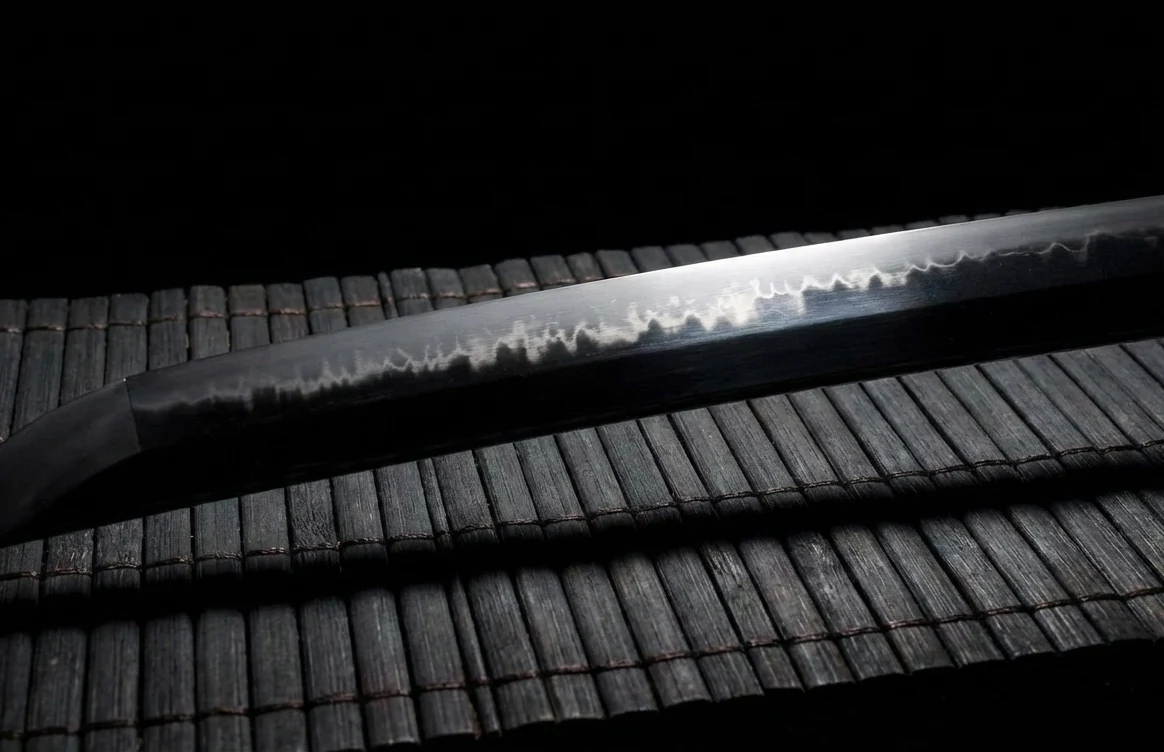
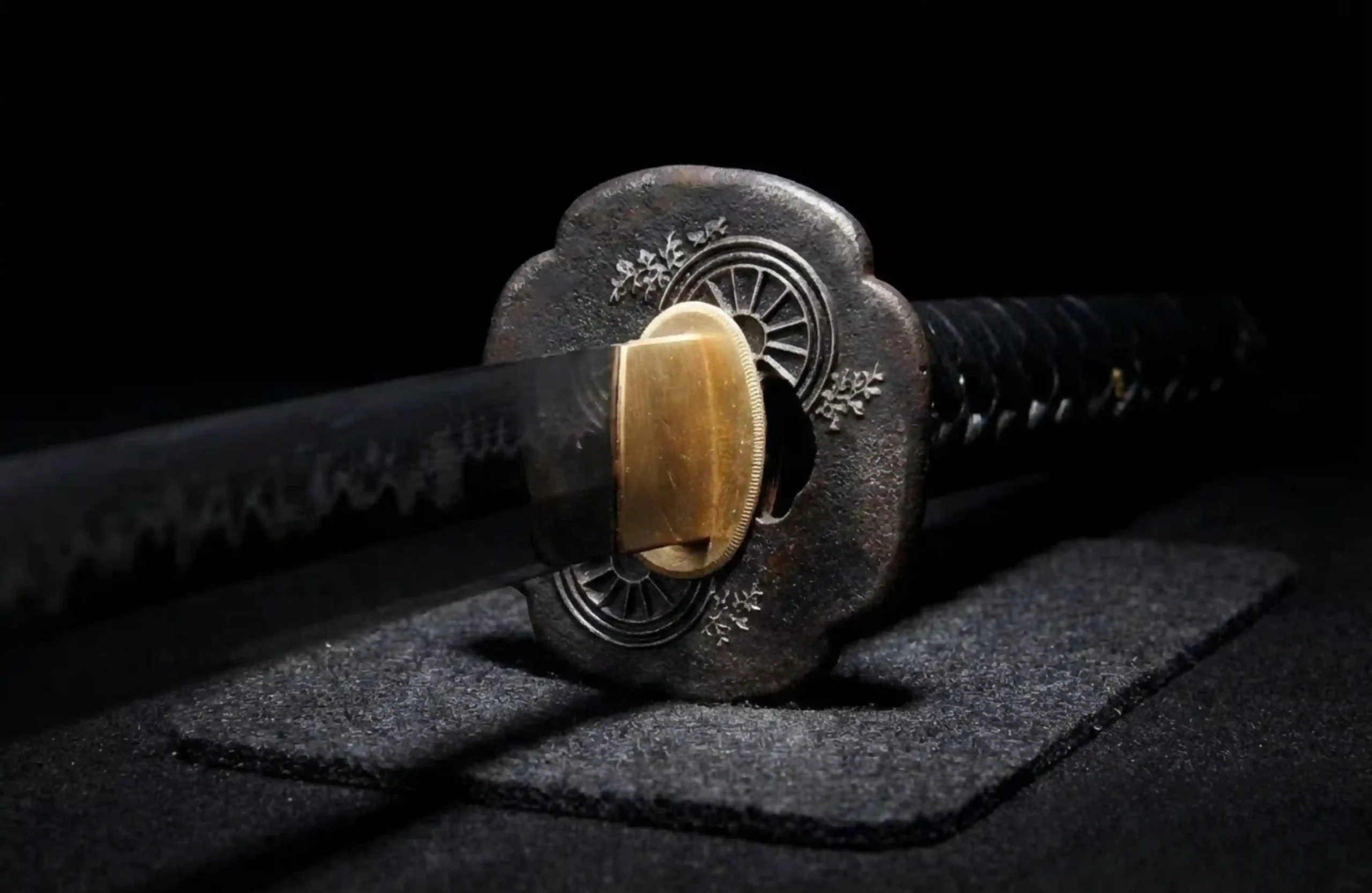
The hamon is cloudy, and looks like a choiji or clove type, however since every sword is handmade expect slightly different changes. The blade is 71 cm long and weighs nearly 1 kg, which is relatively light for a sword without a fuller. It comes razor sharp by default, but you can choose whether you want it sharpened or not. The tsuka is wrapped in high quality genuine black leather ito over white ray skin. Tsuba is iron (along with fuchi and kashira), elaborate and looks aged with a mokko gata shape.
The saya is wrapped with bamboo, while the koiguchi, kurikata, and kojiri are made from polished buffalo horn. The sword comes with a free sword bag, a set of spare mekugi (bamboo pins), a wooden stand, and a wooden box. If you are a serious collector looking for a high end katana with strong attention to detail, I think the Kumagai will impress anyone. However, for regular use, I would recommend other options on this list. Not because this sword cannot perform, but because modern steel alternatives can offer similar performance without the high price tag.
Custom Katanas
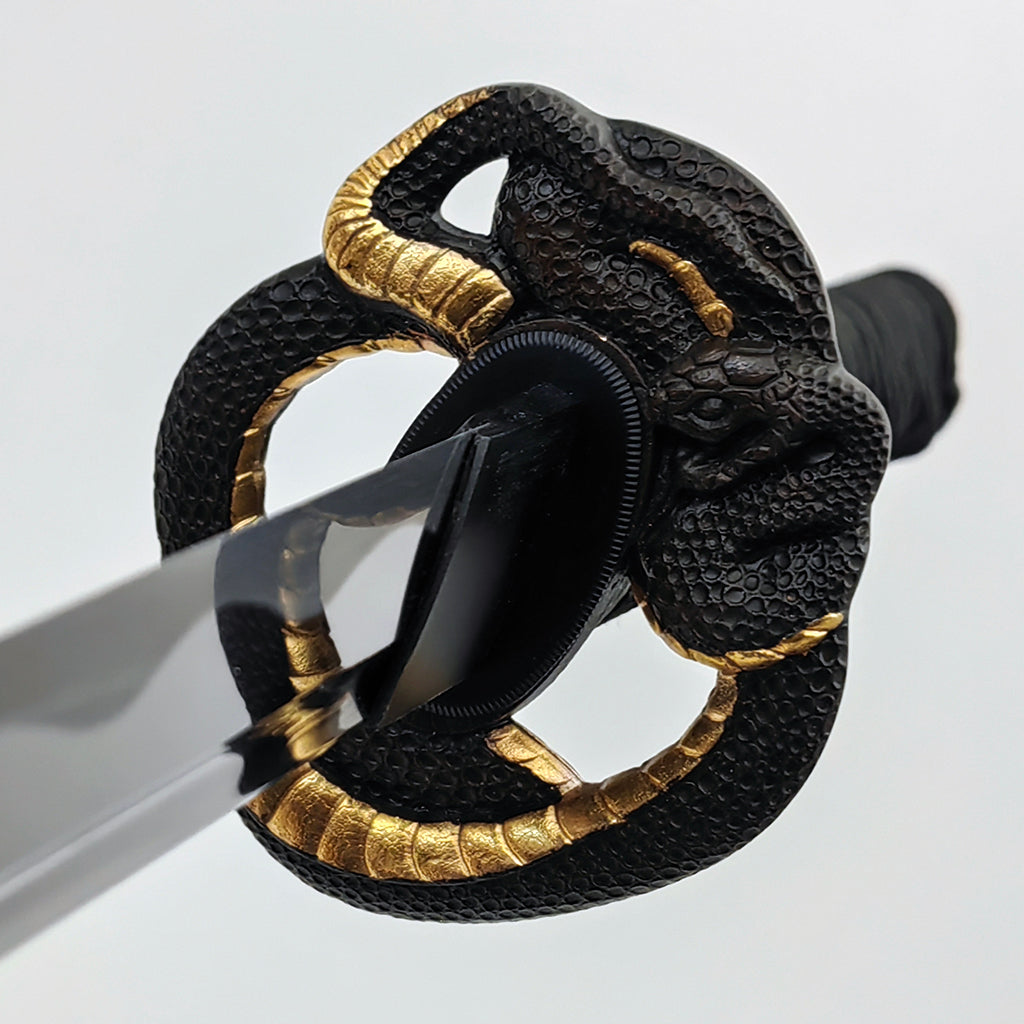
In 2025, custom katanas are the most popular among enthusiasts and collectors, and for a few good reasons. First, who doesn’t want a one-of-a-kind katana. A custom katana allows you to specify nearly every aspect of the sword, from the blade length and curvature to the type of steel, the design of the fittings, and the materials used.
Besides the standard high-carbon steel used for swords, you can also choose the traditional Tamahagane—the same steel Japanese swordsmiths used back in the day. Second, you design it based on your purpose, ensuring it perfectly suits your needs. And finally, let the swordsmith work their art.
How to Choose a Katana: Do Not Skip This
I know everyone wants the best katana for themselves. But let me say this, it’s not only about the best, it’s also about the right one. What makes a katana the best is a mix of different things. Good steel, solid blade work, quality fittings done with care, balance, design, appearance, and even the small details all matter.
That is why it is important to buy from trusted makers with years of experience. All the recommendations we made here come from well known makers like Hanwei, Dragon King, and Longquan swordsmiths, all of whom have been in the market for many years.
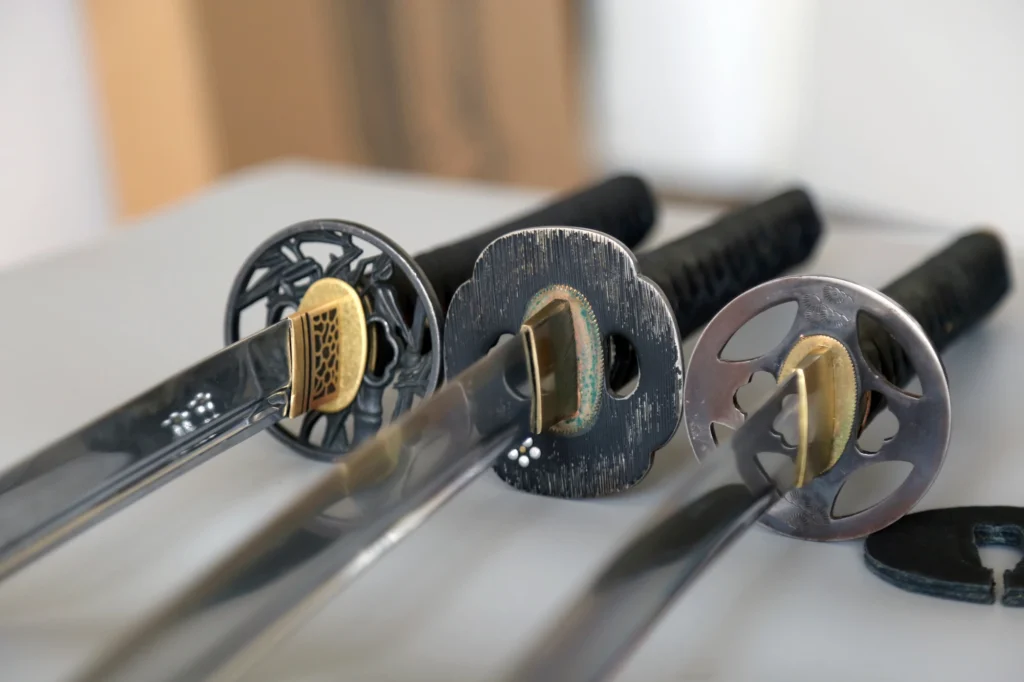
When it comes to finding the right one, being able to touch or hold the sword before buying makes also a difference. This helps you see the details more clearly and understand if it feels right for you. However, since most swords are purchased online, this is often not possible. Still, you can get a very good functional katana, and these are the main things you should focus on.
How You Plan to Use Your Katana: Functional Katana Types

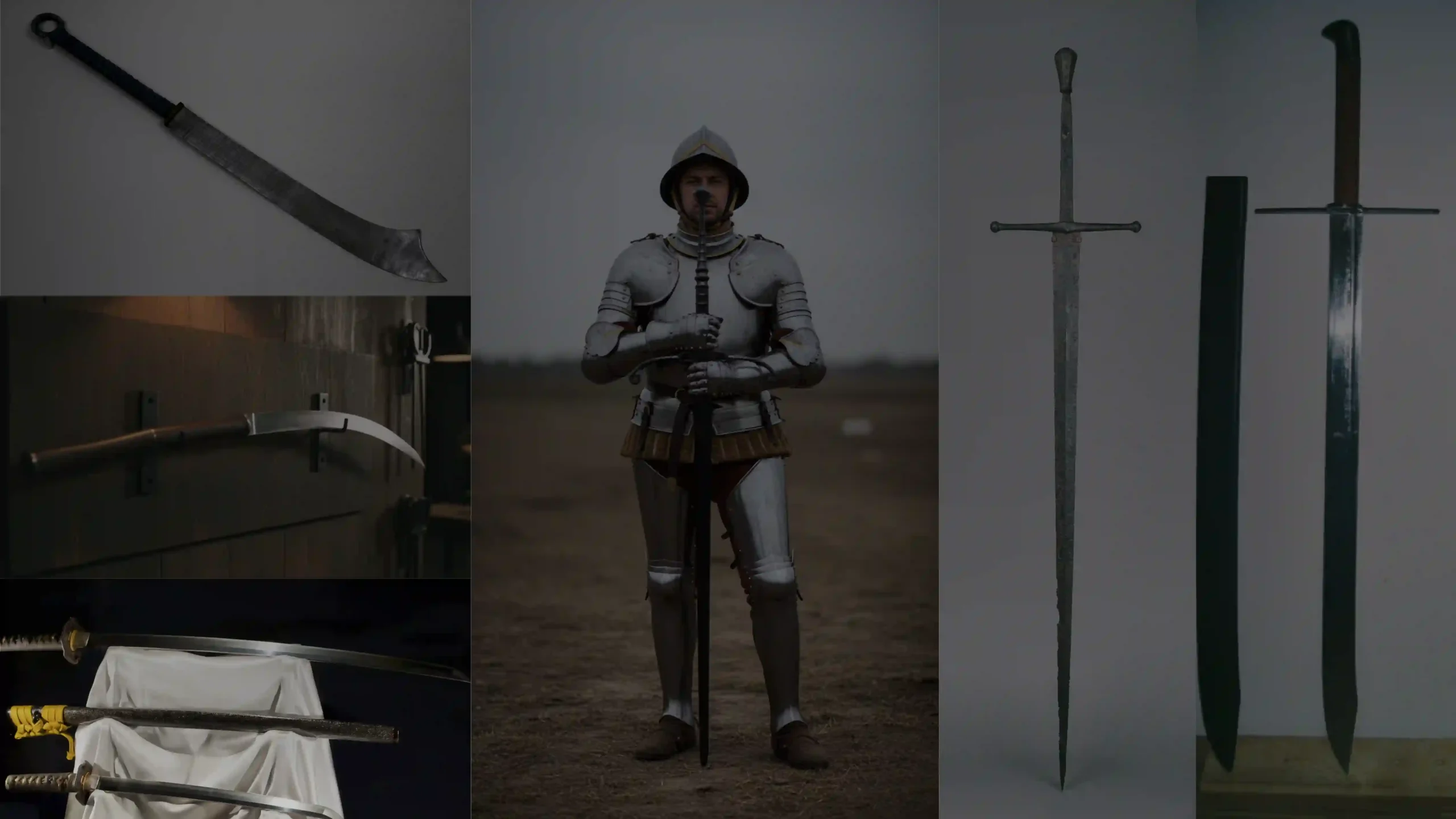
The market offers a wide variety of swords. Some are used for decoration or display, some for collection, others for practicing fighting techniques, some for iaido, some for blade to blade contact like in HEMA, and others for cutting exercises. A functional katana can be used for almost everything, however some swords are better suited or optimised for specific tasks.
For Display and Decoration
If you want a sword only for display, there is no need to spend extra on a real blade. A decorative katana with a stainless steel blade will look just as good on a wall, and you do not have to worry about cleaning or oiling it like you would with a functional sword.
For Cutting Practice
If you want a katana for dojo use or purely for cutting exercises, you’ll need a slightly heavier blade with a more forward balance and, maybe with a slightly deeper curve. High carbon steel blade is best here, since edge retention is what matters most during extended use.
For Collections
If you are buying a katana for collection, performance is not the only priority. What also matters is craftsmanship, history, and overall quality. Collectors usually look for swords that are well made, consistent, and carefully finished.
For Iaido Practice
Katanas used for iaido are generally unsharpened and very well balanced. These katanas vary in weight, with lightweight options for beginners, standard weight models that replicate a functional katana, and heavier versions that feel closer to a real blade.
Today, many iaido katanas are made from aluminum alloy. This makes them safer to use and easier to maintain, but they cannot be used for cutting. Unsharpened carbon steel blades are also an option and can work very well, so in the end, the choice is mostly personal.
Blade to Blade Practice
Katanas designed for blade-to-blade contact are not very common and differ greatly from traditional katanas. While they keep the general katana shape, most other elements are simplified and built purely for durability. These swords are usually made from flexible, resilient steel that can handle repeated contact and return to shape after bending. Because of this design, they are not suitable for cutting practice, drawing and sheathing exercises, or maintaining a sharp edge.
All-Rounder Katanas
What I like to call an all-rounder katana is simply a good, functional sword. It’s a blade you can cut with, train with, display when you’re not using it, and more. While some swords are more specialized for specific purposes, an all-rounder can do all of these things, with its advantages and disadvantages, of course. For most people, this is the choice.
Type of Steel You Should Choose Based on Your Purpose
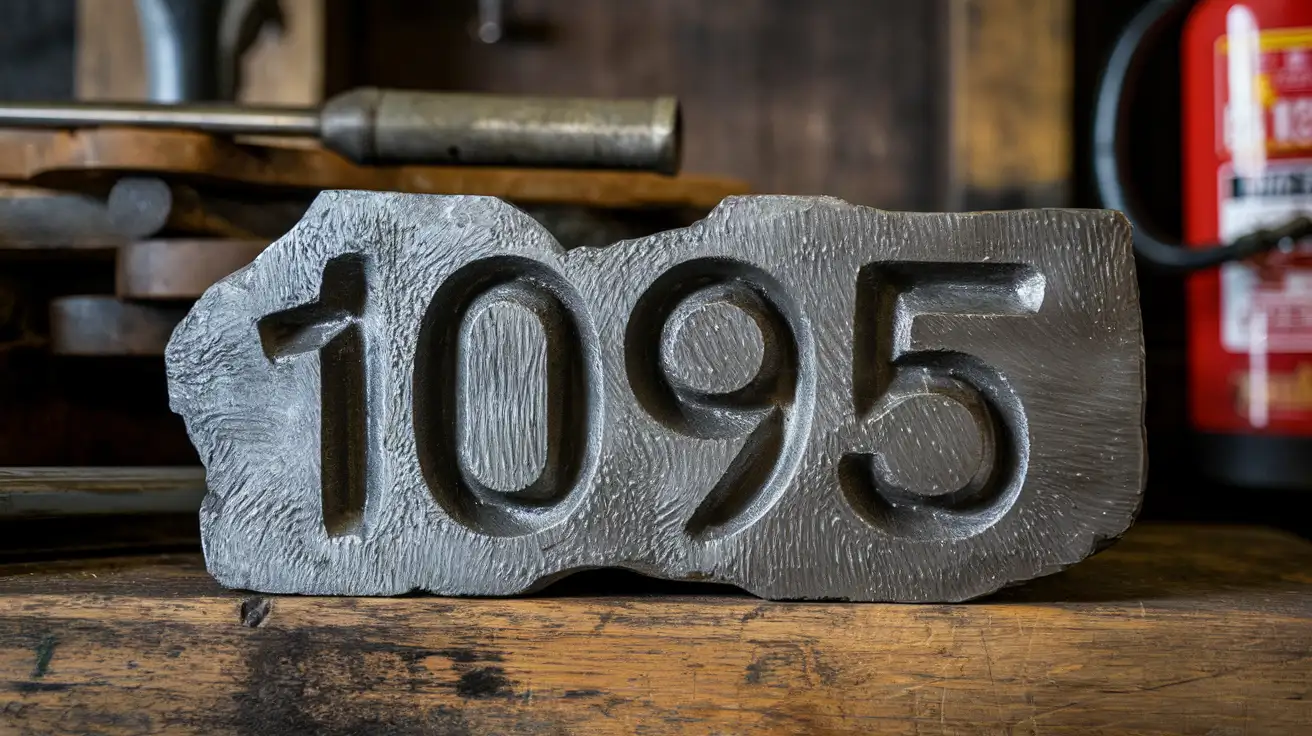
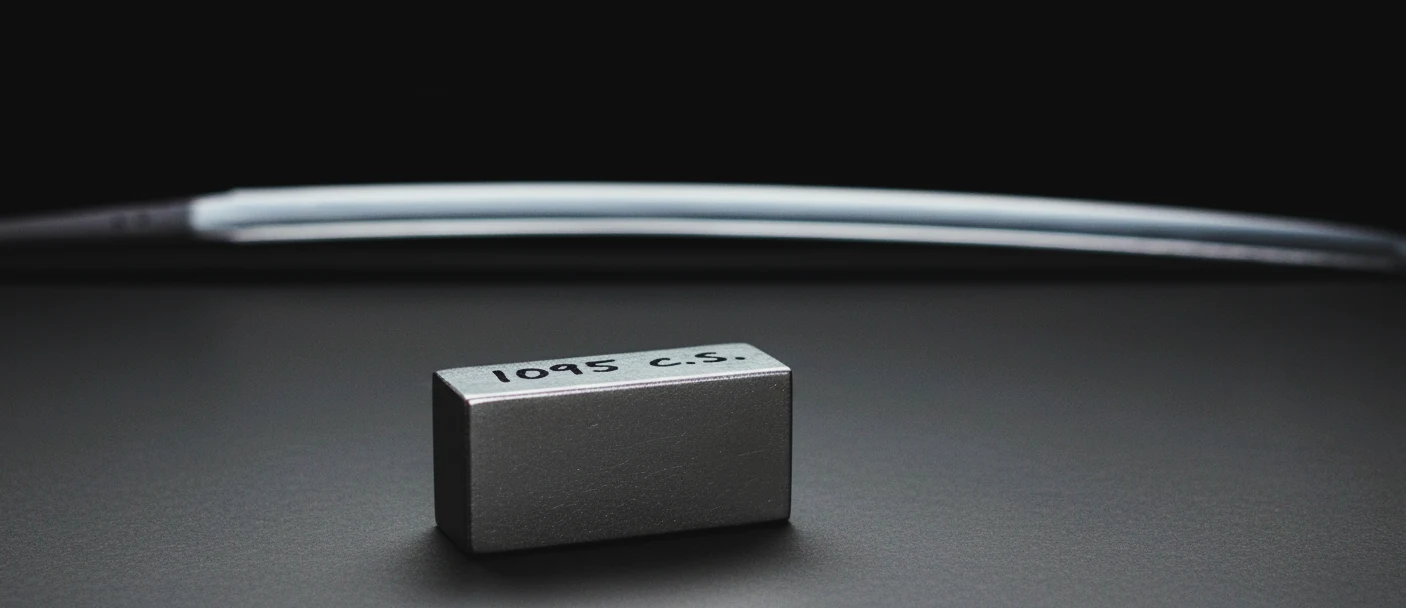
When choosing a katana, the steel is one of the most important factors, along with how it is treated. Different steels are better suited for different purposes. Below is a short list of some of the most common steels used in katanas and what they are best suited for:
- Pure cutting/edge retention: 1095 high carbon steel, T10 tool steel (differentially hardened)
- Display/low maintenance: Stainless steel, Damascus steel
- Blade-to-blade contact/heavy-duty use: Spring steels
If you want to go more in depth on the steels used for katanas and how they perform, we cover that in a separate article.
Tang Construction
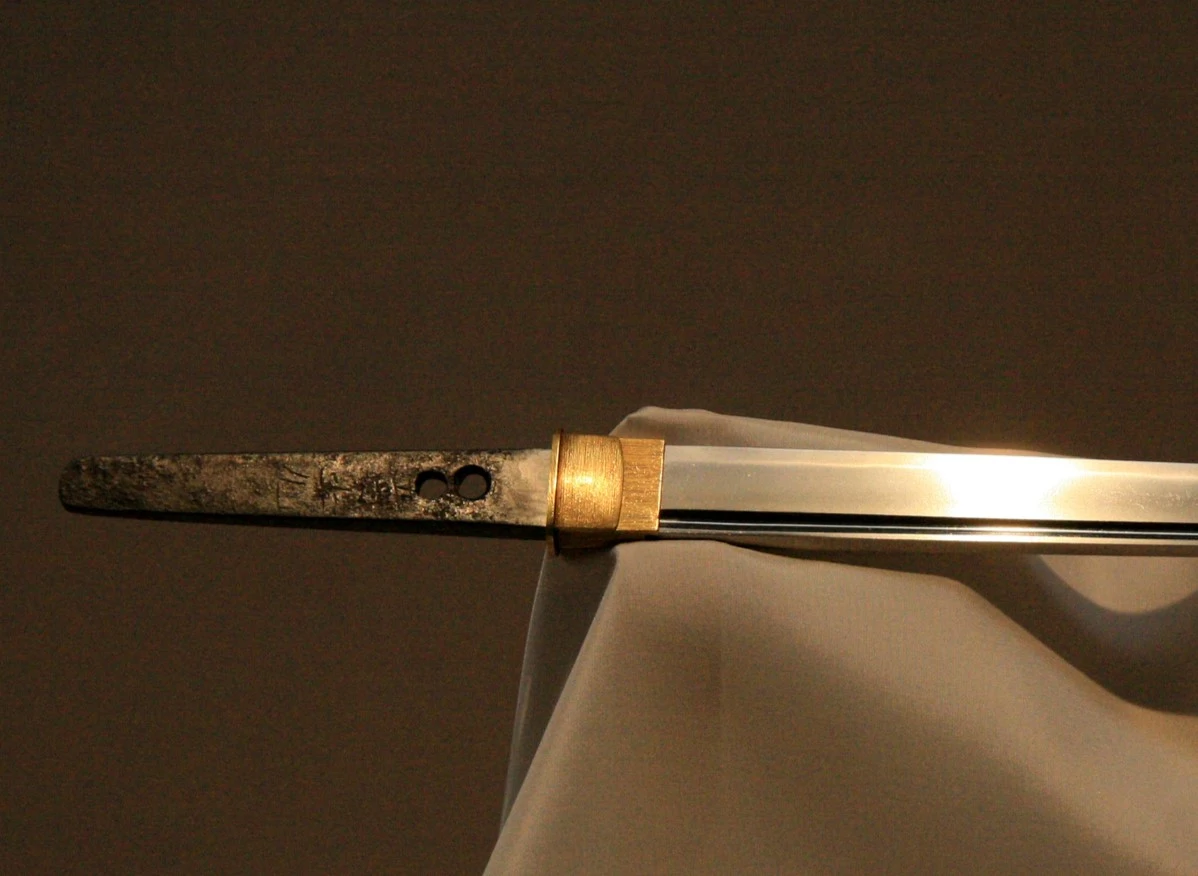
Another important detail for functional swords is the tang. For most samurai swords, there are two main types of tangs: rat tang and full tang. A battle ready katana should have a full tang, meaning the blade extends through the entire handle. This makes the sword much stronger and safer to use. If you buy from reputable makers, they come with a full tang by default, so this is usually not something you need to worry about.
The Length Should Match Your Height
A good rule is that the katana should match your arm length. If you stand straight, hold your arm at your side, and measure from your palm to the floor, that is about the right blade length for you. Most adults end up with a blade between 27 and 30 inches.
FAQ
Is a 100-dollar katana good?
A $100 katana is highly unlikely to be a good, functional sword. At that price point, you’re almost certainly looking at a decorative piece, often called a wall hanger.
How to care for a katana?
Clean and oil your katana regularly to prevent rust. After each use, wipe the blade to remove fingerprints or moisture, then apply a light coat of sword oil. Store it in a dry place and check it from time to time, even if you are not using it.
What is a katana used for?
A katana was traditionally used by samurai for combat and self-defense. Today, it is mostly used for martial arts training, cutting practice, display, or as a collector’s piece.
Can you use a katana for self-defense?
The goal of using a katana for self-defense should be to scare off or keep distance from an aggressor, not to harm them. Swords can cause serious injuries, and using one could even get you into legal trouble.
Last Words
When it comes to the Japanese sword types, more specifically katanas, it’s hard to go wrong with any of these options. Whether you’re looking to become a modern samurai or just want a sword for fun, we made sure to pick the best katanas. If you want to expand your collection with a full samurai sword set check, The Best Samurai Swords of 2025.